A brass fastener is a पेंच, पेंच, nut, washer, or rivet made from a copper-zinc alloy — most commonly C260 cartridge brass, C360 free-cutting brass, or C464 naval brass — specified not for maximum strength, which it does not offer, but for three properties no steel fastener can match simultaneously: electrical and thermal conductivity, complete non-magnetism, and spark-free behavior in explosive atmospheres. Brass fasteners cost more than carbon steel, less than titanium, and roughly the same as stainless steel depending on copper prices, which makes the material decision a question of what the application demands rather than a simple strength ranking.
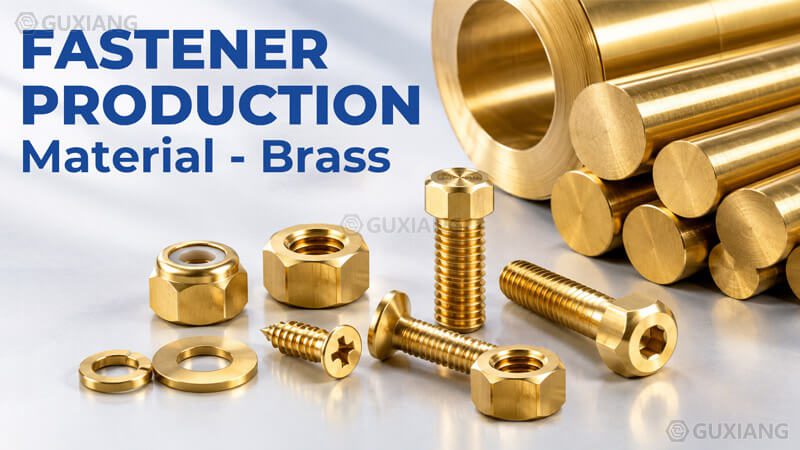
What Are Brass Fasteners
Brass fasteners are mechanical joining components manufactured from wrought copper-zinc (Cu-Zn) alloys. The copper-zinc ratio controls nearly every engineering property: strength, corrosion resistance, conductivity, color, and machinability.
| संपत्ति | Brass (C260) | कार्बन स्टील | स्टेनलेस (304/316) | एल्यूमिनियम (7075) | यह क्यों मायने रखती है |
|---|---|---|---|---|---|
| घनत्व | 8.53 g/cm³ | 7.85 ग्राम/सेमी³ | 7.9–8.0 ग्राम/सेमी³ | 2.70 ग्राम/सेमी³ | Brass is heavy, ~9% denser than steel |
| Tensile strength | 350–540 MPa | 1030 MPa (Grade 8) | 860 एमपीए (125 केएसआई) | 572 एमपीए (83 केएसआई) | Brass is not a high-strength material |
| इलेक्ट्रिकल कंडक्टीविटी | 28% IACS | ~10% आईएसीएस | ~2.4% आईएसीएस | 30-40% आईएसीएस | Brass conducts, steel does not |
| चुंबकत्व | गैर चुंबकीय | लौह-चुंबकीय | अधिकतर गैर-चुंबकीय | गैर चुंबकीय | Brass is reliably non-magnetic |
| Spark behavior | Non-sparking | Sparks on impact | Non-sparking | Non-sparking | Brass is explosion-safe |
दो परिभाषित विशेषताएं पीतल को इस श्रृंखला में शामिल अन्य फास्टनर धातुओं से अलग करती हैं। सबसे पहले, पीतल कुछ फास्टनर सामग्रियों में से एक है जो एक साथ एक संरचनात्मक घटक और एक विद्युत कंडक्टर है - एक पीतल का पेंच एक जोड़ को पकड़कर करंट ले जा सकता है। दूसरा, पीतल विस्फोटक वातावरण में आंतरिक रूप से सुरक्षित है: इसमें कोई लोहा नहीं होता है और यह प्रभाव वाली चिंगारी पैदा नहीं करता है, यही कारण है कि पीतल के फास्टनर खदानों, रासायनिक संयंत्रों और ईंधन प्रबंधन क्षेत्रों में दिखाई देते हैं जहां स्टील निषिद्ध है।

Cu-Zn मिश्र धातु प्रणाली और ग्रेड चयन
Brass fasteners are made from a small number of wrought brass grades whose identity is defined by the copper-zinc ratio and small additions of tin or lead. Because the alloy family is large — the ASTM and UNS systems list dozens of wrought copper-zinc compositions — the practical fastener specification space is deliberately narrow: three grades carry nearly all production, and a fourth group appears only in specialty work.
The full Cu-Zn system extends from red brasses (85% copper, C23000) through yellow brasses (65–70% copper, C26000 and C27200) to Muntz metal (60% copper, C28000) and the leaded and tinned variants derived from them. For फास्टनर, उत्पादन अर्थशास्त्र निर्णायक हैं: एक फास्टनर निर्माता मशीनों, रूपों, या उच्च मात्रा में घटकों का नेतृत्व करता है, और ग्रेड को लगातार चिप-ब्रेकिंग व्यवहार, कोल्ड फॉर्मेबिलिटी, या बड़े पैमाने पर संक्षारण प्रदर्शन प्रदान करना चाहिए। यह आवश्यकता परिवार को यहां जांचे गए तीन ग्रेडों तक फ़िल्टर करती है।
दो अंकीय कॉपर-जिंक तर्क
तांबे की मात्रा गुणों पर हावी है। उच्च तांबे वाले पीतल (85-70% Cu) नरम, लचीले और संक्षारण प्रतिरोधी होते हैं; कम तांबे वाले पीतल (60-65% Cu) सख्त, मजबूत और सस्ते होते हैं। फास्टनरों के लिए तीन ग्रेड महत्वपूर्ण हैं:
| अमेरिकी ग्रेड | साधारण नाम | संघटन | चरित्र |
|---|---|---|---|
| सी26000 | कारतूस पीतल | 70 Cu/30 Zn | सामान्य पीतल की तुलना में तन्य, शीत-रूपी, सर्वोत्तम संक्षारण प्रतिरोध |
| सी36000 | फ्री-कटिंग पीतल | 61.5 Cu / 35.5 Zn / 3 Pb | लीडेड, शानदार मशीनेबिलिटी, मशीन-स्क्रू वर्कहॉर्स |
| सी46400 | नौसेना पीतल | 59 Cu / 40 Zn / 1 Sn | टिन संयोजन डीज़िनसिफिकेशन, समुद्री-ग्रेड का प्रतिरोध करता है |
ये तीन ग्रेड फास्टनर उत्पादन पर हावी क्यों हैं?
सी36000 अधिकांश मशीनी पीतल फास्टनरों के लिए जिम्मेदार है। 3% सीसा जोड़ने से मोड़ने और धागा काटने के दौरान चिप्स टूट जाते हैं, जिससे सख्त सहनशीलता और साफ धागे के साथ स्क्रू, बोल्ट और नट का उच्च गति उत्पादन संभव हो जाता है। यदि पीतल के फास्टनर को बनाने के बजाय मशीन से बनाया गया है, तो यह लगभग निश्चित रूप से C360 है।
सी26000 शीत-निर्माण विकल्प है। 70% तांबे के साथ यह इतना लचीला है कि इसे बिना दरार के रिवेट्स और गठित स्क्रू में ठंडा किया जा सकता है, और यह तीनों में से सबसे अच्छा वायुमंडलीय संक्षारण प्रतिरोध प्रदान करता है।
सी46400 is the specification for service where dezincification is a risk — seawater, brackish water, and aggressive aqueous environments. The 1% tin addition suppresses zinc leaching, which is why naval brass is the standard for marine brass fasteners.
The grade decision is therefore a manufacturing-method decision as much as a material decision: machined production favors C360, formed production favors C260, and corrosive service favors C464.
यांत्रिक विशेषताएं
Brass fastener mechanical properties are governed in North America by ASTM F467/F468 (nonferrous fasteners). Typical and minimum strength values for the three common grades are listed below.
| श्रेणी | Tensile Strength (typical) | Yield Strength (typical) | कठोरता | चरित्र |
|---|---|---|---|---|
| C26000 (H02) | 350–540 MPa | 240–450 MPa | 80–100 HB | Ductile, work-hardening |
| C36000 (H02) | 340-470 एमपीए | 240 एमपीए | 80-90 एचबी | फ्री-मशीनिंग, स्थिर |
| C46400 (H02) | 380-520 एमपीए | 170-250 एमपीए | 75-95 एचबी | समुद्री ग्रेड |
ताकत की हकीकत
ईमानदार शीर्षक यह है कि पीतल मध्यम है-ताकत बांधनेवाला पदार्थ सामग्री। लगभग 350-540 एमपीए की इसकी तन्यता सीमा इसे मिश्र धातु इस्पात (860+ एमपीए) से नीचे, स्टेनलेस स्टील (515-860 एमपीए) से नीचे और एल्यूमीनियम (7075-टी6 में 572 एमपीए) से केवल थोड़ा ऊपर रखती है। लोड-बेयरिंग संरचनात्मक सेवा में, पीतल को अकेले ताकत से समाप्त किया जाता है - द मिश्र धातु इस्पात फास्टनरों गाइड उन सामग्रियों को कवर करता है जो संरचनात्मक भार वहन करती हैं।
पीतल में पूर्ण ताकत की जो कमी है, वह अन्य आयामों में उसकी भरपाई कर देता है, जिसे कोई भी ताकत तालिका कैप्चर नहीं कर पाती है:
प्रवाहकत्त्व - पीतल 26-28% IACS वहन करता है, जो स्टील की चालकता से लगभग दस गुना अधिक है। पीतल फास्टनर एक विद्युत घटक है।
गैर चुंबकत्व - पीतल नगण्य स्तर तक अनुचुंबकीय है, एमआरआई कक्षों और चुंबकीय सेंसरों के पास उपयोग करने योग्य है।
Non-sparking - पीतल के प्रभाव से कोई उत्तेजक चिंगारी उत्पन्न नहीं होती, जो इसे विस्फोटक वातावरण के लिए योग्य बनाती है।
पित्त प्रतिरोध - पीतल फिसलने वाले संपर्क में स्वयं-चिकनाई करता है और टाइटेनियम, स्टेनलेस या एल्यूमीनियम धागे की तरह पित्त या जब्त नहीं करता है।
एएसटीएम एफ467/एफ468 के तहत विशिष्टता अभ्यास
एएसटीएम एफ467 गैर-लौह नट को कवर करता है और एएसटीएम एफ468 गैर-लौह बोल्ट, स्क्रू और स्टड को कवर करता है; साथ में वे उत्तरी अमेरिकी अभ्यास में पीतल फास्टनरों के लिए आयामी, यांत्रिक और अंकन आवश्यकताओं को परिभाषित करते हैं। मानक स्टील फास्टनरों के लिए उपयोग किए जाने वाले समान संपत्ति वर्गों और अंकन सम्मेलनों का संदर्भ देते हैं, जो इंजीनियरिंग टीमों को न्यूनतम पुनर्विक्रय के साथ मौजूदा चित्रों पर पीतल निर्दिष्ट करने देता है। धागों को रोल किया जाता है या काटा जाता है, और मानकों में यांत्रिक मूल्यों को उत्पाद के स्वभाव पर निर्भर किया जाता है - कोल्ड-वर्क्ड बार से काटा गया फास्टनर एनील्ड स्टॉक से एक की तुलना में अधिक ताकत रखता है। एक विनिर्देश जो बिना किसी स्वभाव या शक्ति वर्ग के केवल मिश्र धातु का नाम देता है, आपूर्तिकर्ता को नरम स्थिति में शिप करने के लिए स्वतंत्र छोड़ देता है, जो पीतल फास्टनरों के बारे में क्षेत्र की शिकायतों का एक सामान्य स्रोत है।
तापमान और निम्न-तापमान व्यवहार
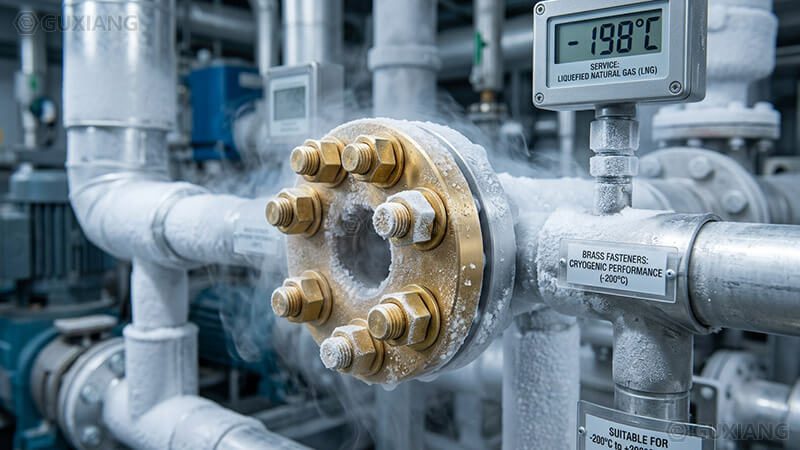
पीतल ऊंचे तापमान पर अपनी ताकत खो देता है और आम तौर पर लगभग 200 डिग्री सेल्सियस से नीचे निरंतर सेवा तक सीमित रहता है। क्रायोजेनिक तापमान पर, हालांकि, पीतल कठोरता बरकरार रखता है और भंगुर नहीं होता है - तरलीकृत-गैस सेवा में एक उपयोगी संपत्ति जो कुछ फास्टनर सामग्री साझा करती है। पीतल के फास्टनरों के लिए व्यावहारिक आवरण लगभग -200 डिग्री सेल्सियस से 200 डिग्री सेल्सियस है, जो अधिकांश औद्योगिक सेवा को कवर करता है लेकिन गर्म-प्रक्रिया उपकरण को शामिल नहीं करता है।
संक्षारण प्रतिरोध और गैल्वेनिक व्यवहार
पीतल एक असामान्य संक्षारण स्थिति रखता है: वायुमंडलीय और कई जलीय वातावरणों में उत्कृष्ट, विशिष्ट जल रसायन विज्ञान में कमजोर, और अन्य धातुओं के खिलाफ गैल्वेनिक रूप से जटिल।
सामान्य संक्षारण प्रदर्शन
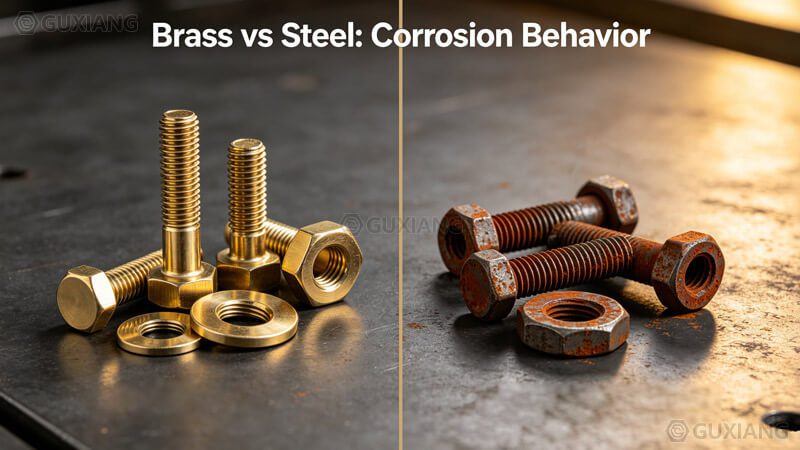
पीतल वायुमंडलीय संक्षारण, ताजे पानी और तटस्थ औद्योगिक वातावरण का अच्छी तरह से प्रतिरोध करता है। इसमें जंग नहीं लगती - तांबे-जस्ता मिश्र धातु में स्टील का आयरन-ऑक्साइड विफलता मोड असंभव है - और इसके संक्षारण उत्पाद (परिचित हरे पेटिना) विनाशकारी के बजाय काफी हद तक सुरक्षात्मक होते हैं।
दो पीतल-विशिष्ट विफलता मोड स्पष्ट ध्यान देने योग्य हैं।
डीज़िनसिफिकेशन। कुछ जल में - शीतल जल, अम्लीय जल, और क्लोराइड युक्त जल - पीतल का जस्ता घटक मिश्रधातु से चुनिंदा रूप से निक्षालित होता है, जो मूल ताकत के एक अंश के साथ एक छिद्रपूर्ण, तांबा युक्त संरचना को पीछे छोड़ देता है। पीतल के फास्टनर की समय से पहले विफलता का सबसे आम कारण डीज़िनसिफिकेशन है, और यही कारण है कि सादे पीले पीतल को आक्रामक जलीय सेवा के लिए निर्दिष्ट नहीं किया गया है। उपाय मिश्र धातु का चयन है: नौसेना पीतल (सी464, 1% टिन के साथ) और डीज़िनसिफिकेशन-प्रतिरोधी पीतल तंत्र को दबा देते हैं।
सीज़न क्रैकिंग (तनाव-संक्षारण क्रैकिंग)। Brass in the presence of ammonia and moisture, under residual or applied tensile stress, can crack intergranularly. This old failure mode — historically observed in brass cartridge cases stored near ammonia — matters for fasteners in agricultural, fertilizer, and cleaning environments where ammonia vapor is present. Low residual stress, annealing, or a change of alloy is the standard mitigation.
Galvanic Corrosion: The Direction Rule
Brass sits near the middle of the galvanic series for seawater, at approximately -0.25 to -0.35 V versus the saturated calomel electrode (SCE). That position produces two opposite behaviors depending on the coupled metal:
| धातु | Potential in Seawater (V vs SCE) | Brass’s Role in the Couple |
|---|---|---|
| एल्यूमीनियम मिश्र धातु | -0.76 से -0.90 | पीतल कैथोडिक है - एल्यूमीनियम संक्षारक है |
| कार्बन स्टील | -0.60 से -0.70 | पीतल कैथोडिक है - स्टील का संक्षारण होता है |
| पीतल | -0.25 से -0.35 | संदर्भ |
| स्टेनलेस स्टील (निष्क्रिय) | -0.05 से -0.45 | पीतल एनोडिक है - पीतल का संक्षारण होता है |
| टाइटेनियम (निष्क्रिय) | -0.05 से -0.15 | पीतल एनोडिक है - पीतल का संक्षारण होता है |
तीन व्यावहारिक निष्कर्ष इस प्रकार हैं:
एल्यूमीनियम संरचना पर पीतल के फास्टनरों - एल्यूमीनियम फ्रेम में पीतल के स्क्रू का सामान्य मामला - जोड़ के चारों ओर एल्यूमीनियम के क्षरण को तेज करता है, क्योंकि एल्यूमीनियम एनोड है। तंत्र टाइटेनियम-ऑन-एल्यूमीनियम के समान दिशा में कवर किया गया है एल्यूमीनियम फास्टनरों गाइड: एल्युमीनियम से जुड़ी कोई भी उत्कृष्ट धातु एल्युमीनियम को बलि का घटक बनाती है।
कार्बन स्टील संरचना पर पीतल के फास्टनरों - पीतल कैथोडिक है, इसलिए स्टील जोड़ के चारों ओर अधिमानतः संक्षारण करता है, हालांकि संभावित अंतर छोटा होता है और एल्यूमीनियम मामले की तुलना में हमला धीमा होता है।
पीतल की संरचना पर स्टेनलेस फास्टनरों - उलटा: स्टेनलेस स्टील पीतल की तुलना में अधिक अच्छा है, इसलिए पीतल का घटक संक्षारक हो जाता है। स्टेनलेस-से-पीतल जोड़े में, पीतल पीड़ित होता है, और स्टेनलेस असेंबली में पीतल के फास्टनर पहले विफल होते हैं।
किसी भी असमान-धातु जोड़ के लिए सामान्य नियम समान है: गैल्वेनिक श्रृंखला में ऊपर की धातु जीवित रहती है और निचली धातु का संक्षारण होता है। जहां भी पीतल गीली सेवा में एल्यूमीनियम, स्टील या स्टेनलेस से मिलता है, वहां संगत जोड़ों का चयन करना, धातुओं को इन्सुलेट करना या इलेक्ट्रोलाइट को बाहर करना अनिवार्य है। जब सेवा वातावरण अनिश्चित होता है, तो आईएसओ 9227 शर्तों के तहत एक छोटा नमक-स्प्रे या विसर्जन परीक्षण सामग्री हैंडबुक अनुमान की तुलना में तेज़ और अधिक रक्षात्मक उत्तर प्रदान करता है, क्योंकि एक विशिष्ट जोड़े का गैल्वेनिक व्यवहार सतह खत्म, क्षेत्र अनुपात और जल रसायन शास्त्र पर उतना ही निर्भर करता है जितना आधार धातुओं पर।
सतही समापन
पीतल के फास्टनरों को विशिष्ट वातावरण में उपस्थिति, धूमिल नियंत्रण और संक्षारण प्रतिरोध के लिए सतह उपचार प्राप्त होता है। स्टील या एल्यूमीनियम की तुलना में विकल्प कम और सरल हैं।
| खत्म करना | उद्देश्य | टिप्पणियाँ |
|---|---|---|
| नंगा/पॉलिश किया हुआ | सजावटी स्वरूप | घर के अंदर धूमिलता नियंत्रण के लिए लाह या मोम की आवश्यकता होती है |
| रोगन | धूमिल निवारण | वास्तुशिल्प और सजावटी पीतल के लिए मानक |
| साफ़ या रंगीन एनोडाइज़ (कांस्य टोन) | उपस्थिति + हल्की सुरक्षा | कुछ बाज़ारों में क्रोमेट-मुक्त विकल्पों को प्राथमिकता दी जाती है |
| निकल चढ़ाना | पहनावा + रूप | सतह को सख्त, चमकीली धातु में परिवर्तित करता है |
| क्रोमेट रूपांतरण | संक्षारण + धूमिल होना | पतला, प्रवाहकीय, विद्युत संपर्क को सुरक्षित रखता है |
The critical procurement distinction is conductive versus non-conductive finishes. A clear lacquer is electrically insulating and ruins a brass fastener intended for grounding; chromate conversion and thin passivation treatments preserve conductivity. For electrical service, specify “conductive finish” explicitly and reject lacquered or thick organic coatings. The broader logic of matching a finish to a service environment is covered in the गैल्वनाइज्ड बनाम जिंक-प्लेटेड फास्टनरों गाइड.
The Non-Sparking, Conductive, Antimicrobial Advantage
This section covers the three properties that no steel, aluminum, or titanium fastener can replicate — the reason brass exists in the fastener catalog at all.
Non-Sparking Behavior
पीतल और अन्य अलौह मिश्रधातुओं को कठोर सतहों पर मारने, रगड़ने या गिराने पर तीव्र चिंगारी उत्पन्न नहीं होती है। विस्फोटक वातावरण में - खदानें, पेट्रोकेमिकल संयंत्र, ईंधन भंडारण, अनाज प्रबंधन - क्षेत्र में उपकरण और फास्टनरों को स्पार्क-सुरक्षित होना चाहिए, और पीतल मानक गैर-स्पार्किंग फास्टनर सामग्री है। इन क्षेत्रों में स्टील फास्टनरों का निषेध है; पीतल के फास्टनरों को निर्दिष्ट किया गया है क्योंकि एक गिरा हुआ रिंच या मारा हुआ बोल्ट वातावरण को प्रज्वलित नहीं कर सकता है।
इलेक्ट्रिकल कंडक्टीविटी
At roughly 26–28% IACS, brass is a functional conductor. Brass fasteners serve as grounding screws, bonding clamps, bus-bar fasteners, and switchgear components where the fastener must carry current while providing mechanical retention. Copper is a better conductor (100% IACS), but pure copper fasteners lack the strength and thread quality of brass; brass is the practical compromise for threaded current-carrying components.
Antimicrobial Surface
Copper and its alloys carry an EPA-registered antimicrobial claim: copper alloy surfaces kill more than 99.9% of bacteria within two hours of contact. Brass fasteners therefore appear in food-processing equipment, medical device housings, hospital hardware, and public-transportation fittings where surface hygiene is a design requirement. This is a niche but real specification driver that steel, stainless, and aluminum fasteners cannot match.
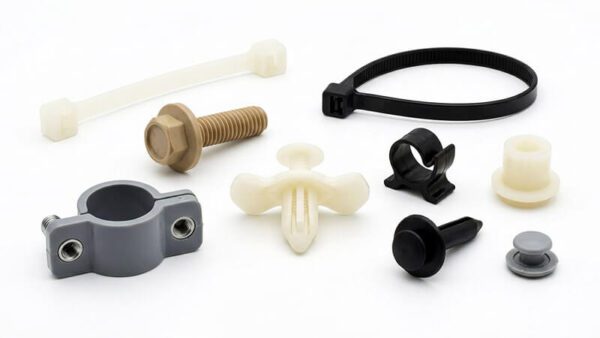
For applications requiring electrical isolation rather than conduction, the प्लास्टिक फास्टनरों गाइड गैर-धातु विकल्प को शामिल करता है।

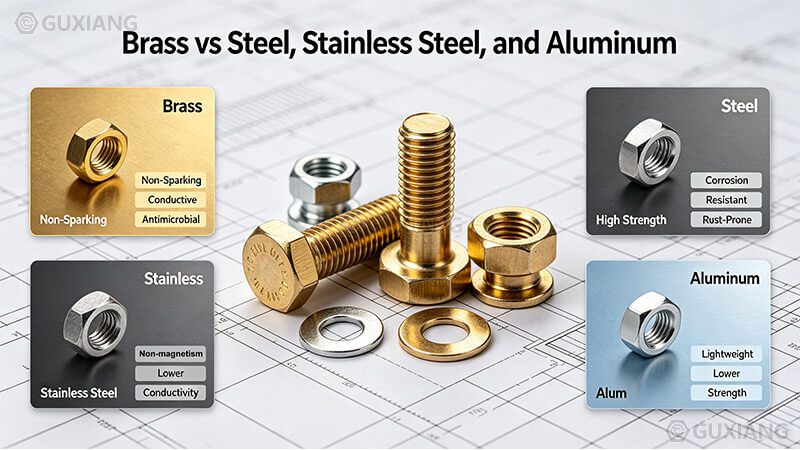
Brass vs Steel, Stainless Steel, and Aluminum
| आयाम | Brass (C360) | कार्बन स्टील | स्टेनलेस (316) | एल्यूमिनियम (7075) |
|---|---|---|---|---|
| घनत्व (ग्राम/सेमी³) | 8.50 | 7.85 | 8.0 | 2.70 |
| तन्यता ताकत (एमपीए) | 340–470 | 860–1030 | 515–860 | 572 |
| Electrical conductivity (% IACS) | 26 | ~10 | ~2.4 | 30–40 |
| चुंबकत्व | गैर चुंबकीय | चुंबकीय | अधिकतर गैर-चुंबकीय | गैर चुंबकीय |
| Spark behavior | Non-sparking | Sparking | Non-sparking | Non-sparking |
| समुद्री जल का क्षरण | Good (C464) | रस्ट परिवार | गड्ढों | गड्ढों |
| Antimicrobial | Yes (copper) | नहीं | नहीं | नहीं |
| प्रति भाग सापेक्ष लागत | 2–3× steel | 1× | 3-5× | 1-2× |
सरल शब्दों में तीन तुलनाएँ
Brass vs carbon steel: steel wins on strength and cost; brass wins on conductivity, non-magnetism, spark safety, and corrosion resistance. Choose brass for electrical, explosion-safe, or decorative service; choose steel for load-bearing joints — the कार्बन स्टील फास्टनरों गाइड उस डोमेन को कवर करता है.
Brass vs stainless steel: the two compete for corrosion-service fasteners. Stainless is stronger and its cost is similar; brass wins on conductivity, non-magnetism, and spark safety, and loses on strength and seawater corrosion (brass is good in seawater with C464, but stainless is stronger and galvanically safer with most structure). For a pure corrosion decision, stainless usually wins; for a conductivity or spark-safety decision, brass is the only choice. The material comparison framework is developed further in the स्टेनलेस स्टील बनाम गैल्वनाइज्ड फास्टनरों गाइड.
Brass vs aluminum: aluminum is lighter, cheaper, and slightly more conductive; brass is stronger (except against 7075), denser, and more decorative. Where weight matters, aluminum wins; where spark safety or antimicrobial properties are required, brass is the choice. And the galvanic interaction between the two — brass is cathodic to aluminum — must be managed whenever they are joined.
Brass vs titanium: the two share the non-magnetic and corrosion-resisting profile, but the economics differ sharply. Titanium offers far higher strength and passivity in the most aggressive chloride service, at a cost of 5–8× steel, while brass is a fraction of that price. Brass wins where moderate corrosion resistance and conductivity are needed; titanium wins where strength-to-weight and extreme chemical resistance justify the premium. For saltwater bolting with a budget, naval brass remains the pragmatic choice, and for the highest-performance marine and chemical service, titanium is the specification.
लागत संबंधी विचार
Brass fastener pricing is dominated by the price of copper, which is volatile and historically 3–4 times the price of steel scrap per kilogram. The practical cost position of brass fasteners is:
| सामग्री | Relative Cost per Part |
|---|---|
| कार्बन स्टील | 1× |
| अल्युमीनियम | 1-2× |
| पीतल | 2-3× |
| स्टेनलेस स्टील | 3-5× |
| टाइटेनियम | 5–8× |
Brass is not the cheapest corrosion-service option — stainless steel is often comparable or slightly higher depending on the copper cycle — but brass sits below stainless on the cost scale in most periods. The cost argument for brass is rarely about price alone; it is about the value of the properties steel and stainless cannot deliver.
| लागत दृश्य | पीतल | इस्पात | स्टेनलेस |
|---|---|---|---|
| आरंभिक खरीद | मध्यम | कम | Moderate-high |
| Corrosion service (atmospheric) | अच्छा | गरीब | उत्कृष्ट |
| Electrical function | हाँ | नहीं | गरीब |
| Spark safety | हाँ | नहीं | हाँ |
| Replacement in explosion zones | Not required | Prohibited | विकल्प |
विस्फोट-सुरक्षित और प्रवाहकीय सेवा के लिए, पीतल प्रभावी रूप से एकमात्र थ्रेडेड-मेटल विकल्प है, इसलिए इसका मूल्य प्रीमियम वैकल्पिक अपग्रेड के बजाय अनिवार्य संपत्ति के लिए खरीदा जाता है।
पीतल फास्टनरों के लिए खरीद नोट्स
Three practices keep a brass fastener buy cost-effective. First, consolidate the copper-price exposure: because brass prices track the London Metal Exchange copper contract, large orders should be priced against a fixed copper quote and a defined validity window, or the buyer accepts market movement between quote and delivery. Second, verify the temper class, as described in Section 3, because a soft-condition shipment defeats the strength purpose of the specification at no visible cost saving. Third, confirm the finish specification before quoting — a lacquered decorative fastener and a bare conductive grounding fastener are different products from the same alloy, and the wrong finish in either direction creates a field failure. These are commercial details, but they determine whether the technical advantages of brass survive contact with procurement.
| उद्योग | प्रमुख आवश्यकता | अनुशंसित ग्रेड | टिप्पणी |
|---|---|---|---|
| Explosive atmospheres (mines, petrochemical) | Non-sparking | सी36000 | Prohibited zones; brass is standard |
| Electrical and grounding | प्रवाहकत्त्व | सी36000 | Specify conductive finish |
| Switchgear and bus-bar | Conductivity + strength | C36000, C46400 | Current-carrying fasteners |
| समुद्री हार्डवेयर | समुद्री जल का क्षरण | सी46400 | Naval brass resists dezincification |
| Architectural and decorative | दिखावट + क्षरण | C26000, C36000 | Lacquered for tarnish control |
| Food processing and medical | Antimicrobial + corrosion | C26000, C36000 | EPA-registered copper surface |
| Cryogenic / LNG service | कम तापमान की कठोरता | सी26000 | No embrittlement to -200°C |
| Instruments and MRI environments | गैर चुंबकीय | सी26000 | कोई चुंबकीय हस्तक्षेप नहीं |
चार-चरणीय चयन ढाँचा
चरण 1: ताकत की आवश्यकता स्थापित करें
If the joint requires tensile strength above roughly 540 MPa, brass is eliminated — specify steel or stainless. Below that, brass is structurally viable, and the decision moves to the non-strength requirements.
Step 2: Identify the Non-Negotiable Requirements
Ask whether the application demands conductivity, spark safety, non-magnetism, or antimicrobial surface. If none of these applies, brass has no advantage over cheaper stainless or steel, and the specification should probably change.
Step 3: Assess the Corrosion and Coupling Environment
| पर्यावरण | अनुशंसित ग्रेड |
|---|---|
| Atmospheric, indoor | C36000 or C26000, lacquered if decorative |
| Fresh water, neutral | सी36000 |
| Seawater / brackish water | C46400 (naval brass) |
| Ammonia presence | Avoid brass; use stainless |
| Contact with aluminum or steel structure in wet service | Insulate or coat; brass will cathodically attack the other metal |
Step 4: Verify Finish Compatibility
If the fastener must conduct current, require a conductive finish (chromate conversion or bare passivated) and reject lacquer. If it must resist tarnish in decorative service, require lacquer or clear coating and accept the loss of conductivity.
त्वरित-संदर्भ चयन तालिका
| आवेदन | श्रेणी | खत्म करना | मुख्य कारण |
|---|---|---|---|
| Explosion zone fasteners | सी36000 | नंगा/निष्क्रिय | Non-sparking |
| Grounding screws | सी36000 | Conductive chromate | प्रवाहकत्त्व |
| Marine bolting | सी46400 | नंगा | Dezincification resistance |
| Decorative hardware | सी26000 | रोगन | उपस्थिति |
| Food-contact fasteners | C26000, C36000 | नंगा/निष्क्रिय | Antimicrobial copper surface |
| Cryogenic equipment | सी26000 | नंगा | कम तापमान की कठोरता |
Worked Example: Specifying a Grounding Bolt
A switchgear panel needs a bolt that clamps a grounding cable lug to a bus-bar in a humid industrial hall. Step 1 settles the strength question: the joint carries no structural load, so any of the brass grades qualifies. Step 2 identifies the driver: the fastener is a current path, so conductivity is the non-negotiable requirement, and spark safety is a bonus. Step 3 assesses the environment: humid indoor air is mildly corrosive, and the coupled metal is copper bus-bar — a compatible, non-galvanic couple for brass, so no insulating treatment is required. Step 4 fixes the finish: the bolt must be bare or chromate-passivated, never lacquered, because the coating would break the electrical path. The specification lands on C36000 brass, conductive chromate finish, with the temper class named. Every step eliminated a common failure — a steel bolt would rust and add resistance, a lacquered brass bolt would look correct but fail electrically, and an aluminum bolt would galvanically conflict with the copper bus-bar.
अक्सर पूछे जाने वाले प्रश्नों
1. Do brass fasteners rust?
No. Brass contains no iron, so it cannot rust in the steel sense. It tarnishes and forms a green patina, and it can dezincify in aggressive water, but atmospheric rusting does not occur.
2. Are brass fasteners magnetic?
No. Brass is effectively non-magnetic, which is why brass fasteners are used in MRI rooms, near magnetic sensors, and in instruments where a steel fastener would interfere.
3. Are brass fasteners strong enough for structural use?
Generally no. Brass ranges from 340 to 540 MPa, below alloy steel and stainless. Use brass for corrosion, conductivity, or spark-safety reasons, not for load-bearing structural joints.
4. Can brass fasteners be used with aluminum?
Mechanically yes, but galvanically risky. Brass is cathodic to aluminum and accelerates corrosion of the aluminum around the joint. Insulate the metals or coat the brass to break the couple.
5. Why do brass fasteners turn green?
The green patina is copper oxide and carbonate compounds formed during atmospheric corrosion. It is largely protective and harmless, though it indicates surface tarnish rather than structural loss.
6. What is dezincification in brass?
A corrosion process where zinc leaches selectively from brass in soft, acidic, or chloride water, leaving a weak porous copper structure. Naval brass with tin addition resists it.
7. Are brass screws suitable for electrical grounding?
Yes, with one condition: specify a conductive finish. Bare or chromate-passivated brass carries current well; lacquered brass is insulated and unsuitable for grounding.
8. Are brass fasteners suitable for marine use?
Yes, if specified correctly. Use naval brass (C46400), which resists dezincification in seawater. Ordinary yellow brass will dezincify in prolonged marine service.
9. What is the strongest brass alloy for fasteners?
C46400 naval brass reaches roughly 520 MPa in work-hardened condition, the highest of the three common fastener grades. No brass grade approaches steel strength.
10. Are brass fasteners cheaper than stainless steel?
Generally yes. Brass typically runs 2–3× carbon steel versus stainless at 3–5×, though copper price swings can narrow or reverse the gap in some periods.
संदर्भ
एएसटीएम इंटरनेशनल। “एएसटीएम एफ467/एफ467एम - सामान्य उपयोग के लिए अलौह नट्स के लिए मानक विशिष्टता।” https://www.astm.org/f0467-13.html
एएसटीएम इंटरनेशनल। “एएसटीएम एफ468/एफ468एम - सामान्य उपयोग के लिए नॉनफेरस बोल्ट, हेक्स कैप स्क्रू, सॉकेट हेड कैप स्क्रू और स्टड के लिए मानक विशिष्टता।” https://www.astm.org/f0468-06.html
एएसटीएम इंटरनेशनल। “ASTM B16/B16M — Standard Specification for Free-Cutting Brass Rod, Bar, and Shapes for Use in Screw Machines.” https://www.astm.org/b0016-20.html
एएसटीएम इंटरनेशनल। “ASTM B21/B21M — Standard Specification for Naval Brass Rod, Bar, and Shapes.” https://www.astm.org/b0021-20.html
इंटरनैशनल ऑर्गनाइज़ेशन फॉर स्टैंडर्डाइज़ेशन। “ISO 9227 - कृत्रिम वातावरण में संक्षारण परीक्षण - नमक स्प्रे परीक्षण।” https://www.iso.org/standard/56534.html
मैटवेब सामग्री संपत्ति डेटा। “Copper and Brass Alloy Property Data.” http://www.matweb.com/
एएसएम इंटरनेशनल। एएसएम हैंडबुक खंड 2: गुण और चयन: अलौह मिश्र धातु और विशेष प्रयोजन सामग्री। 10वां संस्करण. (Print reference — mechanical and corrosion data for copper-zinc alloys.)
United States Environmental Protection Agency. “Copper Antimicrobial Registrations.” https://www.epa.gov/