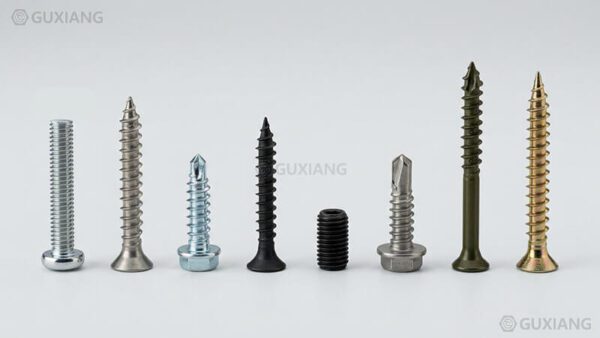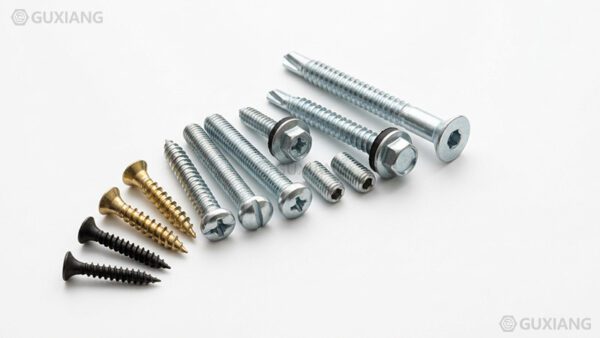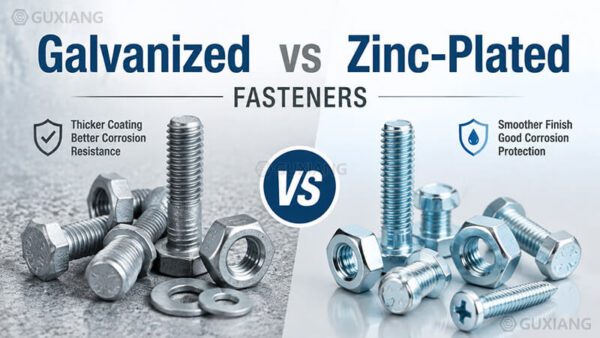






Fastener materials are the base metals and polymers used to make bolts, screws, nuts, and other threaded hardware, from carbon steel and stainless to aluminum, titanium, and engineered plastics. Three factors drive every selection: the mechanical strength the joint must carry, the corrosion resistance the environment demands, and the cost the project can bear. This guide compares common fastener materials, their strength grades, and the coating families that protect them, then maps each option to real service environments.
The Three Decisions Behind Every Fastener Spec
Every fastener specification breaks down into three independent decisions. Get any one wrong and the joint either costs too much or fails early in service. The first decision is the material, meaning the base metal or polymer. The material sets the corrosion behavior, the density, and much of the unit price. Carbon steel is cheap and strong but rusts without protection. Stainless resists corrosion by forming a passive film. Aluminum saves weight. Titanium and engineered plastics cover extreme or specialist duty.
The second decision is the strength grade. Within a given material, heat treatment and composition set how much load the part carries. A grade is a property class such as ISO 8.8 for carbon steel or A2-70 for stainless. The grade tells the buyer the minimum tensile and yield strength, not the alloy family. Two bolts in different materials can share the same grade yet behave very differently in the field, because the material still governs corrosion and temperature limits.
The third decision is the coating or surface treatment. The coating protects the base material from the environment and can change how the thread fits. Zinc plating, hot dip galvanizing, anodizing, and other finishes each trade thickness, cost, and salt spray life. Choose the coating after the material and grade are fixed, because the coating cannot add strength the part does not already have.
Treat the three as a sequence. Pick the material for the environment, set the grade for the load, then coat for extra life. Specifiers who reverse the order, choosing a material for its strength alone and ignoring corrosion, are the ones who see rusted failures a few months after installation. The rest of this guide fills in each decision with numbers you can use on a drawing.
A useful habit is to write the three decisions on the drawing as three separate lines: material, grade, and coating. When a failure occurs, you can then trace which line was wrong instead of guessing at the cause. Many plants keep a one page selector that lists the environment on the left and the material, grade, and coating triple on the right, which removes the most common ambiguity at the purchasing desk and keeps the conversation in one consistent language.
Fastener Material Families Compared
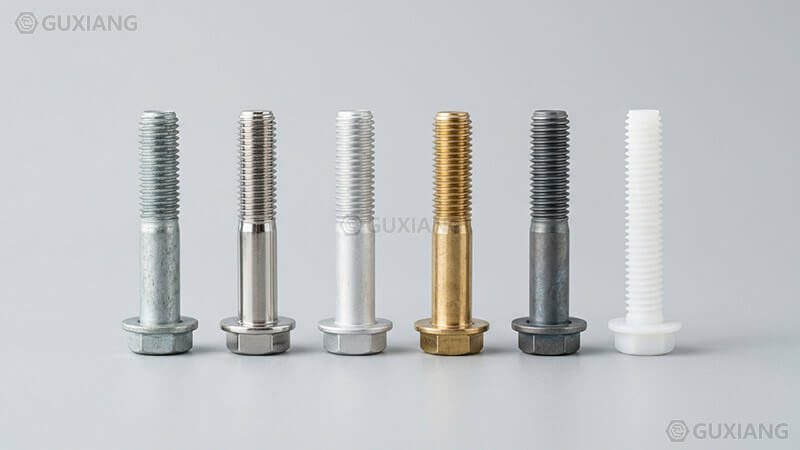
The table below sets the common fastener materials side by side on strength, corrosion resistance, temperature, and relative cost. The figures are indicative and approximate: treat them as a starting comparison, then confirm against the material’s own specification before release. Every material here has a dedicated guide that goes deeper on chemistry, grades, and sourcing, and those links appear with each family below.
Strength and corrosion rarely peak in the same alloy, which is the central tension of fastener selection. A very strong carbon steel rusts fastest, while the most corrosion resistant stainless is modest in strength until you pay for cold worked or special classes. The table keeps the comparison honest by showing both numbers next to the price, so you can see the trade before you specify rather than after a joint has failed in the field.
| Material | Typical tensile strength (MPa) | Korrosionsbeständigkeit | Maximale Betriebstemperatur (°C) | Relative cost index | Am besten geeignet für |
|---|---|---|---|---|---|
| Carbon steel (Grade 8.8) | 800+ (indicative) | Poor, needs coating | ~300 | 1.0 | Allgemeine Zwecke |
| Alloy steel (10.9/12.9) | 1000–1200 | Schlecht | ~300 | 1.3 | High strength structural |
| Stainless 304 / A2-70 | 700 | Good (PREN ~19) | 425 cont. / 870 int. | 3.0 | Indoor / wet |
| Stainless 316 / A4-70 | 700 | Excellent (PREN ~24–26) | 425 cont. / 870 int. | 4.0 | Coastal / chemical |
| Aluminum (6061-T6) | 310 | Good (oxide film) | ~150 | 2.5 | Light weight |
| Messing | 300–500 | Good, not chloride | ~200 | 3.0 | Decorative / low load |
| Titanium (Grade 5) | 1100 | Excellent (seawater) | ~400 | 10+ | Aerospace / marine |
| Nylon / PEEK | 50–90 | Hervorragend | 80–250 | high | Electrical / chemical |
Values indicative / approximate, confirm against the governing standard.
Carbon steel fasteners are the workhorse of the industry because they deliver the best strength for the money. A Grade 8.8 carbon bolt reaches about 800 MPa tensile, enough for most structural and machine joints, while plain low carbon grades serve non critical indoor hardware. The weakness is corrosion: bare carbon steel rusts as soon as it sees moisture, so nearly every outdoor or humid application depends on a coating to survive. That coating is a separate decision, covered later, and it adds cost and thickness the base material does not. For buyers watching budget, carbon steel is usually the right start, then you spend on the surface treatment the environment forces. Our Befestigungselemente aus Kohlenstoffstahl guide goes deeper on grades and sourcing.
Alloy steel takes the same base chemistry and pushes strength higher through added elements and tighter heat treatment, reaching property classes 10.9 and 12.9 with tensile near 1000–1200 MPa. That extra strength matters in automotive, tooling, and heavy equipment where joint size is constrained and every newton of clamp load counts. Corrosion resistance is no better than plain carbon steel, so alloy steel also needs a coating or a dry, controlled environment to avoid rust. Specifiers reach for it when a Grade 8.8 part is simply not strong enough and a larger diameter is not an option. The trade is cost and brittleness, because the highest classes are hard and must be plated with hydrogen relief. Our Legierungsstahl BefestigungselementeZ guide covers the details.
Stainless resists corrosion by forming a thin, self healing chromium rich passive film, so they need no coating in many indoor and wet environments. The two common families are 304, called A2, for general indoor and architectural use, and 316, called A4, which adds molybdenum for resistance to chlorides and chemical attack. Both sit near 700 MPa tensile in the popular A2-70 and A4-70 classes, with PREN values around 19 for 304 and 24 to 26 for 316, a useful proxy for pitting resistance that moves with molybdenum content. Stainless costs more than carbon steel and work hardens when machined, but it removes the coating step in mild service. Our Edelstahl Befestigungselement Klassen guide explains the alloys and classes in depth.
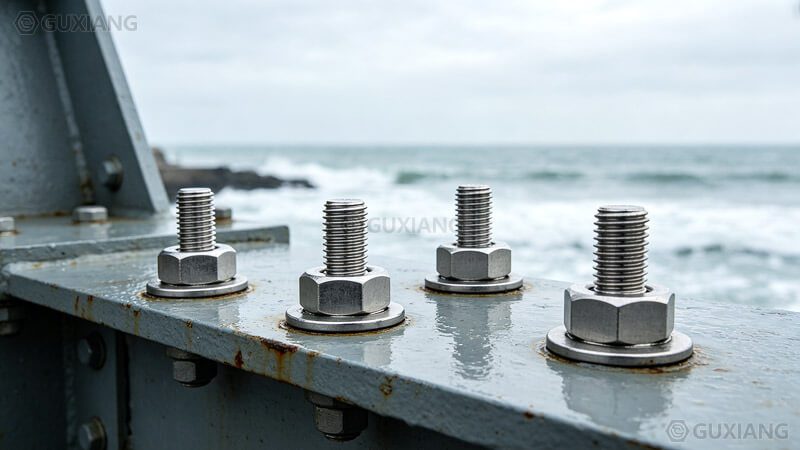
When weight is the priority, aluminum fasteners come in with roughly one third the density of steel, so they cut mass in transport, aerospace, and electronics enclosures. Corrosion resistance comes from the aluminum oxide film it forms, and anodizing thickens that film for better protection and a harder surface. Strength is modest, around 310 MPa for 6061-T6, so aluminum suits light load and panel work rather than primary structure. It is also the right call where a steel fastener would galvanically attack the surrounding metal. See our Aluminium-Befestigungselemente guide for selection detail.
Brass serves decorative, low load, and electrical roles. It resists corrosion in most atmospheres but not in chloride or marine settings, and it is softer than steel, so it will not carry structural load. Brass is easy to machine and looks good in visible hardware, that is why it appears in fixtures, instruments, and terminals.
Titanium delivers excellent strength to weight and outstanding seawater corrosion resistance, which earns them a place in aerospace and marine service where steel would rust or aluminum would be too weak. The cost is high, often an order of magnitude above steel, so titanium is reserved for joints where its properties pay for themselves, such as subsea or flight critical hardware.
Engineered plastics such as nylon and PEEK make parts that are non conductive, non magnetic, and chemically inert. They suit electrical, food, and corrosive chemical duty where metal would corrode or short a circuit, but their strength is a fraction of metal, roughly 50–90 MPa. Our Nylon und PEEK Befestigungselemente guide explains where they fit, and our metal density table gives the weights behind these choices.
Strength Grades in One Table
A fastener grade is a property class that states the minimum tensile and yield strength of the part, set by heat treatment and composition within a material family. The grade does not name the alloy, it names the performance. In the metric world, ISO 898-1 governs carbon and alloy steel with classes such as 4.6, 8.8, 10.9, and 12.9, where the digits encode the strength: the number before the dot times 100 gives the minimum tensile in MPa, and the dot figure times 10 gives the yield to tensile ratio. So an 8.8 bolt reaches 800 MPa tensile and yields at 80 percent of that. In the inch world, SAE J429 Grades 2, 5, and 8 are the familiar equivalents, with Grade 8 near 1138 MPa (165 ksi). Stainless follows ISO 3506 with A2-70 and A4-70, both about 700 MPa tensile. The table below compresses the common classes side by side.
| System | Class/Grade | Mindestzugfestigkeit Rm (MPa) | Min yield ReL (MPa) | Härte |
|---|---|---|---|---|
| ISO 4.6 | 4.6 | 400 | 240 | 116–220 HV |
| ISO 8.8 | 8.8 | 800 | 640 | 250–320 HV (22–32 HRC) |
| ISO 10.9 | 10.9 | 1000 | 900 | 320–380 HV (32–39 HRC) |
| ISO 12.9 | 12.9 | 1200 | 1080 | 380–435 HV (39–44 HRC) |
| SAE Grade 2 | 2 | 413 | varies | varies |
| SAE Grade 5 | 5 | 827 | 689 | 25–34 HRC |
| SAE Grade 8 | 8 | 1138 (165 ksi) | 1034 | 33–39 HRC |
| ISO A2-70 | A2-70 | 700 | 450 | 210 HV min |
| ISO A4-70 | A4-70 | 700 | 450 | 210 HV min |
Values indicative / approximate; consult the governing standard for proof load and exact limits.
Read the grade before you trust the bolt. Most carbon and alloy steel hex heads are marked with the class on the top, and stainless is marked A2 or A4 with the strength number, so the part identifies itself on the bench. A higher grade is not automatically better: it costs more, is harder, and on very high strength steel it demands hydrogen relief baking after plating. Match the grade to the actual clamp load and the safety factor in the design, not to a habit of always buying the strongest available. The values above are indicative and vary by product standard, so confirm against the source document when the joint is safety related. This page gives the quick comparison only and does not reproduce the full grade or marking tables, those live on the dedicated charts linked below.
When a drawing only shows 8.8 with no material named, assume carbon or alloy steel, because stainless uses the A2 or A4 letter code instead. Mixing the two systems is a frequent source of error on cross border jobs, where an inch drawing may call Grade 5 and a metric drawing calls 8.8 for what is nearly the same strength. Confirm the system before you substitute, because the thread form and head dimensions differ even when the strength lines up, and a wrong assumption there can fail the assembly.
For the complete grade listing with proof loads and head markings, see our Schraubenfestigkeitsklasse-Karte, and for identifying marks on hex heads, see our grade marking chart. The grade is only half the story, the material it sits in decides whether the bolt survives the environment, which is the next section.
Matching Material to Environment
Material selection really begins with the environment the fastener will live in, because corrosion, not load, causes most field failures. The table maps common environments to a sensible material and coating pair, with an indicative ASTM B117 neutral salt spray hour (ASTM B117) as a credibility anchor. Salt spray hours are a comparative lab measure, not a field life guarantee, but they show the order of magnitude between a zinc plated indoor screw and a 316 marine bolt.
| Umwelt | Empfohlen Werkstoff | Recommended coating | Indicative ASTM B117 salt spray (h) |
|---|---|---|---|
| Indoor dry | Kohlenstoffstahl | None or black oxide | Minimal |
| Outdoor, rain | Carbon steel + zinc plating | Chromate (see note) | 96–240 (with chromate) |
| Coastal / marine | 316 (A4) | None or anodized (Al) | 1000+ (316) |
| Chemical / industrial | 316 (A4) or PEEK | As applicable | Hoch |
| High temp | Alloy or stainless | Keine | Per temp limit |
Indicative ASTM B117 salt spray hours, approximate and environment dependent.
For sheltered outdoor use, carbon steel with a zinc coating performs well and stays economical, so it dominates fences, enclosures, and light structural steel. Near the coast, or in constant humidity and de icing salt, the chloride load defeats plain zinc, and the right move is 316 stainless steel (A4). The PREN value near 24 to 26 for 316, against about 19 for 304, is the reason: the higher pitting resistance equivalent number means 316 resists chloride attack far better. Aluminum with anodizing works where weight matters and the load is light. Always pair the material with the right coating and avoid coupling dissimilar metals that invite galvanic corrosion, covered later in this guide.
Why does stainless still rust if it is the corrosion answer? The passive film can break down under deposits, low oxygen, or chlorides, and once it pits, the damage is local and fast. The mechanism is explained in our why stainless steel still rusts guide, and the coastal choice between the two grades is detailed in our 304 vs 316 stainless steel comparison. This guide does not re open that debate, it points you to the dedicated pages so the data stays where buyers expect it.
Salt spray hours compress a complex field result into one comparable number, but do not read them as a promise of service life. A part that reaches 1000 hours in ASTM B117 neutral salt spray can still fail in a crevice where chlorides concentrate, because the lab test does not capture crevice or under deposit attack. Use the hours to rank coatings and materials, then validate the actual joint in the real environment or in a field trial before committing a large production run.
Coatings and Surface Treatments: The Full Menu
A coating is what lets a cheap carbon steel bolt survive outside, and the choice of coating often matters as much as the base material. The table below is the full umbrella view: every common fastener coating, its process, typical thickness, indicative salt spray life, and relative cost. Each coating trades thickness, cost, and salt spray life differently, so the rule is to match the coating to the environment rather than to habit or to whatever the last drawing used. The main bolt coating types range from thin zinc electroplating to thick hot dip galvanizing, and the right pick decides whether a fastener lasts or rusts within a season.
| Beschichtung | Prozess | Typical thickness (µm) | Salt spray (B117, h) | Relative cost | Anmerkung |
|---|---|---|---|---|---|
| Zinc electroplating (B633) | Electrolytic | 5–25 | 96–240 (chromated) | 1.0 | Thin, economical |
| Hot dip galvanizing (A153) | Molten dip | 45–85 (bolt) | 500–1500 | 1.5 | Thick, outdoor |
| Mechanical galvanizing | Cold peen | 25–150 | Gut | 1.5 | No H embrittlement |
| Zinc flake (Geomet) | Dip spin | 8–25 | 480–1000 | 2.0 | No H embrittlement |
| Black oxide | Chemical | <1 | Minimal | 0.8 | Cosmetic |
| Nickel / chrome | Electrolytic | 10–50 | Gut | 3.0 | Decorative |
| PTFE / Xylan | Dip | 10–25 | Excellent release | 3.0 | Low friction |
| Anodizing (Al) | Electrolytic | 5–25 | Gut | 1.5 | Hardens surface |
| Passivation (SS) | Chemical | nm | Enhances | 0.5 | Corrosion boost |
| Phosphate | Chemical | 1–10 | Base for paint | 1.0 | Primer |
Values indicative / approximate; salt spray depends on thickness and sealer.
Zinc electroplating is the thin, economical default for indoor and light outdoor hardware, and it keeps thread tolerances tight because the film is only 5 to 25 microns. A zinc bolt therefore suits high volume assemblies where cost and fit matter more than outdoor life. Hot dip galvanizing is the thick, long life option for structural steel exposed to weather, at the price of swollen threads. Zinc flake coatings such as Geomet give high salt spray resistance with no hydrogen embrittlement risk, which means they appear on automotive and high strength parts. Black oxide is cosmetic with minimal protection, nickel and chrome are decorative and corrosion resistant, and PTFE topcoats cut friction. Aluminum uses anodizing, and stainless uses passivation to rebuild its film.
The electroplating principle behind zinc and many other finishes is laid out on the Electroplating page at Wikipedia, and the base metal behavior is covered at the Zinc und Edelstahl references, with passivation detail at the Passivation chemistry page. For the deep dive on the most specified finish, see our Verzinkung guide. To choose between the two zinc families, our galvanized vs zinc plated comparison weighs thickness, cost, and thread fit, and our anodizing for fasteners guide covers the aluminum process end to end.
The umbrella table is deliberately compact. Each finish deserves its own article, and the links in this section take you to those deep dives rather than repeating them here. The point of this guide is to let you see every coating in one view, pick the two or three that fit your environment, then read the one that wins. That keeps the comparison honest and stops this page from drifting into a single coating’s detail at the expense of the others.
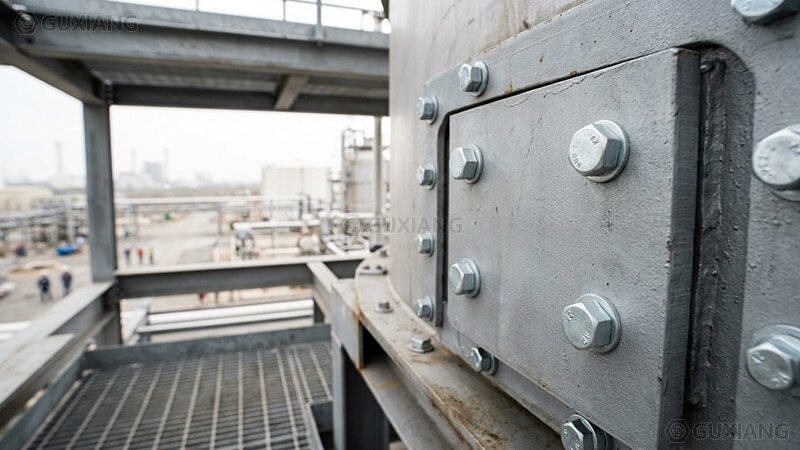
Coating Thickness vs Thread Fit
This is the section where shop floor experience saves a rejected order, because coating thickness quietly eats the thread tolerance. A metric fastener is cut to a tolerance class such as 6g for the bolt and 6H for the nut, and the gaps are small by design so the joint runs down clean and holds preload. A plating of 8 to 25 microns on a 6g or 6H thread can consume a large share of that tolerance, causing nuts to bind or go/no-go gauges to fail at inspection.
For tight fit classes, the fix is decided before plating: increase the tap size on the nut so the coated thread still clears, or cut the threads after coating so the plating sits on the finished form. Agree the plating thickness with the supplier up front, because the effect grows as diameter shrinks. A coarse thread in M20 shrugs off a few microns, but a fine M3 thread can seize once coated. Threads that look fine unmated can lock up after plating, so thread fit must be specified together with the coating, not added as an afterthought on the purchase order.
Hydrogen embrittlement is the other coating risk on strong steel. Acid pickling and plating can introduce hydrogen, and on hard, high strength parts that hydrogen can drive sudden brittle failure months later. ASTM B633 requires hydrogen relief baking on high strength steel, with the bake applied above roughly 1000 MPa tensile, and the standard notes a practical ceiling near 1700 MPa (247 ksi, 46 HRC) above which electroplated zinc is normally avoided. If your fastener sits in that range, switch to a coating with no acid step, such as mechanical galvanizing or zinc flake, rather than betting on the bake. The coating also changes the friction under the head, and that changes the torque to preload relationship, so our coefficient of friction guide and Drehmoment Zugfestigkeit chart show how plating moves the numbers, with our tensile strength converter for any unit switch. The electroplating route and its hydrogen risk are covered in our zinc plating guide.
One more practical note: when you specify the coated condition, write it on the purchase order as a single requirement, not as two separate notes that different shops might read differently. State that the bolt is to be plated and the nut tapped oversize to suit, with the assembled go gauge called out as part of the acceptance. That one line prevents the most common thread fit rejection, which is a nut that will not run down because the plating was added after the tap size was already fixed.
Galvanic Corrosion: The Assembly Killer
Galvanic corrosion happens when two dissimilar metals touch in the presence of an electrolyte, and the more active one corrodes faster. In fasteners, the classic failure is a carbon steel or aluminum part coupled to stainless steel, where the stainless stays bright while the softer metal eats away. The galvanic series ranks metals by their electrode potential in seawater, and the further apart two metals sit on that list, the harder the attack on the more active one. The table below gives the common fastener metals against the standard hydrogen electrode.
| Metall | Potential vs SHE (V) |
|---|---|
| Gold | +1.50 |
| Platinum | +1.20 |
| Titan | +0.10 |
| 316 SS (passive) | +0.10 |
| 304 SS (passive) | +0.00 |
| Carbon steel / iron | −0.50 |
| Aluminium | −0.80 |
| Zinc | −1.05 |
| Magnesium | −1.60 |
Seawater, indicative values, varies with condition.
The practical lesson is to keep partners close on the series. Aluminum against 316 stainless, at about 0.90 V apart, is a risky pairing in a wet joint, while titanium and 316 sit together and are safe. You avoid galvanic attack three ways: isolate the metals with a non conductive washer or a coating barrier, select partners near each other on the series, or make the smaller part the sacrificial one so it corrodes first and is cheap to replace. A zinc plated steel washer under a stainless bolt is a deliberate sacrifice, the zinc goes before the steel or the stainless. Coatings themselves act as the barrier, so plating choice matters as much as the base metal. The mechanism is detailed on the Galvanic corrosion page at Wikipedia. For the isolation hardware, size the right non conductive or coated washer from a washer dimensions chart, with the common standards listed in our dedicated guide.
Galvanic risk also rises with the area ratio, not just the metal names. A small active part next to a large noble part is the worst case, because the small part carries almost all of the corrosion current. That is why a thin aluminum bracket bolted to a big stainless panel fails fast, while a large aluminum structure with a few stainless fasteners survives for years. Judge the risk by area as well as by the metals on the series.
Cost vs Performance: Where to Spend, Where to Save
Cost decisions on fasteners are easy to get backwards, because the unit price is the number buyers see first and the total cost of ownership is what they actually pay. The table below sets a relative unit cost index for each material, with carbon steel at 1.0 as the baseline. Stainless runs several times higher, titanium an order of magnitude above, and engineered plastics high by weight but cheap by handling and corrosion saving.
| Material | Unit cost index | TCO note |
|---|---|---|
| Kohlenstoffstahl | 1.0 (add coating cost) | Coating extends life, plan for it |
| Stainless 304 | 3.0 | No coating needed in many uses |
| Stainless 316 | 4.0 | Best for coastal, fewer replacements |
| Aluminium | 2.5 | Saves handling weight |
| Titan | 10+ | Reserved for critical service |
| Nylon / PEEK | Hoch | Weight and corrosion savings offset price |
Unit cost index indicative / approximate.
Spend where the environment forces you to, and save where it does not. For dry indoor duty, carbon steel with a light zinc coating is the right economy call, and paying for stainless there is wasted money. For coastal or chemical service, the stainless premium buys years of life and avoids the labor of replacing a failed carbon bolt, so the total cost of ownership often favors the dearer material. Coatings extend the life of cheap steel, but a coating that fails in the wrong environment costs more than specifying the better base metal once. The weight side of cost matters too: our fastener weight calculator turns material and quantity into shipping and handling cost, which is where aluminum and plastics quietly pay back.
Price also shifts with volume and finish. A custom coated small lot costs far more per piece than a catalog zinc plated screw by the thousand, so the cost index above is a starting point, not a quote. Get the environment right first, then ask a manufacturer for the real number on your quantity, because the right material at the wrong volume can still blow the budget on a large order.
Standards You'll Be Asked to Name
Specifiers name standards so a callout means the same thing in a plating shop in one country and an assembly plant in another. The bodies you will cite most are ASTM International for North American steel and coating specs, ISO for the international property classes, SAE International for inch series grades, and the DIN, ISO, ANSI, and ASME family for the broader fastener system. The common documents include ASTM A307, A325, and A490 for structural steel, F3125 for the structural bolt assembly, A193 B7 and B8M for pressure and corrosion service, F593 and F594 for stainless screws and nuts, B633 for zinc electroplating, B117 for salt spray, and F1941 for fastener coatings. On the international side, ISO 3506 covers stainless, ISO 898-1 carbon and alloy steel, ISO 4042 plating on threaded parts, and ISO 10683 for non electrolytic coatings.
The standards themselves are maintained by the bodies above, and the safest links are to the organizations rather than to deep pages that move or expire. For ASTM, start at ASTM International; for ISO at ISO; for SAE at SAE International; and for corrosion and coating science at AMPP, the body formed from NACE. ASTM B633-23, the current zinc electroplating revision, is one verified deep link worth keeping at ASTM B633-23. For how the DIN, ISO, ANSI, and ASME systems relate and which to cite on a global project, see our Befestigungselement Standards erklärt guide. This guide does not restate every standard, it points to the source and to the dedicated pages.
On global projects, the standard you cite also signals the supply base you can use. ASTM based specs pull from North American mills, ISO from a wider international base, and citing both on one drawing widens your sourcing without changing the part. Our standards guide explains when you can substitute across systems and when the marking or proof load forces a true equivalent rather than a near match, which matters the moment a single source cannot meet the lead time.
Seven Specification Mistakes to Avoid
Most fastener failures trace back to a short list of repeating mistakes, and all of them are avoidable at the drawing stage.
Choosing by material alone and forgetting the grade. The alloy sets corrosion, the grade sets load, and you need both numbers on the spec.
Ignoring the environment. A strong carbon bolt in a coastal plant is a rusted bolt in a season, no matter the grade.
Letting the coating eat the thread. A thick plating on a tight class binds the nut, so spec the coated condition up front.
Coupling dissimilar metals without isolation. Aluminum against stainless in a wet joint is a galvanic failure waiting to happen.
Zinc plating very high strength steel. Above the embrittlement threshold, electroplated zinc needs a relief bake or a different coating entirely.
Buying on unit price only. The cheap bolt that fails costs more in downtime than the dearer material specified once.
Pairing a coating with an incompatible base. Some finishes do nothing for the substrate they sit on, so match the coating to the material, not to habit.
Each of these is covered earlier with its data, and the isolation fix for mistake four starts with the right washer, sized from our washer size chart. When the spec is set and you want a second opinion from a manufacturer, our ingenieurteam reviews material and grade choices against the environment.
None of these mistakes needs special software to avoid. They need the three decisions written explicitly on the drawing and a quick check against the environment before the order is placed, which is the habit this guide is meant to build in the specifier and the buyer alike.
Häufig gestellte Fragen
Was ist der Unterschied zwischen einem Befestigungsmaterial und einer Klasse?
A: Ein Befestigungsmaterial ist das Grundmetall oder Polymer, aus dem das Teil besteht, wie Kohlenstoffstahl, Edelstahl, Aluminium oder Nylon. Ein Grad beschreibt das Festigkeitsniveau, das durch Wärmebehandlung und Zusammensetzung in diesem Material erreicht wird, am häufigsten ausgedrückt als ISO-Eigenschaftsklasse wie 8.8 oder A2-70. Sie wählen das Material zuerst für Korrosionsbeständigkeit und Kosten, dann die Qualität für die Last, die es tragen muss. Die beiden Entscheidungen sind unabhängig: Ein Edelstahlbolzen und ein Kohlenstoffstahlbolzen können die gleiche Stärke der Klasse 8,8 haben, verhalten sich aber in einer Meeresumwelt sehr unterschiedlich.
Wie wähle ich das richtige Befestigungsmaterial für den Außen- oder Küstenbereich?
A: Für den geschützten Außenbereich leistet Kohlenstoffstahl mit einer Zinkbeschichtung eine gute Leistung und bleibt wirtschaftlich. In Küstennähe oder bei konstanter Luftfeuchtigkeit wenden Sie sich an 316 Edelstahl (A4), der eine Lochfraßwiderstandsäquivalentzahl (PREN) von 24 bis 26 aufweist und einem Chloridangriff weit besser als 304 standhält. Aluminium mit anodisierenden Arbeiten, wo Gewicht zählt. Verbinden Sie das Material immer mit der richtigen Beschichtung und vermeiden Sie die Kopplung verschiedener Metalle, die galvanische Korrosion einladen. Wenn Sie Zweifel an strukturellen Küstenarbeiten haben, geben Sie A4 an und bestätigen Sie dies mit dem Projektstandard.
What are the most common fastener coating types?
A: The common options are zinc electroplating (thin, economical, good for indoor and light outdoor), hot dip galvanizing (thick, long life outdoors), zinc flake coatings such as Geomet (high salt spray resistance, no hydrogen risk), black oxide (cosmetic, minimal protection), nickel or chrome (decorative and corrosion resistant), and PTFE based topcoats for low friction. Aluminum parts use anodizing, and stainless parts use passivation. Each coating trades thickness, cost, and salt spray life differently, so match the coating to the environment rather than to habit.
Does coating thickness affect thread fit?
A: Yes, and this is where specifiers get surprised. A plating of 8 to 25 microns on a 6g or 6H thread can consume a large share of the tolerance, causing nuts to bind or gauges to fail. For tight fit classes, increase the tap size before plating or cut threads after coating, and agree the plating thickness with the supplier up front. The effect grows with smaller diameters. Threads that look fine unmated can seize once coated, so thread fit must be specified together with the coating, not after it.
What is galvanic corrosion and how do I avoid it in fasteners?
A: Galvanic corrosion happens when two dissimilar metals touch in the presence of an electrolyte, and the more active one corrodes faster. In fasteners, a carbon steel or aluminum part coupled to stainless steel is the classic failure. Avoid it by isolating the metals with a non conductive washer or coating, selecting partners close on the galvanic series, or making the smaller part the sacrificial one (for example a zinc plated washer). Coatings themselves act as the barrier, which is why plating choice matters as much as base material.
Which fastener material is best for high temperature service?
A: Carbon and alloy steels serve well up to roughly 300 C if not over stressed, while stainless grades such as 304 and 316 remain useful to about 425 C continuous and 870 C intermittent, limited by sensitization and strength loss. Titanium grades extend further and resist scaling, though cost rises sharply. Above these ranges, specify specialty alloys per the project standard. Always check both the temperature and the load, because a material that survives the heat may lose too much strength to hold the joint.
How much more do stainless steel fasteners cost than carbon steel?
A: Stainless typically costs three to five times the equivalent carbon steel part by unit price, with 316 running above 304 and titanium an order of magnitude higher. That gap narrows on total cost of ownership when you add coating, replacement, and downtime: a carbon bolt that needs galvanizing and still fails in a coastal plant is not cheaper. Use the cost index table to compare, then decide by environment and service life rather than sticker price. For dry indoor duty, carbon steel with a light coating is usually the right economy call.
Literaturverzeichnis
ASTM International. The standards body behind A307, A325, A490, F3125, A193, F593, F594, B633, B117, and F1941 cited in this guide.
ASTM B633-23, galvanisch abgeschiedene Beschichtungen aus Zink auf Eisen und Stahl. The verified current revision defining zinc electroplating thickness classes and hydrogen relief baking for high strength steel.
ISO. The international body for ISO 898-1, ISO 3506, ISO 4042, and ISO 10683 referenced throughout.
SAE International. Source of SAE J429 inch series grade equivalents for carbon and alloy steel fasteners.
AMPP (NACE). Authority on corrosion science and coating practice referenced for galvanic and salt spray behavior.
Galvanische Korrosion, Wikipedia. Background on the galvanic series and dissimilar metal attack used in the corrosion section.
Passivierung (Chemie), Wikipedia. Reference for the passive film that makes stainless and the passivation process.
Electroplating, Wikipedia. Background on the electrolytic coating principle behind zinc and other platings.
Zinc, Wikipedia. Reference for zinc as the metal behind galvanizing and its protective role over steel.
Stainless steel, Wikipedia. Reference for the 304 and 316 families mentioned in the material comparison.