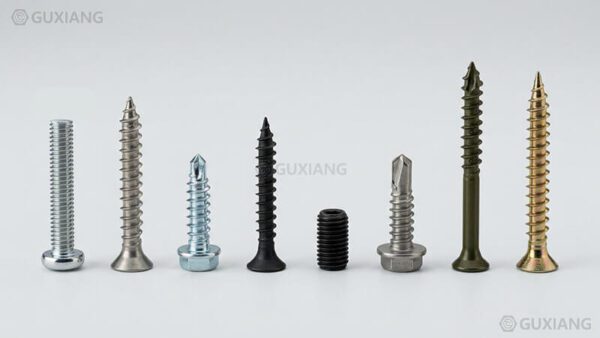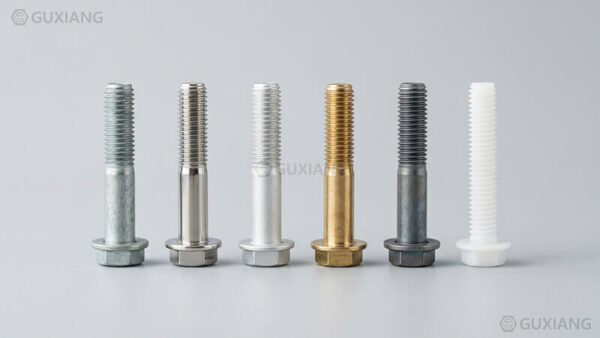





Ein Aluminiumbefestiger ist ein Bolzen, eine Schraube, eine Mutter, ein Niet oder eine Unterlegscheibe aus einem Aluminiumlegierung - am häufigsten 2024, 5052, 6061 oder 7075 -, der nicht ausgewählt wurde, weil Aluminium in der Stärke zu Stahl passt, sondern weil er eine Kombination liefert, die kein Stahl bieten kann: etwa ein Drittel der Dichte, ein selbstheilender korrosionsbeständiger Oxidfilm, hohe elektrische und thermische Leitfähigkeit und vollständiger Nichtmagnetismus. Der Kompromiss ist strukturell - die stärksten Aluminiumbefestigungen liegen bei etwa 83 ksi Zugfestigkeit, unter den 125 ksi eines Standard-Legierungsstahl-Schraubens - weshalb die Entscheidung, Aluminium zu verwenden, immer eine Entscheidung darüber ist, was in einer bestimmten Anwendung wichtiger ist: Gewicht, Korrosion und Leitfähigkeit oder Rohlastkapazität.
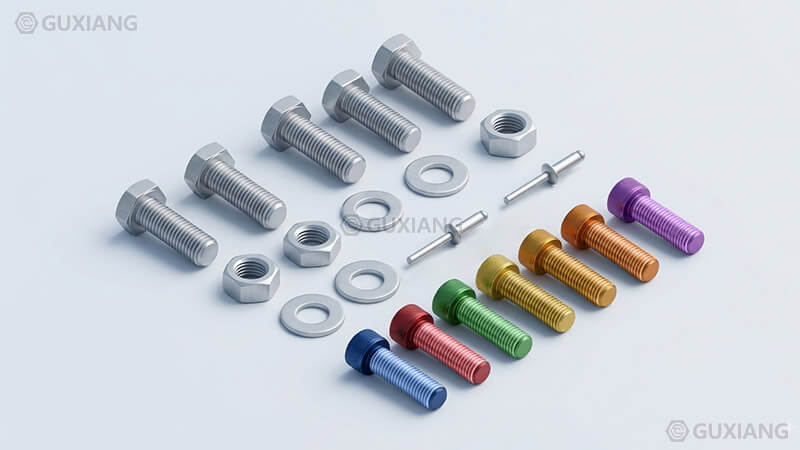
Dieser Leitfaden bildet die komplette Aluminium-Befestigungselement-Landschaft für zwei Zuschauer ab. Für Ingenieure präsentiert es das Legierungsbezeichnungssystem, quantitative mechanische Eigenschaftstabellen, galvanische Korrosionsgrundlagen mit anodischen / kathodischen Potentialdaten und Oberflächenbehandlung-Spezifikationen. Für Einkaufs- und Beschaffungsteams wird das gleiche Material in einfachen Worten mit Side-by-Side-Vergleichstabellen, Kostenkontext und einem vierstufigen Auswahlrahmen erläutert, der eine Anwendung-Anforderung in eine bestimmte Note und ein bestimmtes Finish verwandelt.
Was sind Aluminium Befestigungselemente
Aluminium Befestigungselemente sind mechanische Verbindungskomponenten - Bolzen, Schrauben, Bolzen, Muttern, Unterlegierungen und Nieten - aus Aluminiumschmiedelegierungen. Sie unterscheiden sich von Stahl Befestigungselemente sowohl in Material und Fertigung Route: Die meisten Aluminium Befestigungselemente werden kaltgeformt oder aus Stabmaterial bearbeitet, und die Festigkeit des fertigen Bauteils kommt von der Legierungszusammensetzung und seiner Temperaturbezeichnung und nicht von einem Quench-und-Temper-Wärmebehandlungszyklus, der auf den Befestigungselement selbst angewendet wird.
Die definierenden Eigenschaften, die Aluminium Befestigungselement Auswahl fahren sind vierfach:
| Eigenschaft | Aluminium-Wert | Stahl (Carbon/Legierung) | Edelstahl | Warum das wichtig ist |
|---|---|---|---|---|
| Dichte | 2,70 g/cm³ | 7,85 g/cm³ | 7,9–8,0 g/cm³ | ~66% Gewichtsreduktion pro Befestigungselement |
| Zugfestigkeit (höchste Güteklasse) | 83 ksi (7075-T6) | 150 ksi (Festigkeitsklasse 8) | 125 ksi (B8 Klasse 2) | Aluminium ist strukturell schwächer |
| Korrosionsmechanismus | Selbstheilende Oxidschicht | Rosts ohne Beschichtung | Chromoxid-Passivierung | Aluminium widersteht vielen Umgebungen Stahl kann nicht |
| Elektrische Leitfähigkeit | 30–40% IACS | ~10% IACS | ~2,41 TP7T IACS | Aluminium ist ein Leiter, kein Isolator |
| Magnetismus | Nichtmagnetisch | Ferromagnetisch | Meist nichtmagnetisch (geglüht) | Kritisch in Elektronik und medizinische Ausrüstung |
Zwei Namenskonventionen erscheinen in der gesamten Branche: die amerikanische Schreibweise Aluminium und die britische/europäische Schreibweise aluminium. Beide beziehen sich auf das gleiche Werkstoff und werden austauschbar in Spezifikationen, Katalogen und Suchanfragen verwendet - eine Kaufsuche nach “Aluminium Befestigungselemente” gibt die gleiche Produktklasse wie “Aluminium Befestigungselemente” zurück”
Aluminium Befestigungselemente sind selten austauschbar mit Stahl Befestigungselemente auf einer one-for-one-Basis. Ein Aluminiumbolzen hat geringere Zug- und Scherfestigkeit, unterschiedliche Gewindeeingriffsanforderungen, unterschiedliches Drehmomentverhalten und unterschiedliche Korrosionswechselwirkungen mit den Materialien, die er verbindet. Das Verständnis dieser Grenzen - anstatt Aluminium als Drop-in-Ersatz für Stahl zu behandeln - ist die Grundlage für das richtige Spezifikation.
Legierungsbezeichnungssystem und Zusammensetzung
Aluminium Befestigungselemente bestehen nicht aus “reinem Aluminium. Sie bestehen aus Aluminium-Schmiedelegierungen, deren vierstelliges Bezeichnungssystem (gegründet von der Aluminium Association und übernommen in die Standards ASTM und ISO) die wichtigsten Legierungselemente codiert.
Die Four-Digit-Serie
| Reihe | Hauptlegierungselement | Merkmale | Gängige Befestigungselement-Legierungen |
|---|---|---|---|
| 1xxx | Keine (99%+ reine Aluminium) | Ausgezeichnete Korrosionsbeständigkeit, geringe Festigkeit, hohe Leitfähigkeit | 1100 |
| 2xxx | Kupfer (Cu) | Hohe Festigkeit, wärmebehandelbar, schlechte Korrosionsbeständigkeit | 2024 |
| 3xxx | Mangan (Mn) | Mäßige Festigkeit, gute Verarbeitbarkeit, gute Korrosionsbeständigkeit | 3003 |
| 5xxx | Magnesium (Mg) | Beste Marine Korrosionsbeständigkeit, mäßige Festigkeit, nicht wärmebehandelbar | 5052, 5083, 5086 |
| 6xxx | Magnesium + Silicium | Ausgewogene Festigkeit/Korrosion, wärmebehandelbar, ausgezeichnete Extrudierbarkeit | 6061, 6063 |
| 7xxx | Zink (Zn) | Höchste Festigkeit, wärmebehandelbar, schlechte Korrosionsbeständigkeit, SCC-empfindlich | 7075 |
Die erste Ziffer kennzeichnet die Serie; die zweite Ziffer kennzeichnet Änderungen an der ursprünglichen Legierung; die letzten beiden Ziffern sind willkürliche Identifikatoren innerhalb der Serie. Zum Beispiel bedeutet 2024 eine Legierung der 2xxx-Serie (Kupfer), die eine Entwicklung der vierten Generation innerhalb dieser Serie ist.
Temperaturbezeichnungen
Die mechanischen Eigenschaften eines Aluminiumlegierung hängen sowohl von seiner Temperatur als auch von seiner Zusammensetzung ab. Die Temperatur wird nach einem Bindestrich angehängt - zum Beispiel 6061-T6 oder 5052-H32.
| Temperament | Bedeutung | Ergebnischarakter |
|---|---|---|
| O | Geglüht | Weichste, maximale Duktilität, niedrigste Festigkeit |
| T4 | Lösung wärmebehandelt + natürlich gealtert | Mäßige Festigkeit, gute Umformbarkeit |
| T6 | Lösung wärmebehandelt + künstlich gealtert | Spitzenstärke, am häufigsten Befestigungselement Temperament |
| T73 | Lösung wärmebehandelt + überaltert | Opfert etwas Kraft für Spannungskorrosionsbeständigkeit |
| H32 | Dehngehärtet + stabilisiert (1⁄4 hart) | Verarbeitbare Festigkeit, stabile Eigenschaften |
Die Unterscheidung zwischen wärmebehandelbaren und nicht wärmebehandelbaren Legierungen ist für Befestigungselemente von Bedeutung. Die 2xxx-, 6xxx- und 7xxx-Serie gewinnt an Stärke durch Lösungswärmebehandlung und Alterung (T-Temperaturen). Die 5xxx-Serie gewinnt an Festigkeit nur durch kaltes Arbeiten (Dehnhärten), so dass ihre Festigkeitsbezeichnungen H-Temperaturen verwenden - 5052-H32, 5083-H32 und 5086-H32 sind alle dehnungsgehärtete und stabilisierte Bedingungen. Diese Unterscheidung beeinflusst die Verfügbarkeit: 5xxx-Serie Befestigungselemente kann nicht durch Wärmebehandlung nachgetempert werden, so dass ihre Festigkeit an der Mühle festgelegt wird.
Mechanische Eigenschaften
Die mechanischen Eigenschaften von Aluminium Befestigungselement werden in Nordamerika durch ASTM F468 (Nichteisenbolzen, Schrauben und Bolzen) und international durch ISO 8839 und das entsprechende GB / T 3098.10 geregelt. In der nachstehenden Tabelle sind repräsentative Zug- und Streckgrenze-Mindestwerte für die in Befestigungselemente am häufigsten angegebenen Legierungen aufgeführt.
| Legierungstemperator | Zugfestigkeit | Streckgrenze | Scherfestigkeit | Typisch Härte |
|---|---|---|---|---|
| 2024-T4 | 68 ksi (470 MPa) | 47 ksi (325 MPa) | 41 ksi (283 MPa) | 120 HB |
| 5052-H32 | 33 ksi (228 MPa) | 28 ksi (193 MPa) | 20 ksi (138 MPa) | 60 HB |
| 5083-H32 | 46 ksi (317 MPa) | 33 ksi (228 MPa) | 26 ksi (179 MPa) | 85 HB |
| 5086-H32 | 42 ksi (290 MPa) | 30 ksi (207 MPa) | 24 ksi (165 MPa) | — |
| 6061-T6 | 45 ksi (310 MPa) | 40 ksi (276 MPa) | 30 ksi (207 MPa) | 95 HB |
| 7075-T6 | 83 ksi (572 MPa) | 73 ksi (503 MPa) | 48 ksi (331 MPa) | 150 HB |
| 2117-T4 (rivet) | 43 ksi (297 MPa) | 24 ksi (165 MPa) | 26 ksi (179 MPa) | — |
The Strength Ceiling
The strongest aluminum fastener grade (7075-T6) delivers approximately 83 ksi tensile strength. The comparison against steel is instructive and central to material selection:
| Material Grade | Zugfestigkeit | Relative to 7075-T6 |
|---|---|---|
| 6061-T6 aluminum | 45 ksi | 0.54× |
| 7075-T6 aluminum | 83 ksi | 1.0× (aluminum ceiling) |
| A193 B7 alloy steel | 125 ksi | 1.5× |
| SAE Grade 8 steel | 150 ksi | 1.8× |
| A286 stainless (strain-hardened) | 130 ksi | 1.6× |
The structural implication is direct: where a steel bolt of a given diameter is required, an aluminum bolt of the same diameter carries less than two-thirds the load. Replacing a steel fastener with aluminum on a strength-equivalent basis requires either a larger diameter, more fasteners, or a redesign of the joint. This is the single most important engineering consideration covered in the Leitfaden für Befestigungselemente aus legiertem Stahl for high-load applications — and the reason aluminum fasteners are specified primarily for weight-sensitive, corrosion-sensitive, or electrical applications rather than maximum-load structural joints.
Verhältnis von Festigkeit zu Gewicht
The strength ceiling narrative reverses when weight enters the calculation. Aluminum’s density is 34% of steel’s, so for a fixed fastener weight, aluminum carries approximately 1.8× the load of an equal-weight steel fastener at the 7075-T6 grade, and roughly equal load at the 6061-T6 grade. In weight-critical applications — aerospace structures, automotive lightweighting, and portable equipment — this specific-strength advantage is the primary justification for aluminum.
Temperaturverhalten
Aluminum loses strength more rapidly than steel at elevated temperature. At 200°C (392°F), 6061-T6 retains approximately 70% of its room-temperature strength, and above 300°C (572°F) the heat-treatable alloys begin to overage, permanently reducing their properties. Aluminum fasteners are therefore unsuitable for service above approximately 200–250°C for heat-treatable grades, and the working range for most aluminum fasteners is -40°C to 150°C. For high-temperature bolting, the Leitfaden für Befestigungselemente aus Kohlenstoffstahl covers the appropriate material classes.
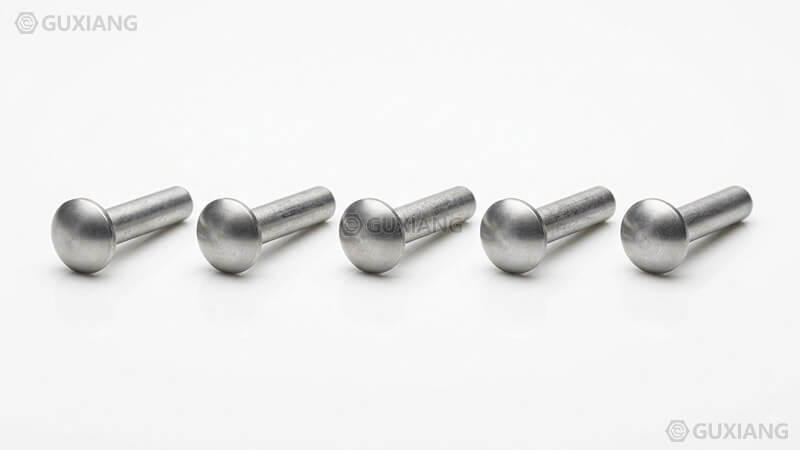
Corrosion Resistance and Galvanic Corrosion
Aluminum’s corrosion story has two opposite faces. Against atmospheric and many chemical environments, aluminum fasteners outperform steel dramatically because of the self-healing oxide film. Against dissimilar metals in a wet environment, aluminum fasteners are frequently the sacrificial victim of galvanic corrosion.
The Self-Healing Oxide Film
When aluminum is exposed to air, it immediately forms a thin, adherent layer of aluminum oxide (Al₂O₃), approximately 4–10 nanometers thick. Unlike the iron oxide (rust) that forms on steel — which is porous, non-adherent, and accelerates corrosion — aluminum oxide is dense, tightly bonded to the substrate, and self-repairing: if the film is scratched, it re-forms within milliseconds in the presence of oxygen.
This oxide film is stable in the pH range of approximately 4 to 9. Outside this range — in strongly acidic or strongly alkaline environments — the film dissolves and aluminum corrodes rapidly. This pH sensitivity is why aluminum fasteners perform well in neutral atmospheric and freshwater environments but poorly in concrete (alkaline) or in contact with strong acids.
Galvanic Corrosion: The Critical Engineering Constraint
The single most important corrosion consideration for aluminum fasteners is galvanic (bimetallic) corrosion, which occurs when two dissimilar metals are in electrical contact in the presence of an electrolyte (water, humidity, salt spray). In this couple, the more active (anodic) metal corrodes preferentially, while the more noble (cathodic) metal is protected.
In the galvanic series for seawater, aluminum and its alloys occupy the active (anodic) end, with corrosion potentials of approximately -0.76 to -0.90 V versus the saturated calomel electrode (SCE). Steel and stainless steel sit substantially more noble:
| Metall | Typical Corrosion Potential in Seawater (V vs SCE) |
|---|---|
| Aluminiumlegierungen | -0,76 bis -0,90 |
| Kohlenstoffstahl | -0,60 bis -0,70 |
| Stainless steel (304/316, passive) | -0,05 bis -0,45 |
| Copper alloys | -0,25 bis -0,35 |
| Titan | -0,05 bis -0,15 |
A potential difference greater than approximately 0.25 V between coupled metals indicates significant galvanic corrosion risk. Aluminum coupled to stainless steel shows a difference of 0.4 to 0.6 V — a high-risk combination.
The direct answer to the most-searched aluminum fastener question — “can I use stainless steel fasteners in aluminum?” — is: yes, mechanically, but the stainless steel fastener will accelerate corrosion of the aluminum base material around the joint. The stainless fastener itself remains intact because it is the cathode; the aluminum panel, bracket, or housing it passes through corrodes around the hole. The practical question is not whether the fastener survives, but whether the aluminum substrate survives.
This interaction is explored quantitatively in the Leitfaden: Edelstahl- vs. verzinkte Befestigungselemente, which compares the corrosion behavior of different fastener materials against aluminum substrates.
Mitigation Strategies
Four standard practices reduce or eliminate galvanic corrosion between aluminum fasteners (or aluminum substrates) and dissimilar metals:
Insulation — Insert a non-conductive barrier (nylon washer, PTFE bushing, or coated gasket) between the two metals to break the electrical circuit.
Cathodic area control — Avoid small-anode/large-cathode geometry. A small aluminum fastener in a large stainless steel structure is the worst case; a large aluminum component with small stainless fasteners is more tolerable.
Coatings — Apply a corrosion-resistant coating to the more noble fastener (zinc, zinc-nickel, or organic coatings) so that the coating, not the aluminum, becomes the sacrificial anode.
Compatible material selection — Use aluminum fasteners with aluminum substrates (no galvanic couple), or select fasteners with corrosion potentials close to aluminum, such as galvanized steel rather than stainless steel.
Atmospheric Corrosion Performance
For non-galvanic exposure, the general corrosion resistance of aluminum fasteners follows the alloy series. The 5xxx-series (5052, 5083, 5086) and 6xxx-series (6061) alloys offer the best general atmospheric resistance and are the standard choices for marine and outdoor applications. The 2xxx-series (2024) and 7xxx-series (7075) are copper- and zinc-bearing respectively, have notably poorer corrosion resistance, and are almost always anodized or coated in service. The underlying failure modes — pitting, intergranular corrosion, and stress-corrosion cracking — are detailed in the Leitfaden: Warum rostet Edelstahl?, which explains the parallel corrosion mechanisms in steel-based fastener materials.
Oberflächenbeschaffenheiten
Surface treatment on aluminum fasteners serves three purposes: corrosion protection, wear resistance, and (for certain processes) electrical conductivity. The three dominant processes are anodizing, chromate conversion coating, and organic coatings.
Anodizing
Anodizing is an electrolytic process that thickens the natural oxide film on aluminum into a controlled, porous ceramic layer of aluminum oxide. The process runs the fastener as the anode in an acid electrolyte, converting the surface to Al₂O₃ to a controlled thickness.
| Anodizing Type | Electrolyte | Coating Thickness | Merkmale | Typische Anwendung |
|---|---|---|---|---|
| Type I (Chromic) | Chromic acid | 0.5–7.6 μm | Thin, fatigue-friendly, good corrosion, limited dyeing | Aerospace, tight-tolerance threads |
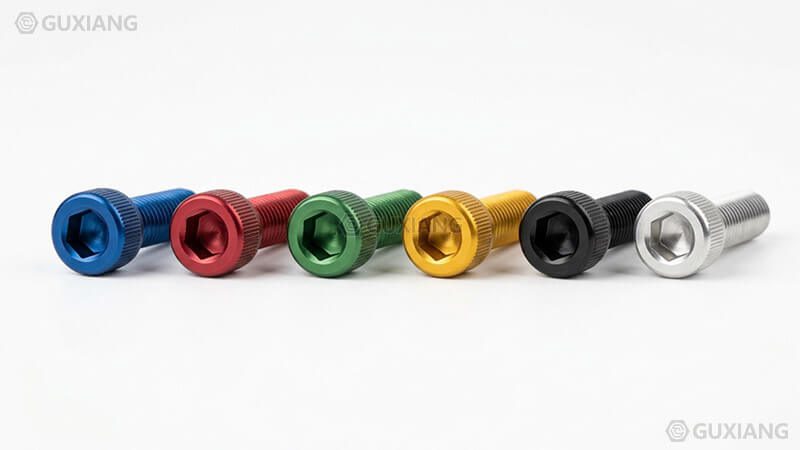
| Type II (Sulfuric) | Sulfuric acid | 1.8–25 μm | General purpose, dyeable, most common | General industrial, colored fasteners |
| Type III (Hardcoat) | Sulfuric acid, low temp | 25–150 μm | Very hard, wear-resistant, thick | High-wear sliding or clamping surfaces |
The anodized layer is extremely hard (comparable to sapphire on the Mohs scale at the surface) but also electrically insulating — anodized aluminum fasteners are non-conductive, which matters when electrical continuity across a joint is required. Aerospace specifications for anodizing are governed by AMS 2470; the sulfuric acid process for fasteners is specified in MIL-A-8625.
Chromate Conversion Coating
Chromate conversion coatings (commonly sold under trade names such as Alodine and Iridite) form a very thin (0.05–0.5 μm) chemical film that maintains electrical conductivity while improving corrosion resistance and paint adhesion. Because the film is thin and conductive, chromate conversion is the standard finish for aluminum fasteners that must remain electrically conductive — a key advantage over anodizing in electronics applications.
Organic and Other Coatings
For fasteners requiring lubrication, specific friction characteristics, or additional corrosion protection, organic coatings such as PTFE or Xylan are applied over the aluminum substrate. These are functional coatings chosen for their frictional properties rather than corrosion resistance alone. The broader logic of matching a coating to an application — and when a coating is or is not necessary — is covered in the Leitfaden: Verzinkte vs. verzinkte Befestigungselemente.
| Fertig | Korrosionsschutz | Elektrische Leitfähigkeit | Thread Fit Impact | Relative Kosten |
|---|---|---|---|---|
| Bare (natural oxide) | Niedrig | Conductive | Keine | 1× |
| Chromat-Umwandlung | Mäßig | Conductive | Minimal (thin film) | 1.1× |
| Anodized (Type II) | Hoch | Non-conductive | Significant (account in tolerance) | 1.2–1.5× |
| Anodized (Type III) | High + wear | Non-conductive | Significant (account in tolerance) | 1.5–2× |
| Organic (PTFE/Xylan) | Mäßig | Non-conductive | Minimal | 1.3–1.8× |
A critical specification detail: anodizing adds measurable thickness to the thread surface, which reduces the effective thread clearance. Anodized aluminum fasteners are typically manufactured with an allowance for this coating growth, or mated with an oversized tap — failing to account for coating thickness is a common cause of seized or galled threads in anodized aluminum assemblies.
Kostenaspekte
Aluminum fastener economics are best understood on two levels: raw material cost per unit weight, and total lifecycle cost including weight-driven savings.
Raw Material Cost Comparison
On a per-kilogram basis, aluminum costs more than carbon steel but less than stainless steel. Representative relative material costs (indexed to carbon steel):
| Material | Relative Cost per kg | Relative Cost per Part (Equal Volume) |
|---|---|---|
| Kohlenstoffstahl | 1.0 | 1.0 |
| Alloy steel (4140) | 1.2–1.5 | 1.2–1.5 |
| Aluminum (6061) | 2.5–3.5 | 0.9–1.2 (density-adjusted) |
| Stainless steel (304/316) | 4–6 | 4–6 |
The density adjustment is decisive. Because aluminum weighs one-third as much as steel, an aluminum fastener of identical dimensions contains one-third the mass — so its material cost per part is comparable to or even below that of carbon steel despite a higher per-kilogram price. The cost premium for aluminum fasteners comes from processing (cold-forming and machining aluminum is faster than machining steel) being partly offset, with the net result that aluminum fasteners typically cost 1.2–1.5× the equivalent carbon steel fastener — close to alloy steel, and well below stainless steel.
Lifecycle Cost
In weight-sensitive systems, aluminum fasteners generate savings that dwarf the modest per-part price difference:
Luft- und Raumfahrt: each kilogram removed from an airframe saves an estimated $200–$500 in fuel over the aircraft’s service life. A switch from steel to aluminum fasteners in non-structural assemblies contributes directly to this reduction.
Automobilindustrie: mass reduction is a regulatory and range driver in electric vehicles; aluminum fasteners in body, battery enclosure, and interior assemblies reduce vehicle mass and improve efficiency.
Transport and handling: lighter assemblies reduce shipping cost and operator fatigue in field-assembled equipment.
For procurement teams, the selection logic is simple: if the application is weight- or corrosion-driven, aluminum is the cost-effective choice; if it is load-driven and there is no weight penalty to bear, carbon or alloy steel is cheaper. For high-volume sourcing decisions, the aluminum fastener manufacturers and supplier evaluation anchor covers qualification, lead time, and certification requirements.
Erläuterung der wichtigsten Notenstufen
This section details the alloy grades that account for the vast majority of aluminum fastener production, grouped by their defining capability.
2024-T4 — The Aerospace Structural Workhorse
2024 is a copper-bearing (2xxx-series) heat-treatable alloy with the best strength-to-weight ratio among the common fastener grades below 7xxx. At 68 ksi tensile strength, it carries structural loads in aircraft skins, ribs, and stringers, most commonly in the form of solid rivets.
Stärken: high strength, good fatigue resistance, established aerospace pedigree.
Einschränkungen: poor corrosion resistance — 2024 fasteners must be anodized or coated, and uncoated 2024 in a marine environment pits and intergranular-corrodes rapidly.
Typische Anwendung: aircraft structural rivets, high-strength non-corrosive applications.
5052-H32 — The General-Purpose Marine Choice
5052 is a magnesium-bearing (5xxx-series) non-heat-treatable alloy. It offers the best combination of moderate strength, excellent corrosion resistance, and good cold-forming characteristics. Because it cannot be heat-treated, its strength is developed through strain hardening (H32 temper).
Stärken: excellent resistance to marine and industrial atmospheres, good formability, weldable.
Einschränkungen: lower strength (33 ksi) — unsuitable for load-bearing structural joints.
Typische Anwendung: marine hardware, outdoor enclosures, sheet-metal assemblies, general-purpose aluminum fasteners.
5083 and 5086 — The Heavy-Duty Marine Grades
5083 and 5086 are higher-magnesium 5xxx-series alloys specified where maximum seawater corrosion resistance is required alongside greater strength than 5052. 5083-H32 reaches 46 ksi tensile — the strongest of the marine-focused aluminum fastener grades — while 5086-H32 reaches 42 ksi. Both retain the outstanding seawater corrosion resistance of the 5xxx series.
Stärken: the best seawater corrosion resistance of any commonly available aluminum fastener grade, combined with useful strength.
Einschränkungen: non-heat-treatable (strength fixed at mill), higher cost than 5052, limited availability in small fastener sizes.
Typische Anwendung: shipbuilding, offshore platforms, dock and harbor equipment, marine-grade bolting.
6061-T6 — The Balanced Universal Grade
6061 is a magnesium-silicon (6xxx-series) heat-treatable alloy and the most widely available aluminum fastener grade in the world. It offers a balanced profile: 45 ksi tensile strength, good corrosion resistance, excellent machinability, and low cost relative to 2xxx and 7xxx alloys.
Stärken: best overall balance of strength, corrosion resistance, availability, and price; heat-treatable for property control.
Einschränkungen: not the strongest, not the most corrosion-resistant — a compromise in both directions.
Typische Anwendung: general industrial fastening, electrical enclosures, consumer products, structural assemblies not requiring 7xxx strength.
7075-T6 — The Maximum-Strength Grade
7075 is a zinc-bearing (7xxx-series) heat-treatable alloy and the strongest aluminum fastener grade in common production at 83 ksi tensile strength — approaching the strength of mild steel.
Stärken: maximum strength of any aluminum fastener grade.
Einschränkungen: poor corrosion resistance and a well-documented susceptibility to stress-corrosion cracking (SCC), particularly in the short-transverse grain direction and in the T6 temper. For SCC-sensitive applications, the overaged 7075-T73 temper is specified, trading roughly 12% tensile strength for dramatically improved SCC resistance.
Typische Anwendung: high-strength weight-critical applications — aerospace fittings, competition vehicles, precision equipment — where corrosion is managed through anodizing or where the service environment is benign.
2117-T4 — The Aircraft Rivet Standard
2117 is a specialized aluminum-copper alloy developed specifically for solid rivets. Its defining property is that it can be driven in the solution-treated (T4) condition and then age-harden in place at room temperature — eliminating the need to solution-treat and re-heat-treat the rivet before installation. At 43 ksi tensile and 26 ksi shear, 2117-T4 rivets are the backbone of aluminum aircraft assembly.
| Note | Tensile (ksi) | Korrosionsbeständigkeit | Wärmebehandelbar | Am besten geeignet für |
|---|---|---|---|---|
| 2024-T4 | 68 | Schlecht | Ja | Aerospace structural rivets |
| 5052-H32 | 33 | Hervorragend | Nein | Marine, general purpose |
| 5083-H32 | 46 | Hervorragend | Nein | Heavy marine, offshore |
| 5086-H32 | 42 | Hervorragend | Nein | Shipbuilding, harbor |
| 6061-T6 | 45 | Gut | Ja | Universal industrial |
| 7075-T6 | 83 | Schlecht | Ja | Maximum strength |
| 2117-T4 | 43 | Mäßig | Yes (self-aging) | Aircraft rivets |
Anwendungsszenarien
Each application scenario below pairs the dominant requirement with the recommended grade and finish.
Aerospace and Aviation
The dominant requirement is weight reduction with structural integrity. Aircraft use 2117-T4 and 2024-T4 solid rivets for skin and structure, and 7075-T6 or 2024-T4 bolts in higher-load fittings. All aerospace aluminum fasteners are anodized or conversion-coated per AMS specifications, and galvanic isolation from titanium and stainless fasteners is managed through wet-installation sealants and coatings.
| Requirement | Note | Fertig |
|---|---|---|
| Skin and stringer rivets | 2117-T4, 2024-T4 | Alodine / anodized |
| High-load fittings | 7075-T6, 2024-T4 | Anodized Type I/II |
| Corrosion-critical areas | 5052, 6061 | Chromat-Umwandlung |
Automotive Lightweighting
The dominant requirement is mass reduction without sacrificing joint reliability. 6xxx-series fasteners (6061-T6) dominate interior, body, and battery-enclosure assemblies; 7xxx-series (7075-T6) appears in high-strength chassis and suspension applications where weight savings justify the cost. Aluminum fasteners are increasingly paired with aluminum body panels to eliminate galvanic couples entirely.
Elektronik und elektrische Ausrüstung
The dominant requirement is electrical conductivity, thermal conductivity, and non-magnetism. 6061-T6 fasteners — often with chromate conversion coating to preserve conductivity — secure bus bars, heat sinks, and RF shields. Non-magnetic behavior is mandatory near magnetic sensors, MRI equipment, and precision instruments, where steel fasteners would interfere with operation. For electrical enclosures that must resist moisture without conductive paths, the Leitfaden für Kunststoffbefestigungselemente bezieht sich auf die nichtmetallische Alternative.
Marine and Offshore
The dominant requirement is seawater corrosion resistance. 5083-H32 and 5086-H32 are the top grades for immersed or splash-zone service; 5052-H32 serves above-deck and general marine hardware. Aluminum-to-aluminum fastening is standard practice, and galvanic isolation is mandatory wherever stainless steel fasteners or hardware contact aluminum structure.
General Industrial
The dominant requirement is a balance of cost, corrosion resistance, and strength. 6061-T6 is the default grade; 5052-H32 is substituted for improved corrosion resistance at the cost of strength. Applications include machinery guards, food-processing equipment (where non-toxic, corrosion-resistant fasteners are required), and consumer products.
Vier-Stufen-Auswahlrahmen
The decision process below converts the preceding data into an actionable sequence.
Schritt 1: Festlegung der Festigkeitsanforderung
Determine the required tensile or shear strength for the joint. If the required strength exceeds roughly 55 ksi, only 7075-T6 (83 ksi) or 2024-T4 (68 ksi) are viable among aluminum grades — and both demand corrosion management. If the requirement is below 45 ksi, the lower-cost, higher-corrosion-resistance 6061-T6 and 5xxx-series grades open up.
Schritt 2: Bewertung der Korrosionsumgebung
| Umwelt | Empfohlene Klassenstufe | Required Finish |
|---|---|---|
| Trocken im Innenbereich, harmlos | 6061-T6 | Bare or light anodize |
| Outdoor, industrial | 6061-T6, 5052-H32 | Anodized Type II |
| Marine, splash zone | 5083-H32, 5086-H32 | Bare (self-protective) |
| Marine, immersed | 5083-H32 | Bare or anodized |
| Dissimilar metal contact present | Beliebige | Galvanic isolation required |
Step 3: Verify Galvanic Compatibility
Identify every metal the aluminum fastener will contact. If the mating material is aluminum, no galvanic couple exists. If it is stainless steel, titanium, or copper, the aluminum fastener (or the aluminum substrate it passes through) is at risk — apply insulation, coating, or a compatible alternative. For aluminum substrates receiving non-aluminum fasteners, the aluminum substrate is the anode and must be protected.
Step 4: Select Finish and Balance Cost
Finalize the finish based on conductivity and corrosion needs, then balance against cost. Anodized finishes add thread-fit considerations; chromate conversion preserves conductivity. The complete selection is summarized below.
Auswahltabelle als Kurzübersicht
| Anwendung | Empfohlene Klassenstufe | Fertig | Hauptgrund |
|---|---|---|---|
| Aircraft structural rivet | 2117-T4, 2024-T4 | Alodine/anodized | Strength-to-weight + self-aging |
| Schiffsbeschläge | 5052-H32 | Nackt | Best corrosion/cost balance |
| Offshore / immersed | 5083-H32 | Bare or anodized | Maximum seawater resistance |
| Shipbuilding | 5086-H32 | Nackt | Seawater + weldability |
| General industrial | 6061-T6 | Bare / anodized | Best overall balance |
| Maximum strength, weight-critical | 7075-T6 (or T73 for SCC) | Anodized | Highest strength |
| Electrical continuity required | 6061-T6 | Chromat-Umwandlung | Conductive finish |
| Non-metallic, insulating joint | (see plastic guide) | — | Elektrische Trennung |
Häufig gestellte Fragen
1. Are aluminum fasteners strong enough for structural use?
Only in specific cases. The strongest grade (7075-T6) reaches 83 ksi, below typical alloy steel (125 ksi). Aluminum fasteners work structurally in weight-critical or corrosion-critical applications, but a load-bearing steel joint cannot be swapped to aluminum without a redesign for the lower strength.
2. Can I use stainless steel fasteners in aluminum?
Mechanisch ja, aber galvanisch riskant. Der rostfreie Verschluss ist kathodisch und beschleunigt die Korrosion des Aluminiums um die Verbindung. Verwenden Sie Isolierung, Beschichtungen oder ein kompatibles Befestigungselement, um diese Bimetallkorrosion zu verhindern.
3. What is the difference between 7075 and 6061 aluminum fasteners?
7075-T6 is much stronger (83 ksi vs 45 ksi) but has poor corrosion resistance and is stress-corrosion-cracking sensitive. 6061-T6 is weaker but offers good corrosion resistance, lower cost, and wider availability — the general-purpose choice.
4. Do aluminum fasteners rust?
Nein, nicht im Sinne von Eisenoxid. Aluminium bildet einen selbstheilenden Oxidfilm, der in neutralen Umgebungen Korrosion widersteht (pH 4-9). Es korrodiert in stark sauren oder alkalischen Bedingungen und kann galvanische Korrosion erleiden, wenn es mit unterschiedlichen Metallen gekoppelt ist.
5. Do aluminum fasteners need anodizing?
Not always. Anodizing improves corrosion and wear resistance but adds thickness and makes the surface non-conductive. Marine 5xxx grades often need no anodizing; 2024 and 7075 almost always do. Conductive applications should use chromate conversion instead.
6. Why are aircraft rivets made of aluminum?
Weight and strength-to-weight ratio. 2117-T4 rivets self-age after driving, eliminating heat treatment during assembly, while aluminum’s low density minimizes airframe weight — a dominant cost and efficiency driver in aviation.
7. What temperature can aluminum fasteners withstand?
Wärmebehandelbare Sorten verlieren an Stärke über 200-250°C und beginnen zu überaltern. Die meisten Aluminium Befestigungselemente sind für -40°C bis 150°C Service ausgelegt. Für erhöhte Temperaturen sind Stahl oder Edelstahl Befestigungselemente erforderlich.
8. How do I prevent galvanic corrosion between aluminum fasteners and steel?
Unterbrechen Sie den Stromkreis mit der Isolierung von Unterlegscheiben oder Durchführungen, beschichten Sie das edlere Metall, damit es Opfer wird, vermeiden Sie die Geometrie einer kleinen Anode / großen Kathode oder wählen Sie feuerverzinkt-Stahl anstelle von Edelstahl, um die Potentialdifferenz zu reduzieren.
9. What certifications are required for aluminum fasteners?
Require ASTM F468 or ISO 8839 mechanical property certification and a material certificate listing the alloy and temper (e.g., 6061-T6). Aerospace applications additionally require AMS material specifications (AMS 4027, AMS 4045) and traceability to the heat or lot.
10. Are aluminum fasteners cheaper than stainless steel?
Ja. Aluminium kostet etwa die Hälfte bis ein Drittel von Edelstahl pro Teil, und seine geringe Dichte bedeutet vergleichbare oder geringere Kosten als Kohlenstoffstahl nach Volumen. Für korrosionsgetriebene Anwendungen unter 200°C ist Aluminium typischerweise die kostengünstigere Option.
Literaturverzeichnis
ASTM International. “ASTM F468/F468M – Norm für Nieten, Sechskantschrauben, Innensechskantschrauben und Bolzen aus Nichteisenmetallen für den allgemeinen Gebrauch.” https://www.astm.org/f0468-06.html
ASTM International. “ASTM B211/B211M — Standard Specification for Aluminum and Aluminum-Alloy Rolled or Cold Finished Bar, Rod, and Wire.” https://www.astm.org/b0211-22.html
ASTM International. “ASTM G85 — Standard Practice for Modified Salt Spray (Fog) Testing.” https://www.astm.org/g0085-19.html
SAE International. “AMS 4027 — Aluminum Alloy, Bar, Rod, and Wire, 6061.”
SAE International. “AMS 4045 — Aluminum Alloy, Sheet and Plate, 7075.”
SAE International. “AMS 2470 — Anodic Treatment of Aluminum Alloys, Chromic Acid Process.”
International Organization for Standardization. “ISO 8839 — Mechanical Properties of Fasteners — Bolts, Screws, Studs and Nuts Made of Non-Ferrous Metals.” https://www.iso.org/standard/16551.html
Internationale Organisation für Normung. “ISO 9227 – Korrosionsprüfungen in künstlichen Atmosphären – Salznebelprüfungen.” https://www.iso.org/standard/56534.html
ASM International. ASM-Handbuch, Band 2: Eigenschaften und Auswahl: Nichteisenlegierungen und Spezialwerkstoffe. 10. Auflage. (Print reference — mechanical and corrosion data for aluminum alloys.)
MatWeb Material Property Data. “Aluminum Alloy Property Data.” http://www.matweb.com/