





Zinkplattieren, auch Zinkgalvanisieren oder Elektrogalvanisieren genannt, ist der Prozess der Abscheidung einer dünnen Zinkschicht auf Stahl- oder Eisenteile unter Verwendung eines elektrischen Stroms. Das Zink wirkt als Opferschicht und korrodiert vor dem Grundmetall, um den Rost zu stoppen. Es ist der häufigste kostengünstige Korrosionsschutz für Befestigungselemente, Halterungen und gestanzte Beschläge, die in Innenräumen und in milden Umgebungen verwendet werden. Dieser Leitfaden erklärt, was Zinkplattierung ist, wie der Prozess funktioniert, seine Chromatoberflächen, Dicke-Klassen und Prozesstypen, damit Sie es mit Sicherheit angeben können.
Was ist Zink Plating?
Zinkplattierung (der Begriff der meisten Ingenieure und Käufer Suchen für) ist eine galvanisierte Beschichtung, wo ein dünner, kontinuierlicher Film aus Zinkmetall auf einem Eisen- oder Stahlsubstrat abgeschieden wird. Im Handel wird es auch als Zinkgalvanisieren oder Elektrogalvanisieren bezeichnet. Der Prozess selbst wird im nächsten Abschnitt erläutert. Hier genügt es zu wissen, dass das Beschichtung in einem Bad aufgetragen wird, nicht durch Eintauchen des Teils in geschmolzenes Metall.
Der Grund, warum das Beschichtung Stahl schützt, ist elektrochemisch. Zink sitzt unter Eisen in der galvanischen Reihe, was bedeutet, dass Zink das aktivere (anodische) Metall ist. Wenn die beiden verbunden sind und Feuchtigkeit ausgesetzt sind, korrodiert das Zink bevorzugt. Es gibt sein Metall auf, so dass der Stahl es nicht tut. Ingenieure nennen dies eine Opferanode, und es ist die Eigenschaft, die das gesamte Oberflächenbehandlung funktioniert. Ein Kratzer durch das Zink öffnet keinen schnellen Rostkanal im darunter liegenden Stahl, da sich das umgebende Zink immer wieder opfert, um die exponierte Stelle zu schützen.
Das Zink wirkt auch als physikalische Barriere, die Wasser, Sauerstoff und Streusalz vom Grundmetall fernhält. Zusammen die Barriere und Opfereffekte machen eine dünne Beschichtung Arbeit gut drinnen und in milden Service.
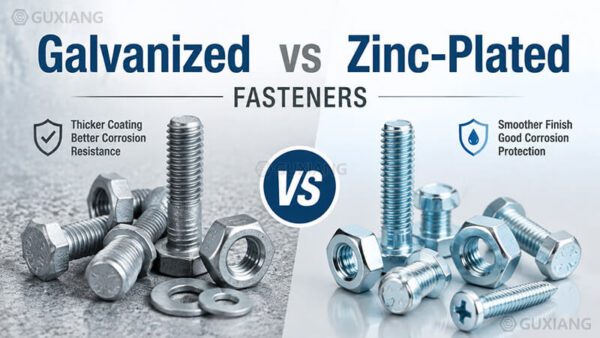
Verwechseln Sie Zinkplattierung nicht mit heißem Galvanisieren. Beide setzen Zink auf Stahl, aber galvanisierend taucht das Teil in geschmolzenes Zink und erzeugt eine viel dickere Beschichtung (typischerweise 45 bis 150 μm). Zinkplattierung ist eine präzise, dünne, galvanisch beschichtete Folie bei Raumtemperatur (normalerweise 5 bis 25 μm), die enge Gewinde-Toleranzen aufweist. Für eine blank Spracherklärung der galvanischen Chemie, siehe die elektroverzinkungsübersicht auf Wikipedia.
Wie funktioniert Zink Plating Arbeit? (Elektrifizierungsprozessschritte)
Der Stahlteil ist die Kathode in einem Zinkelektrolytbad, mit Zinkanoden im gleichen Bad. Wenn Strom fließt, plättchen Zinkionen gleichmäßig auf das Teil aus. Stromdichte, Badchemie und Zeit setzen die Ablagerung Dicke und Gleichmäßigkeit.
Bevor das Zink haften kann, muss der Stahl perfekt sauber und leicht aktiviert sein. Jedes Öl, Oxid oder Schuppen, das auf der Oberfläche verbleibt, verursacht blanke Flecken, schlechte Haftung oder Abplatzungen. Die folgende Sequenz ist der Norm Produktion-Flow in einer Jobshop- oder Captive-Platting-Linie.
| Schritt | Prozess | Was passiert |
|---|---|---|
| 1 | Reinigen und Entfetten | Alkalisches Einweichen und Elektroreinigen Entfernen von Schneidölen, Shop-Erde und Buffing-Masse |
| 2 | Spülen und Säure aktivieren (Pikkel) | Verdünnte Säure Streifen Lichtoxid und Mikro rauht die Oberfläche, so dass Zink greifen kann |
| 3 | Zinkelektroden | Teil ist die Kathode, Zinkanoden lösen sich auf, und Stromablagerungen eine kontrollierte Zinkschicht |
| 4 | Chromat-Umwandlung | Ein kurzes Eintauchen in Chromatlösung bildet einen passiven korrosionsbeständig-Oberfilm |
| 5 | Spülen, trocken und (falls erforderlich) backen | Reines Wasser spülen, warm trocken und ein Wasserstoff Relief Backen für hochfesten Stahl |
| 6 | Inspektion | Beschichtung Dicke (XRF- oder Streifentest), Haftung und Aussehen werden überprüft |
Schritt 4 verdient besondere Aufmerksamkeit, da er sowohl das Aussehen als auch die Lebensdauer des Teils verändert. Die als plattierte Zinkschicht korrodiert von selbst relativ schnell. Eine Chromatkonversion Beschichtung versiegelt sie, fügt Farbe hinzu und multipliziert die Salzsprühbeständigkeit. Dass Oberflächenbehandlung unten ausführlich behandelt wird.
Das letzte Backen in Schritt 5 ist nicht kosmetisch. Bei hartem, hochfestem Befestigungselemente kann Wasserstoff während des Säurebeizens und -plattierens absorbiert werden und kann später zu plötzlichem spröden Versagen führen. Relief Backen treibt diesen Wasserstoff aus. Die Faustregel von ASTM B633 und ASTM F1941 lautet, dass Teile bei 39 bis 40 HRC-Härte oder darüber oder bei Zugfestigkeit von 1000 MPa (ca. 145 ksi) und darüber bald nach der Beschichtung gebacken werden müssen, typischerweise innerhalb von 4 Stunden bei 190 bis 220 °C für mindestens 3 Stunden. Befolgen Sie immer den geltenden Standard und den Kunden Spezifikation für den genauen Zyklus.
Zinkplating-Prozesstypen
Zwei Wahlmöglichkeiten prägen jedes verzinkt-Teil: die Badchemie (alkalisch oder säurehaltig) und die Fixiermethode (Rack oder Fass). Diese Rechte betreffen das Aussehen, die Einheitlichkeit von Dicke, das Wasserstoffrisiko und die Kosten.
Alkalisches vs. saures Zink
Alkalische Zinkbäder sind üblicherweise cyanidfreie Kaliumchloridsysteme. Säurechlorid-Zinkbäder dominieren hochvolumige helle Arbeit. Sie verhalten sich sehr unterschiedlich.
| Eigenschaft | Alkalisches Zink (KCl, cyanidfrei) | Säurechlorid Zink |
|---|---|---|
| Wurfkraft | Hervorragende, gleichmäßige Innengewinde und Vertiefungen | Mäßig, dünnt sich in tiefen Vertiefungen aus |
| Ablagerungssatz | Mäßig | Hoch |
| Aussehen | Matt bis halbhell, leicht aufzuhellen | Bright finish achieved easily |
| Hydrogen embrittlement risk | Lower | Höher |
| Best geometry | Complex, threaded, deep recesses | Simple shapes, high volume small parts |
Für gewinde Befestigungselemente and parts with blind holes, alkaline zinc is usually the safer pick because it reaches into the geometry. Acid zinc wins on speed and brightness for simple stampings.
Rack vs. Barrel Plating
Fixturing decides how parts move through the line.
| Eigenschaft | Rack plating | Barrel plating |
|---|---|---|
| Part handling | Hung individually on frames | Tumbled inside a rotating perforated barrel |
| Best part size | Medium to large, delicate, precision | Small, high volume, robust |
| Thread and cosmetic risk | Low damage | Higher, from tumbling wear and possible burrs |
| Throughput | Lower | Hoch |
| Unit cost | Höher | Lower |
| Coating uniformity | Very uniform | Good, with minor contact shadowing |
Rack plating protects threads and critical surfaces but costs more. Barrel plating is the economy choice for thousands of small screws and washers, at the price of some surface marking. For very high strength fasteners where hydrogen embrittlement is a concern, mechanical galvanizing (a room temperature peening process with no acid pickling) is sometimes specified instead, because it introduces essentially no hydrogen.
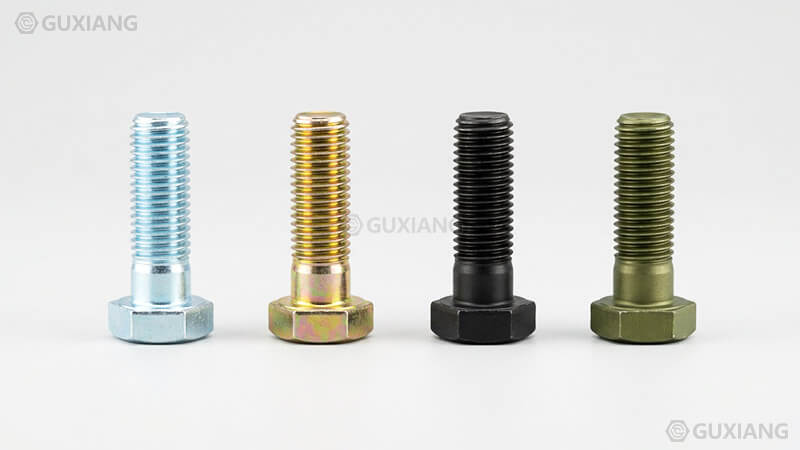
Zinc Plating Finishes: Chromate Conversion Coatings
The chromate film on top of the zinc is what gives the part its color and most of its corrosion resistance. Without it, bright zinc tarnishes and forms white corrosion within days in humid air. With it, the same part can survive weeks of salt spray.
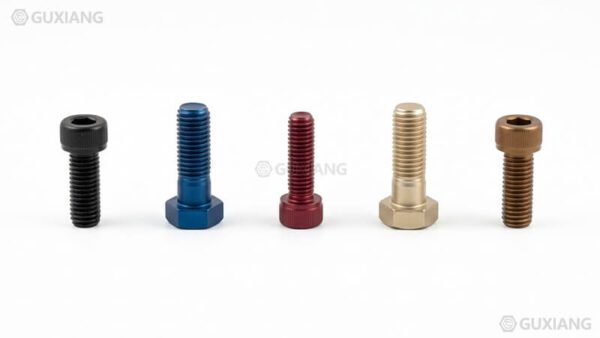
Four colors are common in supply:
Clear or blue chromate is nearly colorless with a faint blue tint. It is the thinnest film and the least protective, but it is clean, decorative, and an excellent paint base.
Yellow or iridescent chromate shows a golden to yellow sheen. It is the traditional general purpose finish for hardware and mild outdoor use.
Black chromate is dark and often used for architectural, automotive, and low reflection applications. It usually needs a sealer or topcoat to reach good salt spray times.
Olive drab (olive green) chromate is the darkest and thickest, favored for severe outdoor, military, and defense work.
The color trend tracks protection: darker chromate films are physically thicker, so they resist longer. The table below gives typical neutral salt spray (ASTM B117) performance to first white corrosion over roughly 8 µm of zinc. Treat these as industry reference ranges, not guarantees, because bath chemistry and zinc thickness move the numbers.
| Chromate finish | Farbe | Chromium chemistry | Typical NSS to white corrosion* | When to use |
|---|---|---|---|---|
| Clear / blue | Transparent blue | Trivalent (Cr3+) | 12 to 48 h | Indoor, decorative, paint base |
| Yellow / iridescent | Golden yellow | Cr3+ or Cr6+ | 72 to 120 h | Mild outdoor, general hardware |
| Black | Black | Cr3+ or Cr6+ | 24 to 96 h | Architectural, decorative, low reflection |
| Olive drab | Olive green | Cr3+ or Cr6+ | 96 to 200 h | Severe outdoor, military, defense |
*Over approximately 8 µm zinc per ASTM B117 neutral salt spray. Actual results vary with zinc thickness, sealer, and bath condition.
Trivalent (Cr3+) vs. Hexavalent (Cr6+) Chromium
This distinction matters for compliance and for corrosion resistance. Hexavalent chromium (Cr6+) chromate gives the best protection and the classic yellow gold look. It is also a known carcinogen and is restricted under the EU RoHS Directive and REACH. RoHS caps hexavalent chromium at 0.1 percent by weight in most applications. Trivalent chromium (Cr3+) chromate is the modern, RoHS compliant standard. It protects nearly as well (slightly below Cr6+ for the same color) and is the default for EU and most North American supply. For the underlying chemistry of the film, see the chromate conversion coating reference. The coating families and color codes are also standardized in ISO 4520, the international standard for chromate conversion coatings on electroplated zinc and cadmium.
Zinc Plating Thickness and Salt Spray Corrosion Resistance
Thickness is the master variable for lifespan. More zinc means more metal to sacrifice before the steel is exposed. ASTM B633 organizes thickness into four service conditions, and the same numbers appear in ISO and fastener standards.
| ASTM B633 service condition | Designation (ISO 2081 / ASTM F1941) | Minimum thickness | Typical environment |
|---|---|---|---|
| SC1 | Fe/Zn 5 | 5 µm | Heated, dry indoor |
| SC2 | Fe/Zn 8 | 8 µm | Unheated buildings, mild indoor |
| SC3 | Fe/Zn 12 | 12 µm | Outdoor, moderate exposure |
| SC4 | Fe/Zn 25 | 25 µm | Severe outdoor, road salt, with chromate |
SC1 is the bare minimum for dry, heated space. SC2 covers most indoor hardware and fasteners. SC3 and SC4 are for genuine outdoor exposure, and SC4 should always be paired with a good chromate (yellow or olive) because 25 µm of bare zinc still fails fast in weather.
In salt spray testing, learn to read the two failure points. White corrosion is zinc oxide or hydroxide forming on the zinc itself. It means the coating is being consumed but the steel is still safe. Red rust is base steel rusting, which means the coating has failed and the part is now corroding. A thicker coating plus a better chromate pushes the red rust point further out. The standard test method is ASTM B117 neutral salt spray, and the thickness classes themselves are defined in ASTM B633-23, the current revision of the electroplated zinc specification.
Key Benefits of Zinc Plating
Engineers specify zinc plating with standards so that a callout means the same thing in a Chinese plating shop and a German assembly plant. The core references are:
ASTM B633-23. The U.S. standard for electrodeposited zinc on iron and steel. It defines the SC1 to SC4 thickness service conditions above and the supplementary treatments. Those treatments are labeled Type I (as plated, no chromate), Type II (colored chromate, typically yellow or olive), Type III (colorless or clear chromate), Type IV (phosphate), Type V (phosphate and oil), and Type VI (black chromate). Read the current revision at ASTM B633-23.
ASTM F1941. The fastener specific standard for electrodeposited coatings on mechanical fasteners, in both inch and metric. It uses the Fe/Zn designation with a chromate letter (for example Fe/Zn 8C) and sets the thread tolerance rules that keep plated bolts fit for service. Portland Bolt publishes a practical walkthrough of the Fe/Zn codes, thickness, chromate types, and baking at the ASTM F1941 reference page.
ISO 2081:2025. The international equivalent, now in its 5th edition (published November 2025), covering electroplated zinc with supplementary treatments. It uses the same Fe/Zn 5, 8, 12, 25 scale and the chromate marker. The official listing is at ISO 2081:2025.
ISO 4520. The international standard for chromate conversion coatings on electroplated zinc and cadmium, which fixes the color and performance classes. See ISO 4520.
RoHS and REACH. EU law restricts hexavalent chromium and other substances. Specifying trivalent chromate keeps parts inside the limits for the European market.
A specifier quick reference: choose the thickness by environment (SC1 to SC4), choose the chromate by appearance and salt spray need (Type III clear, Type II yellow, Type VI black, or olive), and add a baking note for any part at 39 to 40 HRC or above.
Zinc Plating vs. Other Coatings (Brief Comparison)
Zinc plating is one of several ways to protect steel, and it is not always the right one. The table below shows where it fits. It is intentionally short. For the full decision logic across every coating, use our fastener coating selection guide, which compares all finishes by environment.
| Beschichtung | Typical thickness | Max service temp | Am besten geeignet für | See selection guide |
|---|---|---|---|---|
| Verzinkung | 5 to 25 µm | About 200°C | Indoor, mild, precise threads | This article |
| Hot dip galvanizing | 45 to 150 µm | Hoch | Structural outdoor, thick sections | fastener coating selection guide |
| Zinc flake (Geomet, Dacromet) | 8 to 12 µm | About 300°C | Automotive, high temp, no H2 risk | full fastener coating overview |
| 316 stainless steel | Bulk material | Very high | Marine, strong corrosion | 304 vs 316 stainless steel fasteners guide |
The practical rule is simple. Zinc plating wins on cost and precision for mild service. Hot dip galvanizing is the heavier option for rugged outdoor steel. Zinc flake beats electroplating for high temperature or hydrogen sensitive automotive parts. For genuine marine or chemical exposure, solid 316 stainless steel is often the only durable answer, covered in our 304 vs 316 stainless steel fasteners guide. When the environment is uncertain, let the full range of fastener coatings settle the choice.
Industries and Common Applications
Zinc plating shows up wherever steel parts live in mild to moderate air and need to look acceptable while they resist rust.
Automotive. Interior clip nuts, brackets, and hose clamps are overwhelmingly zinc plated, while underbody and engine bay parts that see heat or salt usually move to zinc flake.
Construction and building hardware. Screws, anchors, hinges, and strike plates in dry or mild indoor buildings rely on SC1 to SC2 zinc.
Electronics. Connector shells, shielding cans, and small stamped contacts use thin clear chromate zinc because it is clean and a good finish base.
General industrial hardware. Conveyor clips, appliance screws, and enclosure fasteners are plated in high volume by barrel, keeping cost low.
The environment rule of thumb: mild and indoor maps to Fe/Zn 5 or 8, moderate outdoor maps to Fe/Zn 12 with yellow chromate, and severe outdoor maps to Fe/Zn 25 with olive drab. Anything harsher than that leaves the zinc plating comfort zone, which is the subject of the next section.
How to Specify Zinc Plating on a Drawing or PO
This is the section job shop competitors skip and specifiers need most. A good callout removes ambiguity at the plating line and prevents rejected lots.
1. Pick the thickness class. Use SC1 to SC4 (ASTM B633) or Fe/Zn 5, 8, 12, 25 (ISO 2081 / ASTM F1941). For a typical indoor fastener, Fe/Zn 8 is the common default.
2. Pick the chromate (supplementary treatment). On a drawing this is the Type or the chromate letter. Examples:
ASTM B633: “SC2, Type III” means 8 µm with clear chromate.
ISO 2081: “Fe/Zn 8 c” means 8 µm zinc with chromate.
ASTM F1941 (fasteners): “Fe/Zn 8C” means 8 µm zinc with chromate, with the thread tolerance built in.
3. Handle the threads. Plating adds to the major diameter. For a precise fit, specify pre plate thread cutting (the blank is cut undersized, then plated to finished size) or post plate thread rolling. State the acceptance on thread go/no go gauges so the shop knows the plated part must still assemble.
4. Add the hydrogen relief bake for hard parts. If hardness is 39 to 40 HRC or above, or tensile strength is 1000 MPa and above, apply the same relief bake from Step 5 (190 to 220°C, minimum 3 h, within 4 h of plating). This single line protects you from embrittlement claims.
5. Note appearance and any topcoat. Black chromate parts that must hit long salt spray times should call out a sealer. Painted parts should call out clear chromate as the base.
A complete purchase order line might read: “Zinc plated per ASTM F1941, Fe/Zn 8C, clear chromate, bake per F1941, RoHS compliant.” That one line tells the plater the thickness, the finish, the hardness treatment, and the compliance target. The detailed Fe/Zn code tables behind this are laid out by Portland Bolt in their ASTM F1941 technical reference.
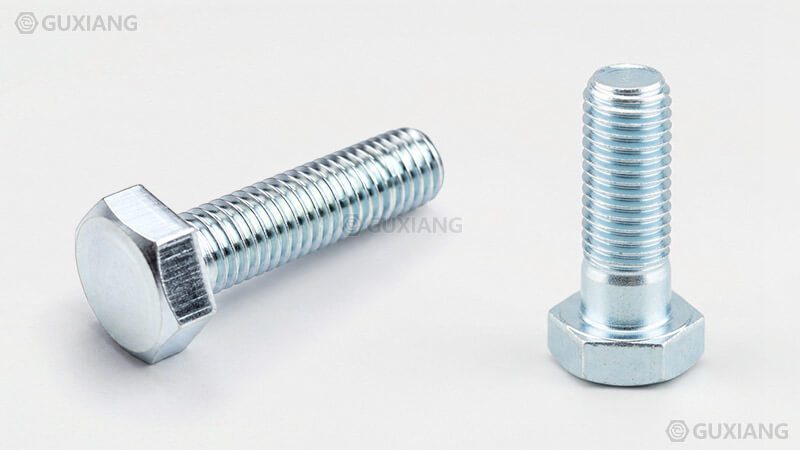
Limitations and When Zinc Plating Is the Wrong Choice
We are upfront about where zinc plating stops working, because guessing wrong costs a failed lot. It is a thin coating, and thin coatings have limits.
Severe outdoor and marine. At a 25 µm maximum, zinc plating is simply too thin for constant salt air or standing coastal exposure. It will white and then red rust faster than buyers expect. For that world, see the full fastener coating overview and consider hot dip galvanizing, zinc flake, or 316 stainless steel.
Long term standing water or acid and alkali immersion. Zinc is amphoteric, so it dissolves in strong acid or alkali. Plating is wrong for chemical tanks and constant wet contact.
High temperature above 200°C. Zinc oxidizes past about 200°C, so continuous hot service needs zinc flake (to about 300°C) or another system.
Very high strength steel. Parts above roughly 40 HRC or 1200 MPa are at real risk of hydrogen embrittlement. Baking helps, but some specs forbid electroplating and require mechanical galvanizing or a coating with no acid step.
Heavy abrasion. A 5 to 25 µm film wears through under rub and fretting, exposing the steel underneath.
None of this makes zinc plating weak. It makes it a precision tool with a defined range. Used inside that range, it is the best value in corrosion protection.
How to Choose the Right Zinc Finish for Your Part
Use the environment as the first filter, then refine by appearance and thread need.
Heated, dry indoor (warehouse racking, appliance interiors). Fe/Zn 5, clear chromate. Cheapest, clean, adequate.
Unheated indoor or mild (building hardware, electronics). Fe/Zn 8, clear or yellow chromate.
Outdoor, moderate (fences, enclosures, garden equipment). Fe/Zn 12, yellow chromate.
Outdoor, severe or road salt (trailer hardware, brackish air). Fe/Zn 25, olive drab chromate, and accept shorter life than heavier coatings.
High temperature above 200°C. Do not use zinc plating. Move to zinc flake or another high temp system.
Marine or strong chemical exposure. Do not use zinc plating alone. Specify 316 stainless or a heavier coating after checking our coating selection guide.
For appearance, clear chromate is the neutral default, yellow is the traditional hardware look, black suits architectural and low glare parts, and olive drab signals severe service. Remember that thicker coatings need pre plate cutting, so state the fit requirement up front. When the choice is between zinc plating and a different coating, the compare all fastener coatings resource gives the full environment based decision table.
Häufig gestellte Fragen
Was ist der Unterschied zwischen Zinkplattieren und Galvanisieren?
A: Zinkplattierung (Elektrolatation) scheidet einen dünnen, präzisen Zinkfilm von 5 bis 25 μm bei Raumtemperatur ab, der Gewinde Toleranz s eng und kostengünstig für Innen- und Sanftservice hält. Galvanisieren (heißes Eintauchen) taucht das Teil in geschmolzenes Zink ein und erzeugt ein viel dickeres Beschichtung von 45 bis 150 μm, das zu Stahl und hartem Außengebrauch passt, aber anschwellen kann Gewinde s. Die beiden teilen den gleichen opfernden Zinkschutz, aber sie unterscheiden sich in Dicke, Temperatur, Kosten und den Teilen, die sie passen.
Wie dick ist Zinkplattierung in Mikrometern?
A: Standard galvanisiertes Zink (0) läuft von 5 bis 25 μm, eingestellt nach Betriebsbedingung. ASTM B633 und ISO 2081 definieren Fe/Zn 5 (5 μm, trocken im Innenbereich), Fe/Zn 8 (8 μm, mild im Innenbereich), Fe/Zn 12 (12 μm, gemäßigt im Außenbereich) und Fe/Zn 25 (25 μm, streng im Außenbereich). Das Maximum von 25 μm ist die praktische Decke für das Galvanisieren von Gestell und Fass, so dass sich alles, was mehr Metall benötigt, zum Schmelzverzinken oder zur Zinkflocke bewegt.
Ist Zinkplattierung rostfest?
A: Nein [0] ist dauerhaft rostfest, aber Zinkplattierung widersteht Rost sehr gut in seinem Bereich. Das Zink wirkt als Opferanode, so dass sogar ein Kratzer den Stahl schützt. In neutralem Salzspray widersteht ein guter chromatierter 8 μm weißer Korrosion für ungefähr 24 bis 120 Stunden abhängig von der Chromatfarbe, und roter Rost erscheint später, wenn das Zink verbraucht wird. In trockener Raumluft kann das Teil viele Jahre halten. In Marine oder konstantem nassen Service wird es schließlich rosten.
Was sind die verschiedenen Farben der Zinkplattierung?
A: Die vier üblichen Farben stammen aus dem Chromat-Konversionsfilm auf dem Zink. Klar oder blau ist am dünnsten und am wenigsten schützend, aber sauber und eine gute Lackgrundlage. Gelb oder irisierend ist der allgemeine Zweck Beschläge Oberflächenbehandlung mit besserer Salzsprühzeit. Schwarz wird für architektonische und blendarme Teile verwendet und benötigt normalerweise eine Versiegelung. Olive Drab ist die dunkelste und schützendste, die für schwere Outdoor- und Verteidigungsarbeiten verwendet wird. Dunklere Chromatfilme sind physisch dicker und widerstehen länger.
Wie lange hält verzinkt Stahl im Freien?
A: Die Lebensdauer hängt von Dicke und Chromat sowie von der Umwelt ab. Innen, verzinkt Stahl hält oft viele Jahre oder Jahrzehnte. Draußen in mäßiger Luft kann ein Fe / Zn 12 mit Gelbchromat mehrere Jahre überleben, während ein Fe / Zn 25 mit Oliventaucher länger hält, aber immer noch eine dünne Beschichtung ist. In Küsten-, Salz- oder ständig nassen Bedingungen Zinkplattierung ist die falsche Wahl und wird relativ schnell rosten, so dass eine schwerere Beschichtung oder Edelstahl die bessere Spezifikation ist.
Ist Zinkplattierung RoHS und REACH konform?
A: Es kann sein, und für die EU und den größten Teil der nordamerikanischen Versorgung sollte es sein. Konformität hängt von der Chromatchemie ab. Dreiwertige (Cr3+) Chromate enthalten kein eingeschränktes sechswertiges Chrom und erfüllen die Grenzwerte von RoHS und REACH. Traditionelles sechswertiges (Cr6+) Chromat bietet die beste Salzsprühzeit, ist jedoch unter RoHS auf 0,1 Gewichtsprozent beschränkt, so dass es für den Export weitgehend ausläuft. Dreiwertiges Chromat auf der Zeichnung angeben, damit das Teil konform bleibt.
Literaturverzeichnis
ASTM B633-23, Standard Specification for Electrodeposited Coatings of Zinc on Iron and Steel. The current ASTM revision defining the SC1 to SC4 thickness service conditions and Type I to VI supplementary chromate treatments used throughout this article.
ISO 2081:2025, Electroplated Coatings of Zinc on Iron and Steel. The 5th edition international standard (published November 2025) that sets the Fe/Zn 5, 8, 12, 25 thickness scale and chromate marker.
ISO 4520:1981, Chromate Conversion Coatings on Electroplated Zinc and Cadmium Coatings. The international reference that fixes chromate color and performance classes for electroplated zinc.
ASTM F1941, Electrodeposited Coatings on Mechanical Fasteners (Portland Bolt technical reference). A practical breakdown of the Fe/Zn designation, thickness, chromate types, and hydrogen relief bake rules for fasteners.
Wikipedia, Electrogalvanization. Background on the zinc electroplating principle, electrolytes, and conversion films referenced in the definition section.
Wikipedia, Chromate Conversion Coating. Reference for the chromate film mechanism, the color to protection trend, and the restriction on hexavalent chromium.