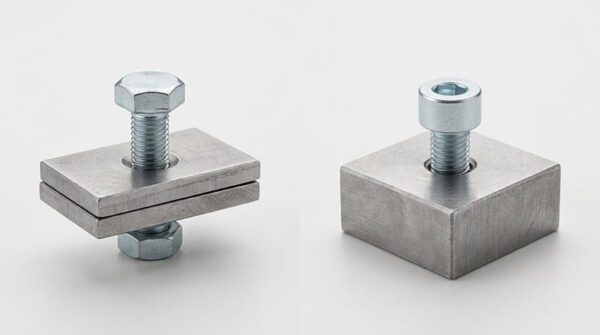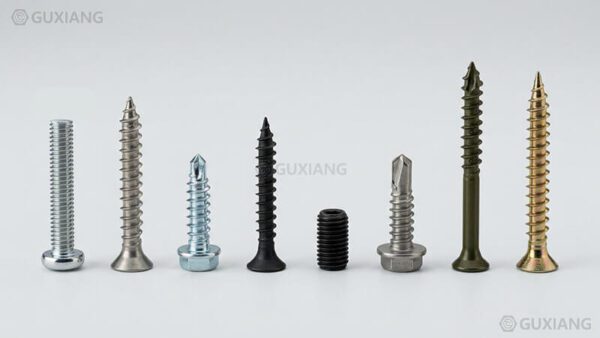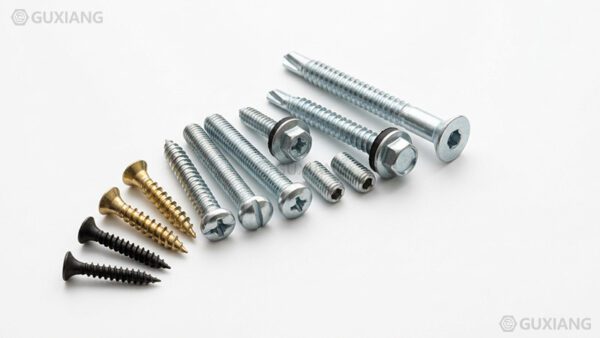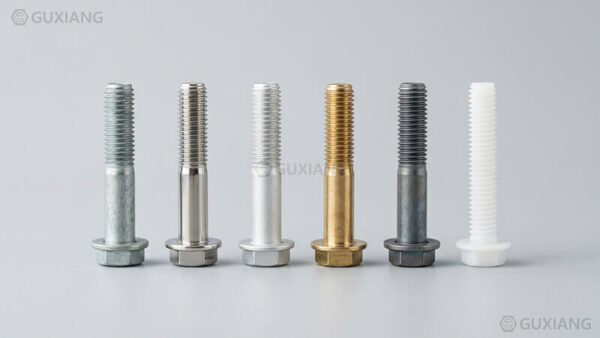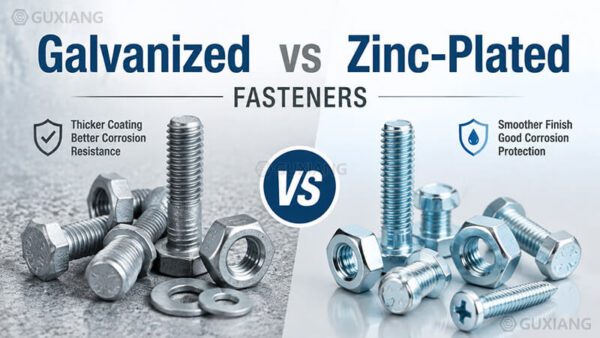






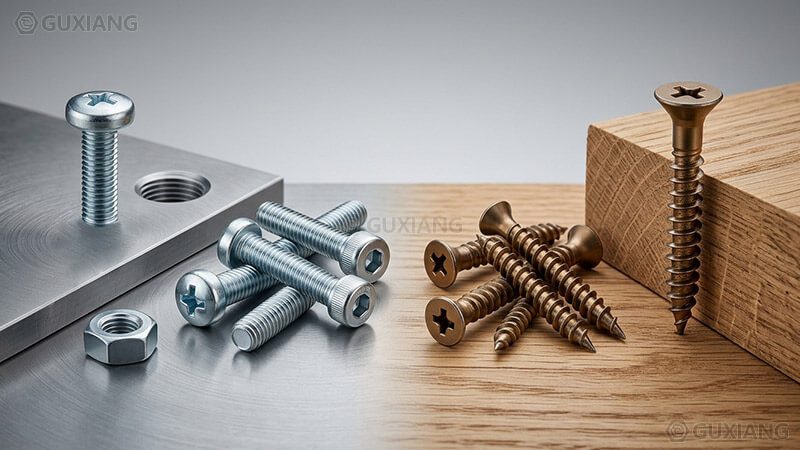
A machine screw is a threaded fastener that cuts or matches a thread inside metal, plastic, or a nut, while a wood screw is a pointed fastener that drives directly into wood and holds by biting into the timber fibers. The machine screw depends on a pre-formed thread or a nut for its grip; the wood screw creates its own thread in the workpiece. That one distinction drives every other difference: thread geometry, tip shape, pilot hole requirements, load behavior, and the materials each screw can serve.
For background on the fastener family, see our guide to what is a screw, and for the broader selection picture, browse types of screws: industrial selection guide.
Quick Comparison Table
| फ़ीचर | मशीन स्क्रू | लकड़ी का स्क्रू |
|---|---|---|
| Thread profile | Machine thread, tight fit (ISO 68-1 / ASME B1.1) | Deep, coarse thread with sharp crests |
| Tip | Flat or blunt, sometimes self-tapping point | Sharp tapered point |
| Pilot hole | Required for tapping; clearance hole for through-fit | Usually recommended; some types self-drill |
| Load mechanism | Thread-to-thread engagement, axial clamping | Fiber-to-thread grip, withdrawal resistance |
| संभोग | Nut, tapped hole, or threaded insert | Workpiece itself |
| Best materials | Metal, plastic, composites | Wood, plywood, particle board, MDF |
| मानक | ASME B18.6.3, ISO 7045 / 7046, ISO 68-1 | ANSI/ASME B18.6.1, ASTM F1667, DIN 7997 |
| विशिष्ट उपयोग | Electronics, appliances, machine guards, brackets | Furniture, trim, framing, joinery, decks |

Machine Screws Explained
A machine screw is defined by its uniform machine thread, which runs the full length of the shank and matches a standard thread form. The head is small relative to the length, the body is straight, and the end is typically flat or slightly chamfered. Machine screws are not meant to cut threads in wood; they are meant to engage a matching internal thread.
Thread Geometry of Machine Screws
Machine screw threads follow a precise 60-degree V profile defined by ISO 68-1 and ASME B1.1. The thread is uniform along the shank, with a controlled pitch, root radius, and tolerance class. Because the fit is tight, the screw transfers load across the full flank of each engaged thread rather than relying on local deformation of the material. This geometry makes machine screws strong in tension and predictable in clamping force.
The uniform thread also means the screw can be removed and re-installed repeatedly without damaging the mating thread, provided the internal thread is undamaged. That repeatability is a major reason machine screws dominate electronics, machinery, and appliance assembly.
Sizing: Number Sizes #0 to #12 and Metric M Series
Machine screws are sized either by US number sizes or metric M designations. US number sizes run from #0 to #12, each with a nominal diameter and a threads-per-inch value. A #6-32 machine screw has a #6 body diameter and 32 threads per inch; a #8-32 and #10-32 are the most common small sizes. Metric machine screws use the M designation: M2, M2.5, M3, M4, M5, M6, and larger, with pitch expressed in millimeters, such as M3 x 0.5.
The small diameters of machine screws — M1.6 to M6 or #0 to #12 — set them apart from structural bolts and from large wood screws. For the full dimensional tables, see our मशीन स्क्रू साइज़ चार्ट.
Head Types for Machine Screws
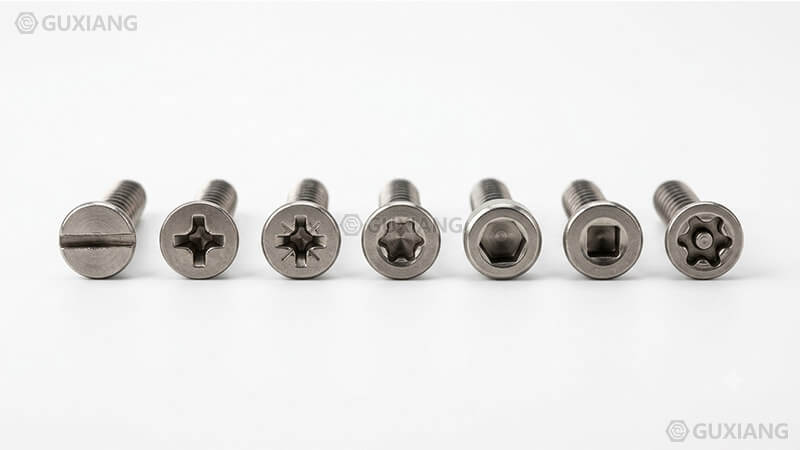
Machine screws come with many head styles because the screw is often visible and must fit tight spaces. Common choices include flat head (countersunk), pan head, round head, truss head, oval head, fillister head, and socket head (hex socket). Drive styles include Phillips, slotted, hex, Torx, and hex socket. The head and drive choice affects torque transmission, appearance, and whether the screw sits flush or protrudes. For a visual catalog of head styles, see different screw head types.
Mating Parts: Nuts, Tapped Holes, and Inserts
A machine screw always works with a matching internal thread. Three mating arrangements are common:
Nut: The screw passes through a clearance hole in both parts and engages a nut on the far side. This arrangement delivers strong clamping and easy disassembly.
Tapped hole: One part is drilled and tapped to the matching thread size. The screw engages the internal thread directly, with no nut on the far side.
Threaded insert: A metal insert is installed into a soft or thin material, then the machine screw engages the insert. This is the standard solution for plastics, composites, and sheet metal.
The internal thread is the load-bearing partner. If the tapped hole is too deep, too shallow, or misthreaded, the joint fails even when the screw is perfect.
Tolerance and Fit Classes
Machine screw threads carry tolerance designations that state how tight the fit will be. Metric threads use classes such as 6g for the external thread and 6H for the internal thread; inch threads rely on fit classes and allowance values in ASME B1.1. A closer fit reduces radial play and distributes load evenly, which matters in precision instruments and high-cycle assemblies. A looser fit eases assembly, tolerates dirt, and suits fasteners that see frequent removal.
The class also interacts with surface finish and plating. A zinc-plated machine screw can grow enough in thickness to shift its effective fit, so experienced buyers check the plating thickness against the tolerance class before ordering. The same principle applies to stainless steel, where galling risk at the thread flanks changes with fit and lubrication.
Typical Machine Screw Applications
Machine screws appear wherever precise, repeatable fastening in metal or plastic is required: electronic enclosures, PCB standoffs, appliance housings, machinery guards, nameplates, instrument panels, brackets, and sheet-metal assemblies. They are also the standard fastener for attaching components to tapped bosses in die-cast housings.
Wood Screws Explained
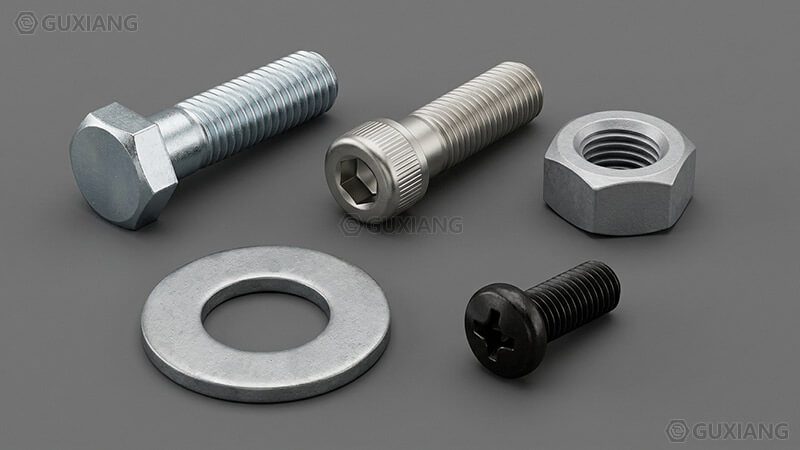
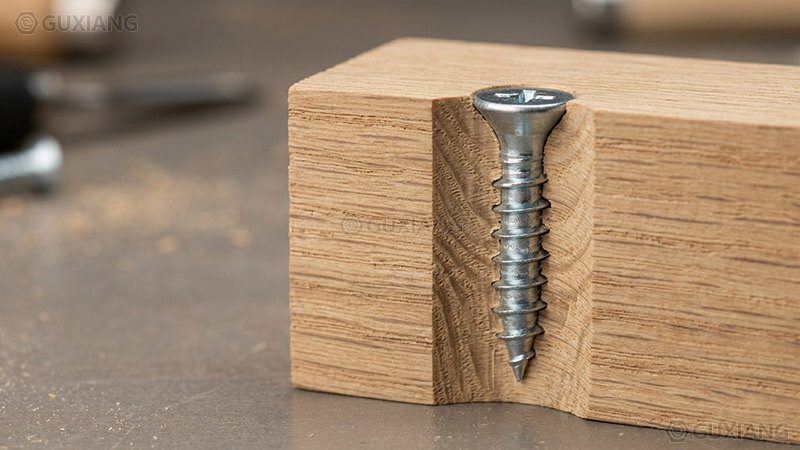
A wood screw is a pointed screw whose deep, coarse thread cuts into wood as it is driven. The sharp tip finds its way into the grain, and the thread bites into the fibers to create withdrawal resistance. Wood screw geometry is built for the mechanics of timber: soft enough to accept a screw, fibrous enough to grip it, and prone to splitting if the pilot hole is wrong.
Thread Geometry of Wood Screws
Wood screw threads are deeper and coarser than machine threads, with sharp crests and a large lead angle. The deep thread maximizes the area of wood engaged per turn, converting torque into axial pull rather than sliding along a tight thread fit. Traditional wood screws have a tapered body that thickens toward the head, which presses the wood fibers aside as the screw seats.
Modern wood screws often add thread-cutting features: self-tapping points, partial threads, and dual-thread zones. A partially threaded wood screw has threads on the lower shank only, so the smooth upper shank draws parts together without continued thread cutting near the head.
Self-Drilling and Self-Tapping Features
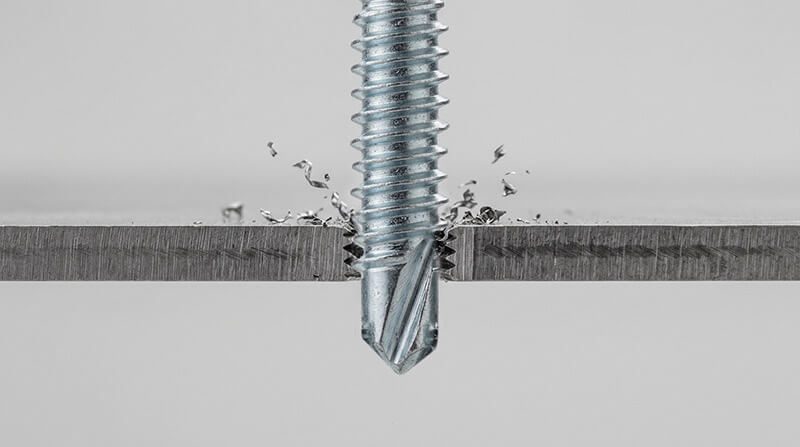
Two engineering terms cause constant confusion. A self-tapping screw cuts its own thread in a pre-drilled pilot hole; a self-drilling screw (often called a TEK screw) has a drill-point tip that drills its own hole, eliminating the pilot hole step. Many modern wood screws are self-tapping with a sharp point that displaces fibers, and some are self-drilling for thin sheet-metal-to-wood connections.
Sizing Wood Screws
Wood screws are sized by gauge number (#4, #6, #8, #10, #12, #14) and length in inches or millimeters. The gauge number tracks the shank diameter; #8 and #10 are the most common general-purpose sizes. Length is measured from the bearing surface of the head to the tip for flat-head screws, and from under the head for pan or round heads. For inch and metric equivalents and length rules, follow the gauge and length conventions in the wood screw charts.
Heads and Drive Styles
Wood screws use heads suited to woodworking tools and countersinking. Flat head and bugle head screws sit flush or below the surface; pan head, truss head, and round head screws stand proud; washer-head screws spread load over a wider area. Drive styles have evolved from slotted and Phillips to square drive (Robertson), Torx, and combination drives. Modern deck and construction screws use Torx or square drives because they resist cam-out at high torque, which matters when driving long screws into hardwood.
Wood Species and Fastener Behavior
Not all wood behaves the same under a screw. Softwoods such as pine and fir are forgiving: they compress easily, accept screws with minimal pilot holes, and rarely split in moderate sizes. Hardwoods such as oak, maple, and walnut demand sharper points, larger pilot holes, and lower driving torque. Dense tropical hardwoods can blunt cheap screw points quickly and may require pilot holes that match the root diameter rather than the thread crest.
Moisture content changes everything. Green or damp wood swells and grips screws more firmly, but it also rusts unprotected steel and can shrink around the screw as it dries, loosening the joint. Kiln-dried stock behaves more predictably, and treated lumber needs corrosion-resistant coatings because the preservatives attack ordinary zinc. Matching the screw to the wood species is as important as matching the screw to the job.
Coatings and Corrosion Protection
Bare steel wood screws rust quickly in exterior service. Common protections include zinc plating (yellow, clear, or blue), hot-dip galvanizing for severe exposure, stainless steel for coastal and chemical environments, and ceramic or polymer coatings that reduce friction and improve corrosion resistance. The coating also changes driving behavior: a coated screw needs less torque and is less likely to snap in hardwood.
Typical Wood Screw Applications
Wood screws join lumber in furniture, cabinetry, trim, flooring, decking, fencing, and general carpentry. They fasten hinges, handles, and hardware to timber, secure plywood and OSB panels, and mount fixtures to wooden studs and beams. Their strength in wood comes from withdrawal and shear resistance across the engaged fibers, not from thread-to-thread clamping.
Deep Comparison: Thread Geometry
The thread geometry is the most visible physical difference and the root of every performance gap.
| Aspect | मशीन स्क्रू | लकड़ी का स्क्रू |
|---|---|---|
| Thread profile | 60-degree V, precise, uniform | Deep, coarse, sharp-crested, tapered |
| पिच | Fine, standardized (ISO 68-1, ASME B1.1) | Coarse, often self-drilling geometry |
| Thread form | Matches internal thread | Cuts its own path in wood fibers |
| Body | Straight shank, full thread | Tapered or straight with coarse thread |
| सहनशीलता | Tight classes (6g/6H typical) | No strict thread tolerance needed |
A machine thread is a precision fit; a wood thread is a cutting tool. Try to drive a machine screw into solid oak and the fine thread will either strip in soft grain or snap under torque before it bites. Try to use a wood screw in a tapped aluminum block and the coarse thread will fail to engage the internal thread at all.
Deep Comparison: Pilot Holes
Pilot holes are the second decisive difference. A machine screw normally needs either a clearance hole (slightly larger than the body) when used with a nut, or a tapped hole (drilled and threaded to size) when used without one. If you force a machine screw into an undersized hole in metal, you risk breaking the screw or the tap.
A wood screw benefits from a pilot hole in almost every case. The pilot hole serves three purposes: it prevents the wood from splitting, it lets the screw start straight, and it reduces driving torque. The recommended pilot size depends on the screw gauge, the wood hardness, and whether the screw is in the end grain or side grain. Hardwoods and end-grain joints need larger pilot holes; softwoods can sometimes accept screws without a pilot hole, but at the cost of higher splitting risk near edges.
हमारा zलकड़ी के स्क्रू के लिए पायलट छेद आकार gives a practical table by gauge and wood type, while the machine screw dimension tables give the correct tapping and clearance drill sizes for metal threads.
Deep Comparison: Load Mechanism
The way each screw carries load is fundamentally different.
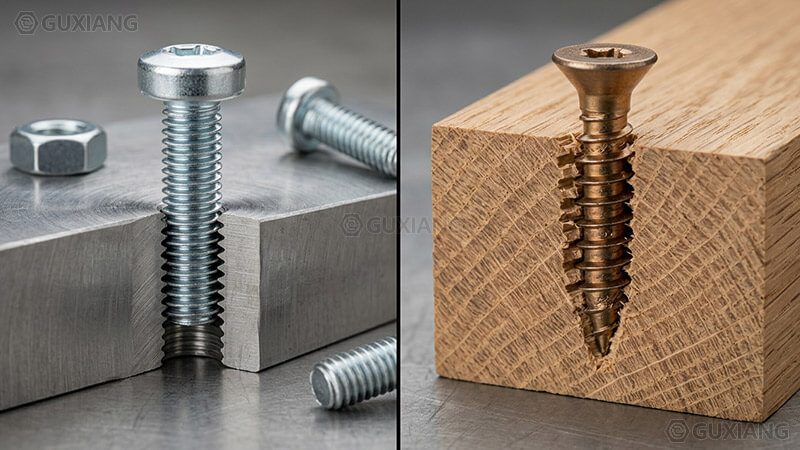
Machine screws transfer load through thread-to-thread contact. The internal thread of the nut or tapped hole wraps around the external thread of the screw. When the joint is tightened, the screw stretches slightly and the clamped parts are compressed, creating an axial clamping force. The strength of the joint is governed by the tensile strength of the screw, the shear strength of the engaged threads, and the bearing area under the head and nut. For that reason, machine screws are the default for precision assemblies: the load path is predictable and repeatable.
Wood screws transfer load through fiber engagement. The thread bites into the wood fibers, and withdrawal resistance is created by the shear strength of the wood between adjacent thread crests. The joint does not rely on an internal thread partner; the wood itself is the mating part. The failure modes are also different: wood screws fail by withdrawal (pulled straight out), by fiber tear-out near the surface, or by splitting the wood, rather than by thread stripping in a tapped hole.
The practical result: machine screws excel in rigid, dimensionally stable assemblies; wood screws excel where the workpiece is the load-bearing partner and the fastener must hold in a soft, fibrous material.
Deep Comparison: Installation and Driving Behavior
The difference in thread geometry shows up the moment you pick up a driver.
Machine screws want controlled torque. They engage a pre-formed thread, so the required torque is modest and predictable. The risk is over-torque: a machine screw forced past its limit strips the internal thread, deforms the head, or breaks in the shank. Installation calls for a calibrated driver, the correct drive bit, and torque values matched to the size and material. Because the mating thread is already cut, the screw cannot create more thread depth as it goes; pushing harder only damages the joint.
Wood screws want controlled depth and feed. As the point enters the wood, the thread pulls the screw in, and the drive must follow without cam-out. If the driver slips, the head chews and the screw stops advancing. If the screw is driven too deep, the head sinks past the surface; if it is driven at an angle, the pilot hole is ruined and the grip weakens. Long wood screws in dense stock benefit from wax or soap lubrication, which lowers driving torque and reduces the chance of breakage.
Drive style matters in both cases. Phillips drives cam out under load, which protects the workpiece but frustrates high-torque driving. Torx and square drives transmit torque more reliably and are the modern choice for long wood screws and hardened machine screws. A stripped drive is a failed fastener, so matching the bit to the drive is a practical quality check on every assembly line.
Deep Comparison: Material Compatibility
| सामग्री | मशीन स्क्रू | लकड़ी का स्क्रू |
|---|---|---|
| Steel, aluminum, brass | Yes — tapped hole or nut | Poor — thread does not engage |
| Sheet metal | Yes — self-tapping variants | गरीब |
| Plastics, composites | Yes — with thread-forming or inserts | नहीं |
| Solid wood | No — thread too fine, tip blunt | हाँ |
| Plywood, OSB, MDF | No — strips easily | Yes — with pilot hole |
| Particle board | Sometimes — coarse-thread particle-board screws exist | Yes — with care |
The material rule is simple: machine threads need a hard, threaded partner; wood threads need a soft, fibrous partner. Hybrid fasteners exist — self-tapping machine screws for thin metal, particle-board screws for manufactured boards — but the classic machine screw and classic wood screw stay on opposite sides of the material divide.
When to Choose Which
Follow this four-step decision flow to pick the correct screw for a job.
Step 1 — Identify the base material. If the workpiece is metal, plastic, or composite, choose a machine screw (or its self-tapping variant). If the workpiece is wood, plywood, OSB, or MDF, choose a wood screw or a specialty board screw.
Step 2 — Define the load. If the joint must carry significant tension or shear in rigid assemblies, machine screws with nuts or tapped holes deliver predictable strength. If the joint must resist withdrawal from wood, a wood screw with adequate thread engagement and correct pilot hole is the right choice. For vibration or repeated disassembly, machine screws win.
Step 3 — Consider disassembly. Machine screws can be removed and re-tightened repeatedly, and replacement is cheap. Wood screws also remove cleanly if the pilot hole is intact, but repeated removal in the same hole reduces grip because the wood fibers are damaged.
Step 4 — Match the environment. Exterior or damp conditions call for stainless steel or coated fasteners regardless of type. For machine screws in metal, galvanic corrosion between the screw and the workpiece must be checked; for wood screws, the coating must resist moisture and wood acids.
If you are still deciding between fastener families, the bolt vs screw: what is the difference article clarifies when a threaded fastener should be a bolt rather than a screw.
Sizing and Hole References
Sizing rules differ between the two families, and getting them wrong is the most common source of failed joints.
Machine screw sizing: Choose the nominal diameter and thread pitch from the machine screw chart, then select the correct clearance drill for a nut-and-bolt style joint or the correct tapping drill for a tapped hole. Never guess a tap size from the outside diameter; the minor diameter of the thread is smaller than the nominal size.
Wood screw sizing: Choose the gauge for the load and the length for the material thickness. The screw should enter the base material by at least the threaded portion; a common rule is that the threaded part should be about two-thirds of the screw length or more in the holding member.
Pilot hole sizing: For wood, use the pilot hole table that matches the gauge and wood hardness. For metal, use the machine screw tap drill chart.
Use the machine screw charts for thread dimensions and tap drill sizes, and the wood screw tables for gauge and pilot hole guidance.
Material and Coating Selection
Material choice follows the same logic for both families: strength, corrosion resistance, cost, and compatibility.
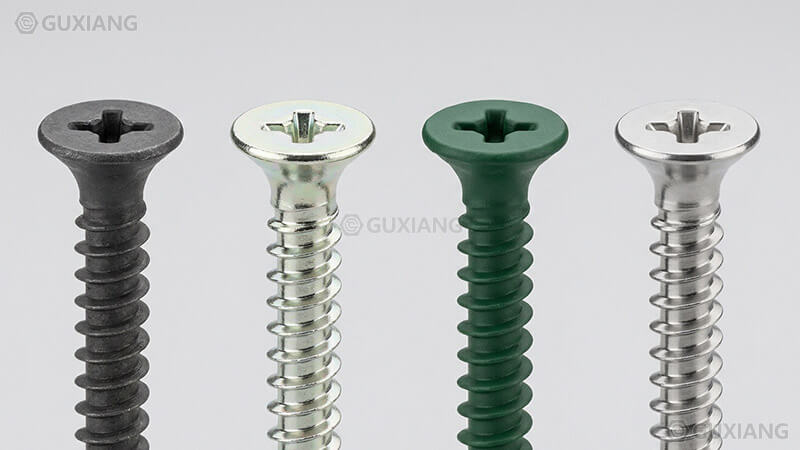
कार्बन स्टील is the default for interior service. Plain or lightly oiled machine screws suit dry assemblies; zinc-plated or passivated finishes protect both machine and wood screws in mildly humid conditions. Our कार्बन स्टील फास्टनर गाइड covers the common finishes and their limits.
स्टेनलेस स्टील is the standard for outdoor, marine, and food-contact service. Austenitic grades such as A2 (304) and A4 (316) resist corrosion well; A4 adds molybdenum for chloride resistance. Stainless machine screws and wood screws are both common in decking, coastal construction, and processing equipment. For grade selection, see व्यास] थ्रेड थ्रेड.
Alloy and hardened steels appear where higher strength is needed. Machine screws in hardened alloy steel serve demanding machinery; wood screws in case-hardened steel resist bending and tip wear in hardwood. The trade-off is reduced ductility: hardened screws can snap instead of bending if overloaded.
Non-ferrous materials — brass, aluminum, nylon — are chosen for non-magnetic, non-sparking, decorative, or lightweight applications. Brass machine screws are common in electrical terminals; nylon screws are used in electronics where insulation and non-conductivity matter.
Common Mistakes and Substitution Traps
Several recurring errors explain most failed screw joints.
Using a wood screw in metal. The coarse thread cannot cut a matching internal thread in steel or aluminum. The screw either strips, snaps, or simply does not hold. Use a machine screw or a proper sheet-metal or self-tapping screw instead.
Using a machine screw in wood. The fine machine thread engages too little wood, the blunt tip does not start well, and the screw strips under modest load. A wood screw is the correct tool.
Skipping the pilot hole in hardwood. Hardwoods are prone to splitting when a wood screw is driven without a pilot hole, especially near edges and in end grain. The pilot hole is not optional for joinery-grade work.
Overtightening a machine screw into a tapped hole. Because the thread fit is tight, excess torque strips the internal thread and ruins the tapped part. Use the specified torque and a calibrated driver.
Substituting a sheet-metal screw for a wood screw, or vice versa. Sheet-metal screws have sharp thread-cutting edges and often a gimlet point; they cut metal but behave poorly in thick wood. Dedicated wood screws have thread geometry tuned for fiber engagement. The deck-versus-drywall distinction is covered in drywall screws vs deck screws.
Ignoring drive compatibility. A screw with a Torx drive cannot be driven by a Phillips driver without damaging the head. Match the drive type to the driver, or use combination drives for flexibility.
Confusing length with grip. A long wood screw still fails if the threaded portion does not reach into the holding member. A machine screw holds little if the nut is undersized or the tapped depth is short. Grip comes from engaged threads, not from total length.
Manufacturing and Custom Screws at GUXIANG
Machine screws and wood screws are produced in enormous volumes, but projects often need non-standard lengths, custom head styles, special materials, or defined finishes. GUXIANG manufactures both fastener families and supports OEM customization.
The production chain for screws starts with कोल्ड हेडिंग, which forms the head and shank at high speed from wire stock, preserving the grain flow of the metal. थ्रेड रोलिंग then forms the thread profile — rolled threads are stronger and smoother than cut threads because the fiber structure follows the thread contour. गर्मी उपचार hardens the screw to the required class, and surface treatment — zinc plating, black oxide, Dacromet, zinc-nickel, or stainless passivation — finishes the part for its environment.
For custom projects, GUXIANG offers sampling before mass production, material certificates, dimensional inspection reports, and batch traceability. Whether the requirement is a standard #10 wood screw in bulk or a custom machine screw with a special thread and head, the engineering team verifies the drawing before the line runs. If your project needs fasteners engineered to specification, contact the team and request a fastener quote.
अक्सर पूछे जाने वाले प्रश्न
What is the main difference between machine screws and wood screws?
Machine screws are designed to engage with compatible internal machine threads in a tapped hole, nut, or threaded insert. Wood screws are designed to grip directly into wood fibers. The key difference is their thread-engagement mechanism and intended application.
Do machine screws always have fine threads?
No. Machine screws can use different standardized thread pitches, including coarse and fine options. The required thread must match the mating nut or tapped hole.
Do wood screws need pilot holes?
Not always, but pilot holes are often appropriate. The requirement depends on the type of wood, screw design, hole location, and risk of splitting. Follow the fastener manufacturer’s installation guidance for the intended application.
Can machine screws be used in wood?
Yes. They can be used with threaded inserts, T-nuts, barrel nuts, or other suitable threaded components. Directly tapping wood is also possible in certain engineered applications, but it requires appropriate material and hole preparation.
Can wood screws be used in metal?
A conventional wood screw should not generally be substituted for a machine screw in a tapped metal hole. A wood screw may pass through a clearance hole in metal hardware and engage wood behind it when the joint is designed for that arrangement.
Do machine screws always require a nut?
No. A machine screw can engage a compatible tapped hole or a threaded insert. A matching nut is another common option when the screw passes through a clearance hole.
Which is stronger: a machine screw or a wood screw?
Neither type is inherently stronger in every application. Joint performance depends on the fastener material, dimensions, thread engagement, receiving substrate, load direction, and installation method. Compare the relevant specifications and joint requirements rather than relying on the screw category alone.
Can I replace a wood screw with a machine screw?
Only if the joint provides the correct threaded interface and the replacement meets the application’s dimensional and performance requirements. A machine screw installed directly into an ordinary wood-screw hole is not automatically an equivalent replacement.
Do machine screws and wood screws have different head styles?
Their head-style ranges overlap. Both types can have configurations such as flat or pan heads, depending on the product. Head shape alone is not a reliable identification method; thread geometry and intended engagement are more useful indicators.
How do I identify the correct machine screw thread?
Check the applicable thread standard, nominal diameter, pitch, tolerance requirements, and mating component. Visual similarity or nominal diameter alone is insufficient to establish thread compatibility.
Are wood screws suitable for plywood, MDF, and particleboard?
Suitability depends on the screw design and the properties of the material. Engineered wood products can behave differently from solid timber, so consider the intended application, edge distance, risk of splitting, and the fastener manufacturer’s recommendations.
What information does a fastener manufacturer need for a quotation?
Useful information includes the fastener type, dimensions, thread specification, head and drive configuration, material, finish, application, quantity, and any inspection or documentation requirements. Drawings, CAD files, samples, or existing part numbers can help clarify custom requirements.