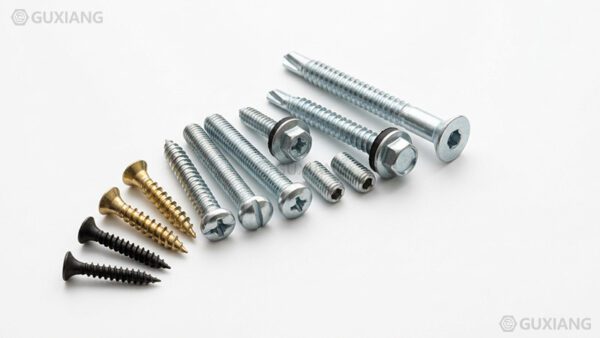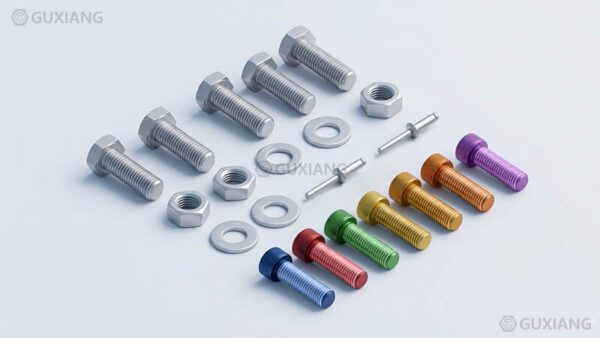






Застежка - это аппаратное устройство, которое механически соединяет два или более компонентов вместе, либо постоянно, либо таким образом, что позволяет снова разобрать соединение. Болты, винты, орехи, шайбы, заклепки, якоря и булавки все сидят внутри этого определения. Инженеры, покупатели и специалисты по техническому обслуживанию ищут этот термин по той же практической причине: стыки выходят из строя, когда крепеж был неправ для нагрузки, окружающей среды или метода сборки. Это руководство определяет, что такое крепеж, отображает основные типы крепежа и приложения и дает вам структуру выбора, которую вы можете применить прямо к чертежу.

Что такое застежка?
Застежка - это любое аппаратное устройство, которое соединяет две или более частей механическими средствами, а не химической связью, такой как клей или металлургическая связь, такая как сварка. Определение широкое: оно охватывает резьбовые части, которые создают силу зажима, непоточные части, такие как заклепки, которые блокируются деформацией, и удерживающие устройства, такие как затворы, которые блокируют движение.
Первое различие, которое имеет значение, заключается в том, должен ли сустав распадаться. Застегнутые застежки такие как болты и винты являются съемными, что делает их по умолчанию, когда оборудование нуждается в обслуживании или разборке для отгрузки. Заклепки и многие якоря являются постоянными. Выбор неправильной стороны этой линии дорог: постоянный крепеж в исправном соединении превращает десятиминутный ремонт в вырез и переделку.
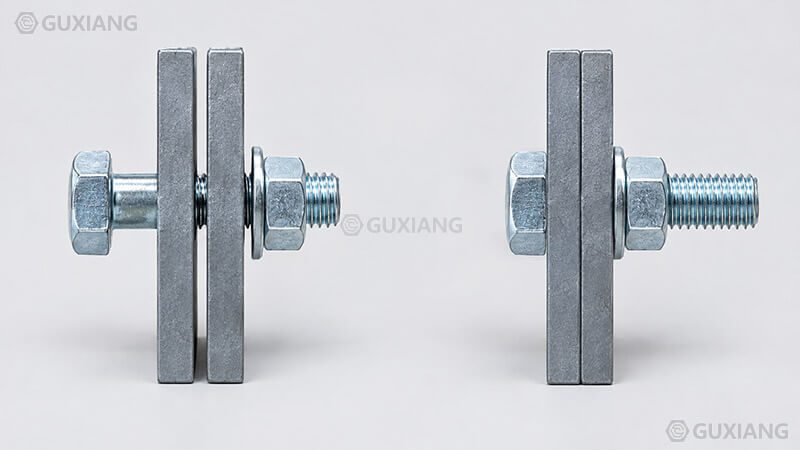
Второе отличие заключается в том, как переносится груз. Совместная болтовая работа в напряжении: затягивание растягивает болт, и это растяжение зажимает пластины, поэтому трение между ними сопротивляется сдвигу. Заклепка или штифт работают в сдвигах, а шайба работает в сжатии, распространяя нагрузку и защищая поверхность. Назовите путь нагрузки, и тип крепежа следует.
Анатомия имеет значение, потому что призывы к рисованию относятся к каждой функции по имени. Голова обеспечивает подшипниковую поверхность и крутящий момент интерфейса, лоскут является непоточным корпусом, а нить несет основной диаметр, незначительный диаметр и шаг, которые решают, будет ли гайка работать вообще. Вызов, который называет стиль головы и шаг, но опускает длину нити, является распространенным источником отклоненных заказов.
Обзор в Вступление в Википедию использует тот же фрейминг, и полный каталог, который мы поставляем, живет под крепления. Застежки почти всегда являются самыми дешевыми частями в сборке и первыми, когда она выходит из строя. Именно поэтому определение имеет коммерческое значение.
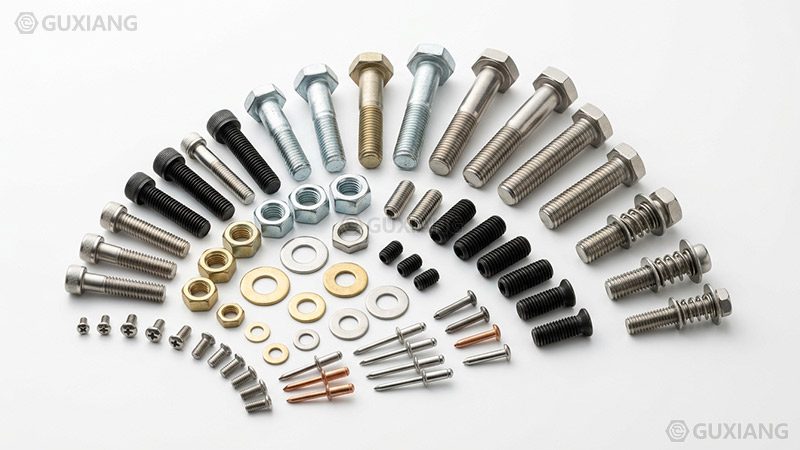
Типы застежек
Типы застежек можно сортировать пятью способами, а реальная спецификация касается всех пяти. Форма и стиль головы говорят вам, как части сидений, диск говорит вам, как крутящий момент попадает, нить говорит вам, с чем он спаривается, материал говорит вам, как долго он выживает, и приложение говорит вам, какая конвенция регулирует его.
| Тип | Определение | Типичное использование | Требуется предварительно просверленное отверстие | Съемность |
|---|---|---|---|---|
| Болт | Внешне резьбовый крепеж вставлен через клиренсовые отверстия и затянут гайкой | Конструкционная сталь, фланцы труб, рамы машин | Да (отверстие) | Съемный |
| К черту | Наружно резьбовый крепеж, который соединяется с существующей внутренней нитью или образует свою собственную | Машинные сборки, корпуса, деревообработка | Обычно (пилот или клиренс) | Съемный |
| Орех | Внутренне резьбовый компонент, который соединяется с болтом или шпилькой | Любое болтовое соединение | Нет | Съемный |
| Шайба | Плоское или форменное кольцо, которое распределяет нагрузку, защищает поверхность или сопротивляется ослаблению | Под болтовыми головками и орехами | Нет | Съемный |
| Винт | Безголовый винт, пробитый через хаб, чтобы запереть его против вала | Пули, ошейники, шестерни | Пробитое отверстие | Съемный, полупостоянный |
| Ривт | Беспоточный штифт деформирован на установке, чтобы сформировать вторую голову | Листовой металл, шкурки самолетов, корпуса | Да | Постоянный |
| Якорь | Устройство, которое захватывает бетон или кладки путем расширения, трения или склеивания | Фиксация на бетоне, кирпиче, блоке | Да | Съемные в большинстве конструкций |
Прочитайте последние две колонки вместе, потому что они решают, как продукт ведет себя в обслуживании. Машина, которая плавает в секциях, хочет болт; запечатанный корпус хочет заклепку.
По форме и стилю головы
Шестиглавый костюм конструктивно и машинно работает, потому что розетка захватывает их сбоку, а фланцевая версия распределяет нагрузку без отдельной стиральной машины. Кепка разъема и головки кнопок сидят низко или смываются, поэтому они доминируют в корпусах, где выступающая гекс будет нарушать движущуюся часть. Контрсанкционные сиденья смываются и требуют противопоказания. Наш болты, винты, орехи, и стиральная машина диапазоны организованы этой логикой, и каждая геометрия изложена в нашей системе типы головок винтов руководство.
Путешествие и перерыв
Привод устанавливает, сколько крутящего момента принимает часть, прежде чем инструмент выключится. Слотированные диски являются самыми старыми и самыми легкими для повреждения. Приводы Phillips были разработаны для преднамеренного разминирования, что защищает сустав при низком крутящем моменте, но ограничивает преднагрузку, которую техник достигает вручную. Hex и Torx передают гораздо больше крутящего момента с меньшей радиальной силой, поэтому Torx взял на себя сборку автомобилей и приборов.
Формы Thread
Машинные нити спариваются с пробитым отверстием или гайкой того же размера и шага, и они являются формой позади нашего машинные винты. Самонажатие и резьбообразующие винты разрезают или катят собственную спаривающуюся нить в листовом металле или пластике, удаляя операцию постукивания. Древесные винты используют грубый профиль с большим радиусом корня для захвата волокон без расщепления. Выбор формы резьбы — это выбор того, что может взять подложка.
По материалам
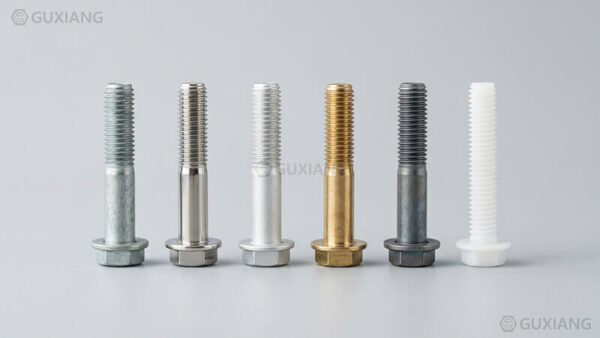
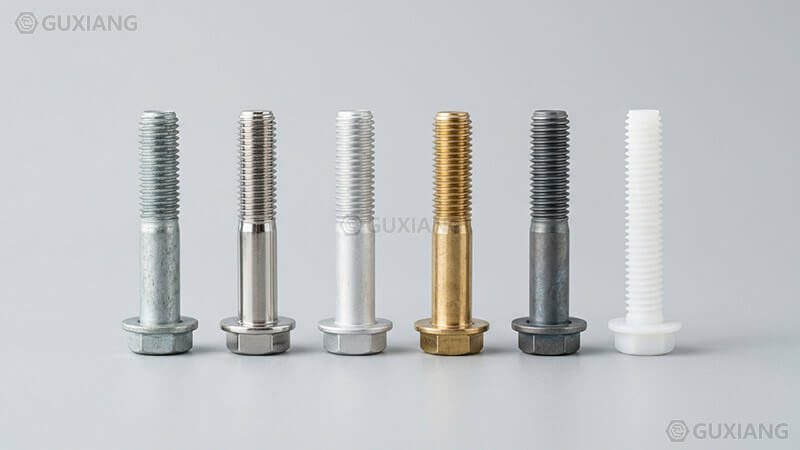
Материал регулирует коррозию, вес, температуру и цену. Углеродистая сталь является стандартом прочности за доллар, нержавеющая сталь покупает коррозионную стойкость, алюминий и титан покупают вес, а пластмассы покупают изоляцию.
С помощью приложения
Промышленное использование добавляет окончательный уровень соглашения. Конструкционные сталелитейные заводы по умолчанию до тяжелых шести болтов с соответствующим орехом и закаленной стиральной машиной. Автомобильная сборка по умолчанию для фланцевых винтов с преобладающими функциями крутящего момента. Электроника по умолчанию для небольших машинных винтов в нажатые или самоклеющиеся гайки.
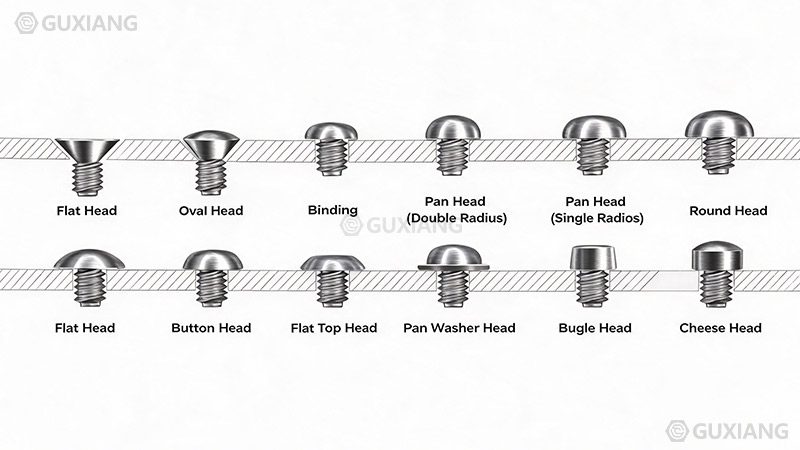
Как работают застежки?
Правильно затянутый болтовый сустав не удерживает части вместе болтом, действующим как штифт. Удерживает их, зажимая. Затягивание растягивает болт эластично, что растяжение является предварительной нагрузкой, а полученное сжатие на суставных гранях является зажимной нагрузкой. Затем пластины удерживаются трением между их лицами, и болт видит только сдвиг, если это трение преодолено. Это объясняет, почему рыхлый болт ломается: как только нагрузка зажима исчезла, сустав проскальзывает, и болт принимает нагрузку на изгиб, для которой он никогда не был рассчитан. Геометрия резьбы за этим растяжением описана в Винтовая нить Википедии.
Промышленное правило большого пальца делит вход примерно на 50 процентов на трение под головой, 40 процентов на трение в нитях и только около 10 процентов на полезную предварительную нагрузку. Таким образом, изменение смазки, покрытия или поверхности может перемещать достигнутую предварительную нагрузку на десятки процентов при неизменном крутящем моменте, поэтому фигура крутящего момента, указанная без условия трения, не является спецификацией. Наш метрическая диаграмма крутящего момента болта давать стартовые значения для общих марок и финишей.
Длина помолвки на нити спокойно решает, держится ли сустав. Рабочим правилом для стального винта в сталь является зацепление, примерно в один раз превышающее диаметр, до 1,5 раза для алюминия и в два раза или более для пластмасс. Ниже резьба полоскается до того, как болт достигнет контрольной нагрузки. На скамейке это выглядит как проблема качества крепежа; это действительно проблема глубины пробитого отверстия.
Неудача в обслуживании редко является одной перегрузкой. Саморасшатывание происходит от поперечной вибрации, которая позволяет ореху вращаться обратно на фракцию за цикл, поэтому преобладающие гайки с крутящим моментом, клиновидные шайбы и соединения для блокировки нитей появляются в сборках, подверженных вибрации. Расслабление происходит от встраивания, где поверхностные аспермии уплощаются, и сустав теряет предварительную нагрузку. Усталость следует после потери нагрузки зажима. Защита нагрузки зажима: крутящий момент до заявленного значения с заявленным условием трения, затем повторная проверка после первого теплового цикла.
Одной из практических ловушек является рассмотрение крутящего момента как цели, а не средства. Рычаг крутящего момента устанавливает целевой вход, но выход, который имеет значение, - это растяжение в болте и зажим, который он создает, и этот выход качается со смазкой, покрытием и отделкой поверхности. Один и тот же крутящий момент на сухом простом болте и восковом пластинчатом болте может приземляться при очень различной предварительной нагрузке, поэтому критические соединения указывают крутящий момент с условием трения или определяют метод с контролируемым напряжением. Когда сустав связан с безопасностью, проверьте предварительную нагрузку непосредственно с помощью ультразвукового измерения, а не доверяя гаечному ключу. Документируйте состояние трения на чертеже, чтобы ассемблер и инспектор прочитали один и тот же номер.
Материалы крепежа
Выбор материала устанавливает поведение коррозии, вес, температурный предел и стоимость единицы в одном решении. В таблице сравниваются семь семей, с которыми встречается большинство покупателей, и приводятся ориентировочные цифры. У каждой семьи есть специальный гид в нашей материалы для крепления сравнение.
| Материальное семейство | Типичный[0] | Прочность на растяжение (индикативная) | Устойчивость к коррозии | Индекс стоимости (углерод = 1,0) |
|---|---|---|---|---|
| Углеродистая сталь | 4.6, 5.8, 8.8 | 400-800 МПа | Бедный, нуждается в [...] | 1.0 |
| Легированная сталь | 10.9, 12.9, ASTM A193 B7 | 1000-1200 МПа | Бедный, нуждается в [...] | 1.3 |
| Нержавеющая сталь | A2-70 (304), A4-70 (316), A4-80 | 500-800 МПа | Отличное добро | 3.0–4.0 |
| Латунь | C36000, CZ121 | 300-500 МПа | Хорошо, не в хлоридах | 3.0 |
| Алюминий | 6061-Т6, 7075-Т6 | 310-570 МПа | Хорошо, из оксидной пленки | 2.5 |
| Титан | Класс 2, класс 5 (Ti-6Al-4V) | 340-1100 МПа | Отлично, включая морскую воду | 10 и выше |
| Пластик без покрытия, нейлон | PA66, [0], PVDF | 50-90 МПа | Отлично | Высокий на килограмм, низкий на часть |
Ценности являются ориентировочными и приблизительными. Утвердить против руководства PEEK и класс прочности нейлон до без покрытия.
Углеродистая сталь - это то, с чего начинается большинство проектов, потому что она обеспечивает лучшую прочность за деньги. Слабость коррозии: голая ржавчина, как только она видит влагу, поэтому большинство наружных применений зависят от нейлон. Увидеть наш без покрытия нейлон руководство.
Легированная сталь повышает прочность, достигая классов свойств 10.9 и 12.9 с растяжением, приближающимся к 1000-1200 МПа. Он зарабатывает свое место, где закреплен сустав нейлон, но он разъедает, как [0], и нуждается в сбросе водорода после покрытия. Увидеть наш без покрытия нейлон руководство.
Нержавеющая сопротивляется коррозии через пассивную пленку, богатую хромом, которая восстанавливается при повреждении, поэтому она не нуждается во многих влажных средах. Больше всего покупателей из двух семей встречают 304 (A2) и 316 (A4), которые добавляют молибден для устойчивости к хлориду. Степени установлены в нашей без покрытия[1][2]] руководство.
Медь выполняет декоративные и электрические роли. Он прекрасно работает и достаточно хорошо подходит для терминалов, но он мягкий рядом со сталью и страдает от хлоридного обслуживания. Укажите его для внешнего вида, а не структуры.
Алюминий нейлон переносит примерно одну треть плотности стали, поэтому они появляются в транспортных, PEEK и [0] корпусах, где масса является ограничением. Оксидная пленка дает коррозионную стойкость и анодирование утолщает ее, но прочность скромная. Подробности в нашем алюминий[0] руководство.
Титан обладает выдающейся прочностью к весу и коррозионной стойкостью морской воды, зарабатывая [0] и нейлон пошлину, где сталь будет ржаветь, а алюминий будет слишком слабым. Стоимость обычно на порядок выше стали, поэтому она остается выбором специалиста.
Спроектированные [0], такие как нейлон и PEEK, производят детали, которые не являются проводящими и немагнитными, подходящими для электрического и коррозионного обслуживания при доле прочности металла. Наш [1] и PEEK [0] путеводитель там, где они есть.
Одно правило перевешивает остальные на смешанных металлических сборках: не связывать металлы далеко друг от друга на гальванической серии без изоляции. Небольшая алюминиевая кронштейн на большой нержавеющей панели является классическим отказом, потому что алюминий становится анодом. Исправления включают изолирующий шайба, барьер покрытие или более близких партнеров. Механизм устанавливается на Википедия о гальванической коррозии.
Стандарты крепежное изделие
Стандарты существуют, поэтому вызов на чертеж означает то же самое для мельницы в одной стране и сборочного завода в другой. На практике спецификация приводит два документа: размерный стандарт, фиксирующий геометрию, и материал или свойство стандарт, фиксирующий прочность. Вызов гексболта конструкционный ссылается на ASME B18.2.1 для размеров и ASTM A325 или F3125 для материала.
| Тело или система | Регион | Типичные стандарты крепежное изделие | Чем он управляет |
|---|---|---|---|
| ISO | Международный | ISO 4014, ISO 4032, ISO 898-1, ISO 3506 | Размеры и классы свойств метрическая система |
| DIN | Германия, широко распространенная в Европе | DIN 931, DIN 934, DIN 912 | Размеры метрическая система, в значительной степени замененные ISO |
| ANSI / ASME | Соединенные Штаты | ASME B18.2.1, B18.2.2, B1.1 | Размеры серии дюйма и форма резьба |
| ASTM | США, цитируемые по всему миру | A307, A325, A490, F3125, A193, F593 | материал и требования к производительности |
| САЙ | США: автомобилестроение возглавил | SAE J429, J995 | Сорта прочности серии Inch |
Системы перекрываются больше, чем ожидают новички, и именно здесь происходят ошибки замены. DIN 931 и ISO 4014 описывают номинально один и тот же шестнадцатеричный болт, но отличаются на ширина по квартирам для некоторых размеров. метрическая система и серии дюйма не являются взаимозаменяемыми, потому что угол и шаг резьба отличаются даже при одинаковых диаметрах. Назовите одну систему на чертеж.
Стандарты поддерживаются органами, которые их публикуют, и наиболее прочные ссылки указывают на организации. Начните с ISO для международной работы метрическая система, ASTM International для североамериканских спецификаций материал и покрытие, ASME для серийных размеров и SAE International для классов автомобилестроение. О том, как системы DIN, ISO, ANSI и ASME связаны с глобальным проектом, см Стандарты крепежное изделие объяснили руководство.
крепежное изделие Размеры и размеры
Вызов размера - это четыре числа в правильном порядке: номинальный диаметр, шаг резьбы, длина и стандарт, который фиксирует геометрию головы и резьбы. “M10 x 1.5 x 50 ISO 4014” является однозначным. “M10 x 50” не является, потому что M10 также поставляется в 1,25 и 1,0 тонких шагах, а тонкий гайка начнется на грубом болте и захватит несколько поворотов вниз. Конвенции длины также различаются: длина шести болтов исключает головку, длина винт с потайной головкой включает ее.
| Обозначение метрическая система | Номинал диаметр (мм) | стандарт грубый шаг (мм) | Hex across flats (мм) |
|---|---|---|---|
| M3 | 3.0 | 0.5 | 5.5 |
| M4 | 4.0 | 0.7 | 7 |
| M5 | 5.0 | 0.8 | 8 |
| M6 | 6.0 | 1.0 | 10 |
| M8 | 8.0 | 1.25 | 13 |
| M10 | 10.0 | 1.5 | 16 |
| M12 | 12.0 | 1.75 | 18 |
| M16 | 16.0 | 2.0 | 24 |
| M20 | 20.0 | 2.5 | 30 |
| M24 | 24.0 | 3.0 | 36 |
Обычная серия ISO метрическая система. Размеры серии тонкого шага и дюйма отличаются; подтвердить против размерности стандарт.
Серия дюймов крепежные изделия использует другой словарь: дробные диаметры, витков на дюйм и калибровочные номера для небольших винтов. Затвор 1/2-13 UNC и затвор M12 близки в диаметр, но не взаимозаменяемы, потому что 13 витков на дюйм не является шагом 1,75 мм. Преобразуйте намеренно и проверьте форму потока, а не только диаметр.
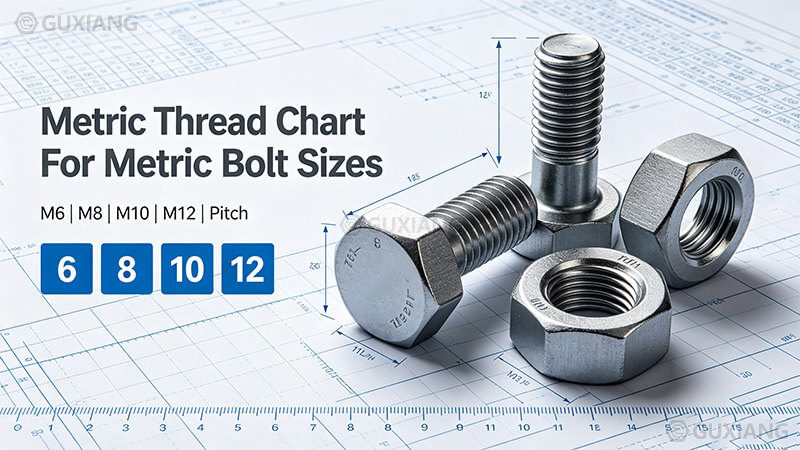
Три чека спасают большинство отвергнутых партий. Подтвердите наличие плоскостей напротив розетки, потому что ISO и DIN различаются по некоторым размерам. Подтвердите подачу против спаривающей части, а не принимайте грубую. Подтвердите длина резьбы, потому что полностью резьбовой и частично резьбовый болты не являются заменителями в суставе, который опирается на шанк для сдвига. Полный список находится в нашем metric thread chart и imperial thread chart.
A tolerance class is part of the size callout even when it is left unstated. Metric threads default to 6g on the bolt and 6H on the nut, a deliberate clearance that lets the fastener assemble and still carry load. A coarse pitch gives more thread engagement per turn and resists cross threading, so it is the default for general assembly; a fine pitch takes up less length for the same tension and holds better under vibration, which is why thin sections and adjustment screws use it. Length is measured to a convention: hex bolt length stops at the underside of the head, while a countersunk screw length includes the head, so a 20 mm hex bolt and a 20 mm countersunk screw are not the same installed length. State the convention when the length is critical.
How to Choose a Fastener
Fastener selection is a sequence, not a single decision. Work the steps in order, because each one narrows the options for the next.
Define the joint. What is being joined, how thick is the stack, and is there access to both sides? One sided access pushes you toward blind rivets, self tapping screws, or clinch hardware.
Quantify the load. Tension, shear, or a mix, and static, cyclic, or shock? Cyclic loading makes clamp load retention the priority, which favours higher preload and a locking feature over a bigger diameter.
Set the environment. Indoor dry, rain washed, coastal salt, chemical, or high temperature each narrows the material and coating pair.
Pick the material and grade. Material for the environment, grade for the load. Our bolt grade chart sets the strength classes side by side.
Choose the coating. Match it to the environment, then check the effect on thread fit and on friction.
Fix the standard and dimensions. Name the system, head style, diameter, pitch, and length, in that order.
Check assembly and cost. Driver access, tool clearance, automation, and total installed cost rather than unit price.
The table below compresses that sequence for the service conditions we see most often.
| Service condition | Recommended type | Recommended material | Recommended coating or finish |
|---|---|---|---|
| Dry indoor, light load | Machine screw or self tapping screw | Carbon steel 4.6 / 5.8 | Zinc plate, Fe/Zn 5–8 |
| Indoor machinery with vibration | Hex bolt plus nut plus locking washer | Carbon steel 8.8 | Zinc plate, Fe/Zn 8–12 |
| Outdoor, rain exposure | Hex bolt or structural bolt | Carbon steel 8.8 | Hot dip galvanized or Fe/Zn 25 |
| Coastal air or de-icing salt | Hex bolt or screw | Stainless A4-70 (316) | Пассивация |
| Chemical or food plant wash-down | Screw or bolt | 316 stainless or PEEK | Passivation, or none for polymer |
| Weight critical assembly | Titanium or aluminium bolt | Ti Grade 5, or 6061-T6 | Anodizing for aluminium, none for titanium |
| Elevated temperature service | Stud plus nut | Alloy steel A193 B7 or B8M | None, or phosphate with oil |
| Electrical isolation or non magnetic duty | Nylon or PEEK screw | PA66 or PEEK | Нет |
| Thin sheet with blind access | Blind rivet or self clinching nut | Aluminium or steel body | Per base metal |
| Frequent service access | Captive screw, or bolt plus washer | 8.8 or A2-70 | Zinc plate or passivation |
Indicative recommendations. Confirm against the governing design code and the actual service environment.
Two habits separate a good specification from an average one. Write the environment on the drawing alongside the part callout. Treat unit price as the last filter: a fastener that costs three times more but removes a warranty claim is usually cheaper.
Three mistakes appear repeatedly in rejected specifications. The first is rating the joint by diameter alone and ignoring engagement length, which lets the thread strip before the bolt reaches proof load. The second is specifying a coating after the threads are cut, so the plating consumes the fit and the nut jams; decide the coating before the thread is rolled. The third is mixing systems on one drawing, such as a metric bolt with an inch nut, which looks close on paper and fails on the bench. A short checklist on the drawing, diameter, pitch, grade, coating, and standard named in that order, prevents most of these before the first part is made.

Fastener Surface Treatments and Coatings
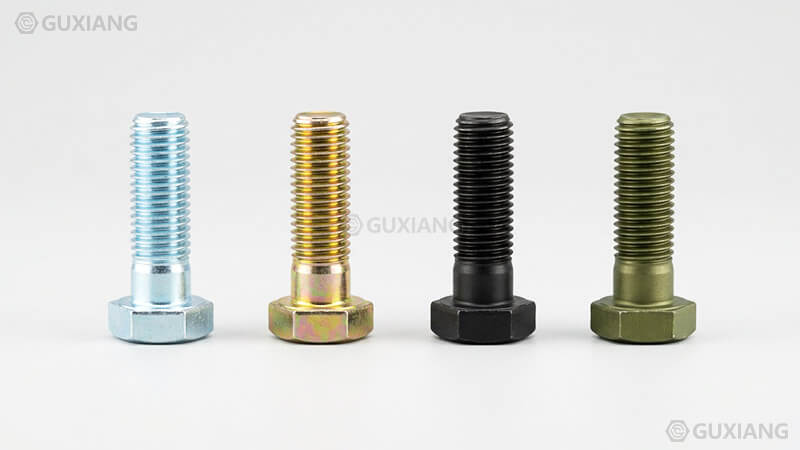
A coating lets an inexpensive carbon steel fastener survive outdoors, and the choice often decides service life more than the base metal does. The options trade thickness, cost, and thread fit, so match the coating to the environment.
| Покрытие | Процесс | Типичный толщина | Indicative ASTM B117 salt spray | Relative cost | Примечания |
|---|---|---|---|---|---|
| Zinc electroplating | Electrolytic | 5–25 µm | 96–240 h chromated | 1.0 | Thin and economical, holds thread fit |
| Hot dip galvanizing | Molten zinc bath | 45–85 µm on bolts | 500–1500 h | 1.5 | Thick and durable, swells threads |
| Mechanical galvanizing | Cold peening | 25–150 µm | Good | 1.5 | No hydrogen embrittlement risk |
| Zinc flake | Dip and spin | 8–25 µm | 480–1000 h | 2.0 | No hydrogen risk, high temperature tolerant |
| Black oxide | Chemical conversion | Under 1 µm | Minimal | 0.8 | Cosmetic only |
| Анодирующий | Electrolytic, aluminium | 5–25 µm | Good | 1.5 | Hardens the surface |
| Пассивация | Chemical, stainless | Negligible | Enhances base resistance | 0.5 | Rebuilds the passive film |
Values are indicative and approximate. Salt spray hours rank options; they are not a field life prediction.
The first shop floor issue is thread fit. A metric thread is cut to a tolerance class, 6g for the bolt and 6H for the nut, and the clearance is small by design. A plating of 8 to 25 µm can consume a large share of that tolerance, so a nut that ran freely before plating binds after it, and go/no-go gauges fail at incoming inspection. The fix must be decided before plating: tap the nut oversize, or cut or roll the thread after coating. The effect grows as diameter shrinks, so an M3 fine thread is far more at risk than an M20 coarse one.
The second issue is hydrogen embrittlement. Acid pickling and electroplating can drive hydrogen into a hardened steel part, and on high strength fasteners it can cause sudden brittle fracture after installation. The remedy is a hydrogen relief bake applied soon after plating, commonly within four hours, at roughly 190–220 °C for a minimum of three hours. Above roughly 1000 MPa tensile or 39 HRC the bake is not optional; above 1200 MPa many specifications forbid electroplating and require a process with no acid step, such as mechanical galvanizing or zinc flake. Both thresholds are laid out in ASTM B633-23.
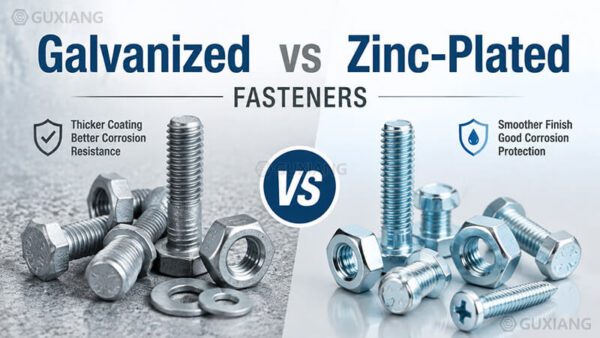
Read corrosion testing correctly as well. ASTM B117 neutral salt spray, described at ASTM B117, is a comparative laboratory method, not a service life guarantee: a part that survives 1000 hours in the cabinet can still fail quickly in a crevice. Use the hours to rank options, then validate the real joint. For the most specified finish see our цинковом покрытии guide, and for the two zinc families our galvanized versus zinc plated comparison. Stainless takes a different route: passivation rebuilds the chromium oxide film, described at Wikipedia’s passivation entry.
Applications of Fasteners
Fastener applications are best grouped by the demands each sector places on the joint, because those demands drive the specification.
Structural steel and construction work in high clamp load on large diameters, usually with plain or galvanized carbon steel bolts in a specified grade. Slip resistant connections depend on clamp load rather than shear, so the tightening method matters as much as the part.
Automotive assembly is a different problem: very high volume, automated driving, and a hard requirement that joints do not come back. Flange headed screws with prevailing torque threads, Torx drives that will not cam out, and zinc flake coatings that carry no hydrogen risk all follow from those constraints. Weight saving adds aluminium and titanium.
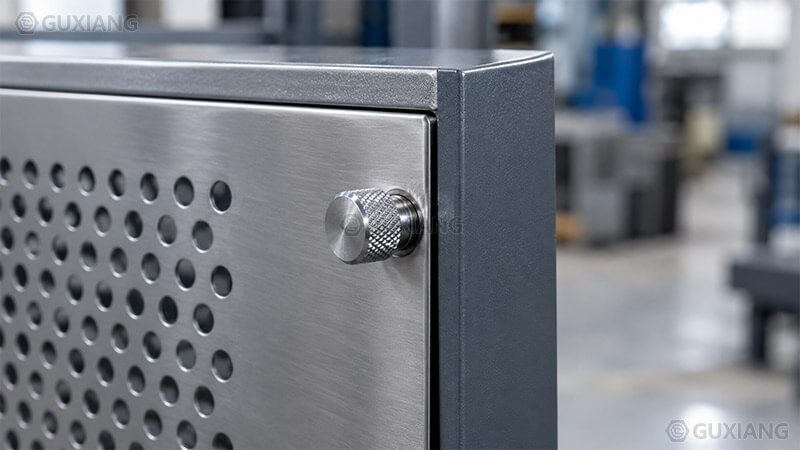
Industrial machinery is the most varied category. Frames use hex bolts and washers, guards use captive screws so the panel cannot be dropped, and rotating assemblies use set screws and lock nuts. Serviceability drives most of it, because a joint a technician cannot reach is a joint left loose.
Electronics and electrical enclosures push toward small machine screws into pressed or self clinching nuts, with plastic fasteners where isolation is needed. Torque values are low and the failure mode is a stripped thread.
Marine and coastal installations are where material choice dominates. Chloride exposure defeats plain zinc quickly, so A4-70 (316) stainless or a heavy coating on carbon steel is the starting point, and dissimilar metal contact must be designed out.
Wood and furniture work uses its own family, from coarse wood screws to confirmat screws, plus deck screws with corrosion resistant coatings outdoors. The choice interacts with the substrate: our drywall screw versus deck screw comparison shows how a small geometry change moves a screw from interior board to treated timber. Aerospace adds traceability, titanium, and documented inspection. Energy and process plant adds pressure and temperature, which brings stud bolts to ASTM A193 grades.
How Fasteners Are Manufactured
Most headed fasteners start as wire rod and are formed by cold heading: the wire is cut to length and upset in a multi station machine that forces metal into a die, forming the head without cutting. Cold heading is fast, produces almost no scrap, and work hardens the material. Critically, it leaves the grain flow following the shape of the part rather than cut across it, which is why a cold headed bolt is stronger in the head to shank fillet than the same part machined from bar. Machining is reserved for large diameters, low volumes, and special geometries, because it wastes material and interrupts grain flow where fatigue cracks start.
Threads are then formed by rolling rather than cutting on almost all production fasteners. Two dies press the thread form into the blank, displacing metal instead of removing it. Rolled threads are stronger for two reasons: the surface is burnished and work hardened, and the grain flow follows the profile.
Heat treatment comes next for anything above the lowest property classes. Carbon and alloy steel fasteners are quenched and tempered to reach the specified strength and toughness, and the tempering temperature sets the balance between hardness and ductility. This step makes a 10.9 bolt a 10.9 bolt, and it also puts hydrogen embrittlement on the risk list, because a hard part is a susceptible part.
Surface treatment follows, then inspection. Thread inspection uses go/no-go gauges: the go gauge must run the full thread under finger torque, and the no-go gauge must not enter beyond the permitted amount. On a coated part the go gauge is the check that matters, because it catches a plating that has eaten the tolerance. Dimensional checks cover across flats, head height, and length; mechanical sampling covers tensile and hardness. Where we add value is treating these as one connected process, the subject of our engineering driven fastener solutions page.
Volume production holds the tolerances that matter through the tooling rather than through inspection. The cold heading die and the thread rolling dies set the geometry part to part, so a run of a million bolts stays inside the window set by the gauges, and the inspector samples rather than measures every piece. Secondary operations such as drilling a hole, milling a slot, or threading a reduced shank are added after forming when a customer needs a special feature, and each one is a point where grain flow is interrupted, so it is located away from the fillet where fatigue starts. The same part made by machining from bar would need full inspection and still carry the weaker grain structure.
Custom Fastener Options
Catalog parts cover most requirements, and the economics of cold heading mean a standard part is almost always cheaper. There are four situations where a custom fastener is worth it, and in each the tooling cost is recovered elsewhere: a geometry the catalog does not offer, such as a non standard length, shoulder diameter, or combined head and thread form; a material or grade combination the environment demands; a coating or lubrication specification that must hit a salt spray or friction target; and consolidation, where one part replaces two or three.
Custom work changes the commercial shape of the order. Tooling is a fixed cost, so unit price falls steeply with volume and there is a minimum quantity below which machining is the better route. Lead time includes tooling manufacture and first article approval, which belongs in the project schedule. First article inspection should be agreed before production, with the acceptance gauges named in writing.
The deliverable that matters most is a drawing the manufacturer can read without guessing: every dimension affecting fit, the standard, material and grade, coating and thickness, and inspection method. Our custom fastener services team works from that level of definition.
Need a specific screw size, material, standard or custom geometry?
Send the drawing and the service environment to our engineering team and we will confirm the specification, the tooling route, and a realistic lead time.
Частые вопросы
What is the difference between a bolt and a screw?
A: A bolt is designed to be inserted through clearance holes and tightened with a nut, while a screw mates directly with a thread in one of the parts being joined or forms its own thread as it is driven. The distinction is about how it is used rather than how it looks, which is why the same externally threaded part can be called either depending on the joint. In practical terms, a bolted joint is tightened from the nut side and a screwed joint is tightened from the head side. Both create the same clamping force.
What are the main types of fasteners?
A: The main groups are Застегнутые застежки, which include bolts, screws, studs, set screws, and nuts; non threaded fasteners, which include rivets, pins, anchors, and retaining rings; and auxiliary parts such as washers that support the joint. Within threaded fasteners the classification runs by head style, drive type, thread form, material, and application. Most industrial assemblies use a bolt or screw with a nut or tapped hole, plus a washer to spread the load.
What is the most common fastener material?
A: Carbon steel is the most common fastener material because it offers the best strength per unit cost and the widest availability in sizes and head styles. Its weakness is corrosion, so it is almost always supplied with a coating such as цинковом покрытии for outdoor or humid service. Stainless steel is the next most common where corrosion resistance matters, followed by alloy steel for high strength, aluminium and titanium for weight saving, and plastics for electrical or chemical isolation.
How do I choose the right fastener size?
A: Work from the joint backwards. Measure the total stack thickness, add the nut height plus two or three threads of protrusion, and that is your minimum length. Choose the diameter from the load, using the property class to set how much clamp load the section can carry, then check the thread engagement length: around one times the diameter in steel, roughly 1.5 times in aluminium, and more in plastics. Finally confirm the pitch, because a fine pitch nut will start on a coarse thread and then seize.
What does a fastener grade number mean?
A: On metric carbon steel fasteners the grade is a property class such as 8.8 or 10.9, where the first number times 100 gives the minimum tensile strength in MPa and the second number times 10 gives the yield to tensile ratio. So an 8.8 bolt has a minimum tensile strength of 800 MPa and yields at 80 percent of that. Inch series fasteners use SAE grades such as 2, 5, and 8, and stainless uses codes such as A2-70 or A4-70, where 70 means 700 MPa tensile.
What is the difference between metric and imperial fasteners?
A: Metric fasteners are designated by a nominal diameter in millimetres and a thread pitch in millimetres, such as M10 x 1.5, while imperial fasteners use a fractional diameter and threads per inch, such as 1/2-13 UNC. The two are not interchangeable even at similar diameters, because the pitch and, in some cases, the thread angle differ. Metric parts follow ISO dimensional standards and inch parts follow ASME or SAE, so the required tools and washers differ as well.
Are fasteners and hardware the same thing?
A: Not quite. Fastener refers to a device whose primary function is to join or secure components, such as a bolt, screw, nut, washer, rivet, or anchor. Hardware is a broader trade term that can include fasteners along with brackets, hinges, handles, and other items that support an assembly without joining it. In purchasing practice the two words often overlap, and some suppliers list fasteners as a subcategory of hardware.
How do you stop a fastener from loosening?
A: Loosening from vibration happens when transverse movement lets the nut rotate back slightly on each cycle, so the fix is to keep either the preload or the relative motion. Options include a prevailing torque nut or screw, a wedge lock or serrated washer, a thread locking compound, a castellated nut with a split pin, or a safety wire in aerospace practice. Tightening to the correct preload in the first place matters more than any locking device, because a joint with enough clamp load rarely loosens on its own.
What is the difference between a permanent and a removable fastener?
A: A removable fastener, such as a bolt with a nut or a screw into a tapped hole, can be disassembled and refitted without destroying the part or the joint. A permanent fastener, such as a solid or blind rivet, a clinch nut, or a welded stud, is designed to stay in place and must be drilled out or cut away for removal. The choice depends on whether the assembly will need servicing, adjustment, or disassembly for shipping at any point in its life.
What is clamp load and why does it matter?
A: Clamp load is the compressive force that a tightened fastener applies to the joint, produced by stretching the bolt when it is torqued. It matters because a properly clamped joint transfers shear load through friction between the plates rather than through the bolt shank, which is what keeps the fastener from seeing fatigue loading. If clamp load is lost through loosening, relaxation, or embedding, the joint starts to slip and the bolt begins to carry alternating load, which is how most bolted joints eventually fail.
References
Fastener, Wikipedia. Background on the fastener family, the permanent and non permanent split, and the scope of the term used in this guide.
Screw thread, Wikipedia. Reference for thread geometry, pitch, and the mechanics behind preload generation.
ISO. The international body behind ISO 4014, 4032, 898-1, and 3506 cited in the standards and dimensions sections.
ASTM International. Source of A307, A325, A490, F3125, A193, and F593 referenced across the standards section.
ASTM B633-23, Electrodeposited Coatings of Zinc on Iron and Steel. The current revision setting цинковом покрытии thickness classes and hydrogen relief baking requirements.
ASTM B117, Standard Practice for Operating Salt Spray (Fog) Apparatus. The neutral salt spray test method referenced for comparative coating data.
ASME. Publisher of the ASME B18 series dimensional standards and B1.1 thread form for inch series fasteners.
SAE International. Source of SAE J429 and J995 inch series strength grades for carbon and alloy steel fasteners.
AMPP. The corrosion and coatings authority, formed from NACE, referenced for coating selection and corrosion practice.
Galvanic corrosion, Wikipedia. Background on dissimilar metal attack and the galvanic series used in the materials section.
Passivation (chemistry), Wikipedia. Reference for the passive film behind stainless corrosion resistance and the passivation treatment.