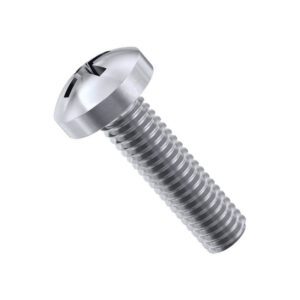






Fasteners are essential metal fixing components including bolts, screws, nuts and washers. We supply all standard & custom fasteners with stable factory wholesale for global industrial buyers.
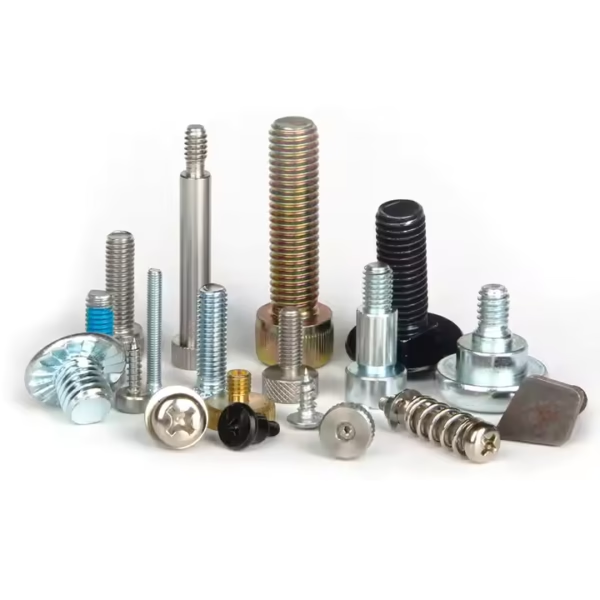

Industrial fasteners are hardware components that mechanically join two or more objects together. Bolts, nuts, screws, washers, rivets, and pins each serve distinct functions in assemblies ranging from structural steel frameworks to precision electronics enclosures. A fastener’s job is simple—hold things together—but the engineering behind material choice, thread geometry, and load distribution separates a reliable joint from a failure point. GUXIANG supplies fasteners built for these demands.
Pick the wrong fastener and you trade joint integrity for a cheap bill of materials. Thread pitch mismatch causes galling under torque. Underspecified coating fails salt spray testing at 200 hours when the spec called for 500. A bolt with yield strength below the clamp load requirement relaxes over thermal cycles and loosens. Every failure mode—shear, fatigue, crevice corrosion, hydrogen embrittlement—traces back to a selection decision made on paper before the first part ships.
Hex Bolts. Partial-thread and full-thread hex bolts per ISO 4014 / 4017 carry shear and tensile loads in structural joints. Grade 8.8, 10.9, and 12.9 cover most applications. Hex head geometry allows standard wrench access in open assemblies.
Hex Nuts. Mated with bolts to form a clamped joint. Grade 8, 10, and 12 nuts match corresponding bolt grades. Prevailing-torque lock nuts with nylon inserts or deformed threads resist vibration loosening without secondary locking elements.
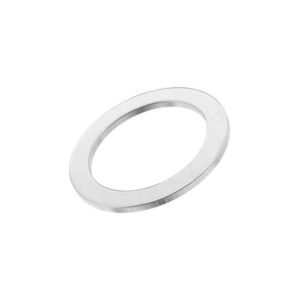
Flat Washers. Distribute bolt head bearing stress across the joint surface to prevent embedment into soft substrates. DIN 125 / ISO 7089 flat washers in steel and stainless are the workhorses. Oversized washers reduce surface pressure on slotted holes.
Spring Lock Washers. Split-ring and toothed lock washers add spring tension under the bolt head to maintain preload through vibration cycles. DIN 127 split washers in spring steel cover general-purpose anti-loosening. Not recommended for critical high-preload joints where direct tension indicating washers are preferred.
Blind Rivets. Permanent mechanical fasteners installed from one side of the assembly. Open-end, closed-end, and structural rivets cover sheet metal to structural applications. Mandrel material—steel, stainless, aluminum—dictates shear and clamp values. Dome, large flange, and countersunk head styles.
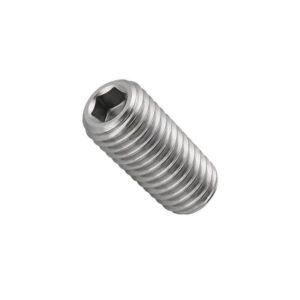
Socket Head Cap Screws. Cylindrical head with internal hex drive, per ISO 4762 / DIN 912. Higher tensile capacity than hex bolts of the same diameter due to alloy steel quench-and-temper processing. Used in machine tool fixtures, die sets, and compact assemblies where external wrench clearance is tight.
Threaded Rods & Studs. Continuous-thread rods in lengths up to 3 meters serving as tension members in concrete anchoring and pipe flange bolting. Double-end studs with different thread lengths on each end handle blind-hole assemblies. Grade B7 / B7M stud bolts dominate petrochemical flange connections.
Taper Pins & Dowel Pins. Precision alignment fasteners that locate mating components before bolting. Hardened and ground dowel pins per ISO 8734 maintain position under shear. Taper pins with 1:50 taper provide self-locking alignment in disassembly-prone setups like jig and fixture plates.
Calculate the clamp load required, then select a fastener whose proof load exceeds it with a safety factor of 1.5 to 2.0. Grade 8.8 bolts cover general structural loads. Grade 10.9 handles higher preload. Grade 12.9 risks hydrogen embrittlement in electroplated conditions—use with caution.
Hot-dip galvanized to ASTM A153 delivers 50+ years in rural environments and 20–30 years in industrial atmospheres. Zinc-nickel electroplate with trivalent passivation hits 720+ hours of neutral salt spray per ISO 9227. Stainless 316 eliminates coating as a variable entirely for marine and chemical exposure.
Anaerobic thread-locking compounds (Loctite 242/271) outperform mechanical lock washers in vibration testing per DIN 65151. Lock washers lose preload after the first few load cycles. Use thread-locking fluid for critical joints and prevailing-torque lock nuts where disassembly is frequent.
Technically possible but not recommended. Galvanic corrosion accelerates when dissimilar metals contact in the presence of moisture. Stainless bolt with zinc-plated steel nut creates a battery where the zinc sacrifices rapidly. Match materials or insert isolating washers and sealants.
Embedment relaxation and thermal cycling are the main causes. After initial tightening, surface asperities on threads and under the head flatten, reducing clamp length by microns—enough to drop preload below the joint separation threshold. Proper torque-to-yield tightening and post-torque settling cycles minimize this effect.
One and a half to three full thread pitches per ASME B18.2.1 guidelines. Less than one pitch risks incomplete thread engagement under load. More than three pitches adds no strength, wastes material, and creates interference in tight assemblies.
Social Chat is free, download and try it now here!