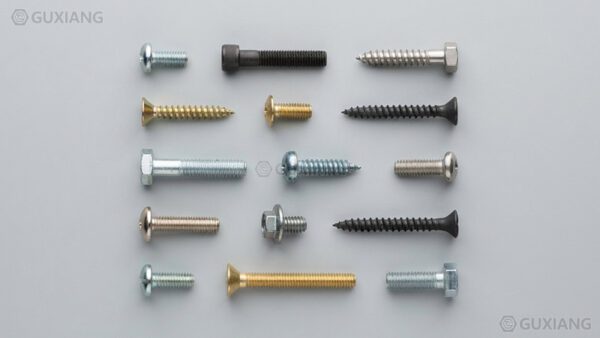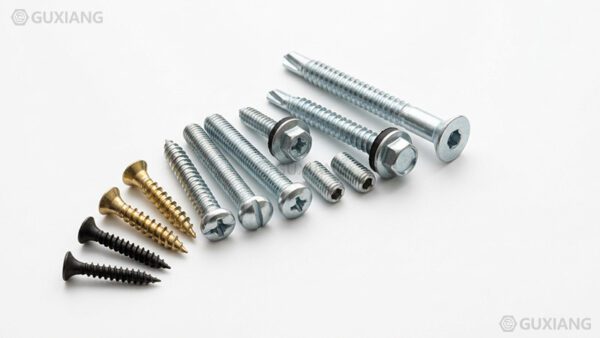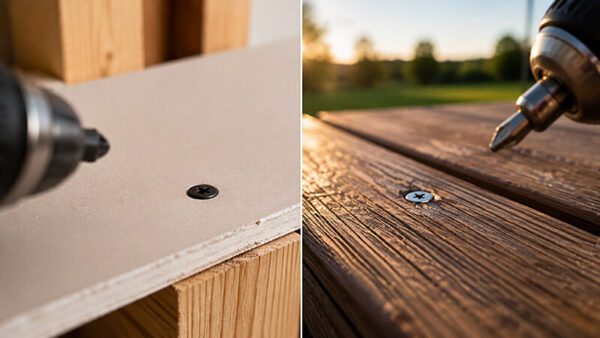






एक ड्राईवॉल स्क्रू एक कठोर, स्व-टैपिंग फास्टनर है जो जिप्सम बोर्ड को लकड़ी या स्टील फ़्रेमिंग में संलग्न करने के लिए इंजीनियर है, जो एक बकल हेड, एक तेज सुई बिंदु, एक दोहरी-थ्रेड ज्यामिति और एक ब्लैक फॉस्फेट फिनिश द्वारा प्रतिष्ठित है। एक आम लकड़ी के पेंच के विपरीत, एक ड्राईवॉल स्क्रू अपने सिर को पूर्व ड्रिलिंग के बिना कागज की सतह के साथ फ्लश करता है, अपने खुद के संभोग धागे को काटता है क्योंकि यह ड्राइव करता है, और यह उत्पादन के लिए पर्याप्त तेज करता है। एक सामान्य सेल्फ-टैपिंग स्क्रू के विपरीत, एक ड्राईवॉल स्क्रू को एक संकीर्ण नौकरी के लिए बांधा जाता है: पतली जिप्सम पैनल, हल्के गेज धातु या मुलायम लकड़ी के स्टड, और एक परिभाषित ड्राइव गहराई जो केवल कागज के चेहरे के नीचे रुकती है। क्योंकि गलत पेंच या तो कागज को फाड़ देता है, स्टड को स्ट्रिप्स करता है, या काम के छह महीने बाद पेंट के माध्यम से जंग करता है। इस गाइड में एनाटॉमी, कोटिंग, थ्रेड विकल्प, आकार, एप्लिकेशन और ड्राईवॉल स्क्रू के विफलता मोड शामिल हैं, जिसमें विनिर्देश विस्तार इंजीनियरों और खरीद टीमों को सही पेंच से मिलान करने की आवश्यकता होती है।.
क्या हैं ड्राईवॉल स्क्रू
एक ड्राईवॉल स्क्रू एक उत्पादन फास्टनर है जो जिप्सम बोर्ड (ड्राईवॉल, शीटरॉक, प्लास्टरबोर्ड) को लकड़ी के स्टड, स्टील स्टड, मेटल फरिंग और फ़्रेम असेंबली में जिप्सम पैनल में संलग्न करने के लिए है। यह सेल्फ-टैपिंग स्क्रू परिवार से संबंधित है: तेज बिंदु कागज और बोर्ड कोर को छेदता है, धागा कटौती करता है या स्टड सामग्री में एक मिलान धागा बनाता है, और एक अलग countersinking कदम के बिना बोर्ड में बकल हेड सीट करता है।.
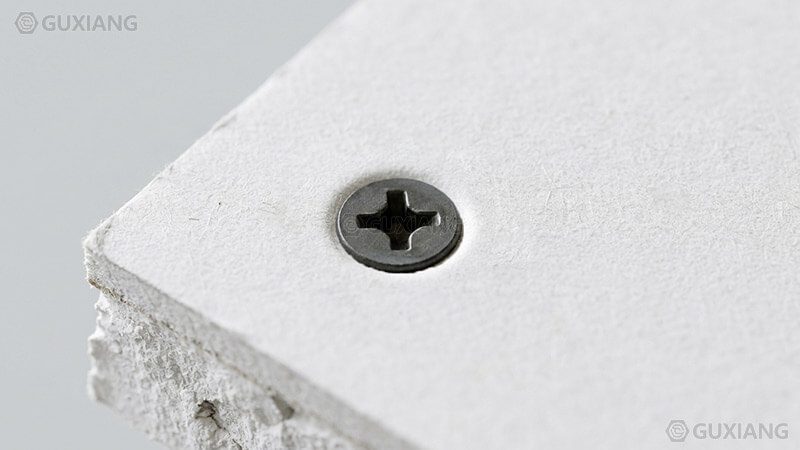
तीन विशेषताएं एक सामान्य उद्देश्य लकड़ी का स्क्रू से ड्राईवॉल स्क्रू को अलग करती हैं। सबसे पहले, सिर एक बकल प्रोफ़ाइल है, एक अवतल countersink आकार जो बोर्ड की सतह के नीचे सिर को खींचता है, क्योंकि यह सीटों के रूप में, एक protruding टोपी के बजाय एक डिंपल छोड़ देता है। दूसरा, धागा कई आकारों पर एक डबल-लीड पैटर्न में चलता है, इसलिए स्क्रू क्रांति के अनुसार तेजी से आगे बढ़ जाता है, दोहरावदार बन्धन पर चालक दल का समय काटना। तीसरा, बिंदु एक तेज सुई या gimlet बिंदु है जो तुरंत एक पायलट छेद के बिना पेपर, सॉफ्टवुड और लाइट गेज स्टील पर शुरू होता है। शरीर आम तौर पर एक कार्बन स्टील रिक्त है जो गर्मी से इलाज किया जाता है और एक कठिन मामले में carburized होता है, इसलिए धागा स्ट्रिपिंग का प्रतिरोध करता है जबकि कोर उच्च गति पर ड्राइविंग से बचने के लिए पर्याप्त क्रूरता रखता है।.
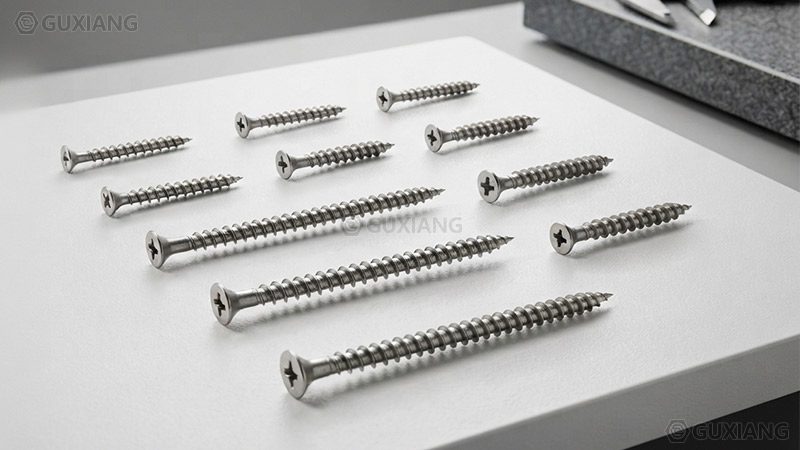
ड्राईवॉल स्क्रू को विनिर्देश परिवारों द्वारा कवर किया जाता है जो खरीदारों को पहचानना चाहिए। ASTM C954 स्टील फ्रेमिंग सदस्यों के लिए जिप्सम पैनल उत्पाद को बांधने के लिए स्टील ड्रिल स्क्रू को परिभाषित करता है, और ASTM C1002 उसी कर्तव्य के लिए स्टील सेल्फ-पियरिंग टैपिंग स्क्रू को परिभाषित करता है; दोनों मामले कठोरता, थ्रेड फॉर्म, पॉइंट ज्यामिति और कोटिंग के लिए निर्धारित आवश्यकताओं। ASME B18.6.3 सामान्य इंच श्रृंखला मशीन को कवर करता है और पेंच आयामी प्रणाली को टैप करता है जिसमें ड्राईवॉल स्क्रू व्यास, धागे और अंक फिट होते हैं। पूरा फास्टनर मानकों परिदृश्य बताता है कि प्रत्येक दस्तावेज़ कहाँ बैठता है, जबकि व्यापक पेंच के प्रकार पूर्ण स्क्रू वर्गीकरण के अंदर गाइड स्थानों drywall स्क्रू।.
एक ड्राईवॉल स्क्रू की एनाटॉमी
प्रत्येक ड्राईवॉल स्क्रू यांत्रिक रूप से उसी तरह काम करता है: एक ड्राइवर बिट अवकाश को संलग्न करता है, टॉर्क स्क्रू को स्पिन करता है, बिंदु बोर्ड को छेदता है, थ्रेड शरीर को जिप्सम कोर के माध्यम से खींचता है, और सिर कागज में एम्बेड करता है। नीचे दिए गए पांच क्षेत्रों में प्रदर्शन होता है।.
| क्षेत्र | ज्यामिति | समारोह |
|---|---|---|
| हेड | Bugle प्रोफ़ाइल, अवतल underside, फिलिप्स या वर्ग अवकाश | कागज के नीचे काउंटरसिंक फ्लश, लोड असर फैलता है, एक पावर ड्राइवर बिट स्वीकार करता है |
| ड्राइव | फिलिप्स #2 सबसे आम; वर्ग और Torx उपलब्ध | स्क्रू बंदूक से टॉर्क स्थानांतरण; हाई स्पीड ड्राइविंग के दौरान कैम-आउट को सीमित करता है |
| धागा | टाइप द्वारा डबल-लीड, तेज धारदार, मोटे या ठीक पिच | कट या स्टड में एक थ्रेड बनाता है, बोर्ड को तंग खींचता है, पुल-आउट प्रतिरोध को नियंत्रित करता है |
| अंक | तीव्र सुई या gimlet बिंदु | पूर्व ड्रिलिंग के बिना पियर्स पेपर और जिप्सम कोर; लगभग 25 गेज तक स्टील पर शुरू होता है |
| खत्म | ब्लैक फॉस्फेट, जस्ता, epoxy, या स्टेनलेस | ड्राइव के दौरान जंग प्रतिरोध, चिकनाई और आग रेटेड या नम विधानसभाओं के साथ संगतता सेट करता है |
बगले सिर अतिरिक्त ध्यान देने योग्य है क्योंकि यह कारण है कि drywall चालक दलों को countersink नहीं है। नीचे एक चिकनी अवतल वक्र है जो शंक में संक्रमण करता है, इसलिए सिर जिप्सम को विस्थापित करता है क्योंकि यह सीटों पर बैठ जाता है और शीर्ष सतह के साथ बंद हो जाता है। यह एक बहुत दूर बारी और कागज के आंसू ड्राइव; इसे गर्व और टेप संयुक्त bulges छोड़ दें। अवकाश लगभग हमेशा उत्तरी अमेरिकी drywall स्क्रू पर फिलिप्स #2 होता है, जो मानक को स्क्रू-gun बिट से मेल खाता है पेंच सिर प्रकार संदर्भ में शामिल हैं कि कैसे अवकाश और सिर ज्यामिति बातचीत करते हैं।.
थ्रेड डिज़ाइन सामग्री को फ्रेम करके भिन्न होता है, और दो वेरिएंट इतने मानकीकृत होते हैं कि उनके पास सामान्य नाम हैं: टाइप डब्ल्यू (लकड़ी, कोर्स थ्रेड) और टाइप एस (स्टील, फाइन थ्रेड)। दोनों एक तेज, उच्च-कोण वाले थ्रेड फ्लैंक का उपयोग करते हैं जो विस्थापितों के बजाय कट जाता है, जो जिप्सम में टोक़ को कम रखता है। डबल-लीड ज्यामिति प्रति क्रांति के बारे में दो थ्रेड पिचों को आगे बढ़ाती है, जो लंबी छत पर सम्मिलन समय को काटती है। टाइप एस स्क्रू पर बिंदु हल्के गेज स्टील को छेदने के लिए जमीन है, जबकि टाइप डब्ल्यू पॉइंट पतली पैनल किनारों को विभाजित किए बिना सॉफ्टवुड स्टार्ट-अप के लिए देखते हैं।.
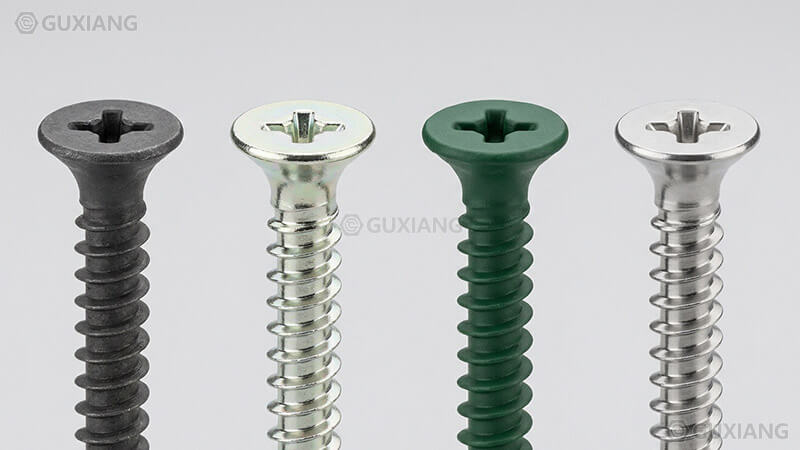
ड्राईवॉल स्क्रू के लिए कोटिंग विकल्प
कोटिंग एक दीवार विधानसभा में जंग के खिलाफ रक्षा की पहली पंक्ति है, और यह फ्रेमिंग के खिलाफ घर्षण और गैल्वेनिक व्यवहार को भी नियंत्रित करता है। चार मुख्य फिनिश परिवारों में ड्राईवॉल स्क्रू जहाज।.
फॉस्फेट ब्लैक कोटिंग
ब्लैक फॉस्फेट डिफ़ॉल्ट ड्राईवॉल स्क्रू फिनिश है। एक जस्ता या मैंगनीज फॉस्फेट रूपांतरण कोटिंग कठोर स्टील सतह पर लागू होता है, जो एक मैट ब्लैक या डार्क ग्रे लेयर का उत्पादन करता है जो स्क्रू के स्नेहन को रखता है और हल्के इनडोर आर्द्रता का प्रतिरोध करता है। कोटिंग पतली है (लगभग 0.2 से 0.5 मिलियन)। फॉस्फेट ब्लैक स्क्रू शुष्क, जलवायु नियंत्रित इमारतों में मानक आंतरिक जिप्सम बोर्ड के लिए सही विकल्प हैं। ASTM B117 स्थितियों के तहत नमक स्प्रे प्रतिरोध आम तौर पर लाल जंग प्रकट होने से 24 से 72 घंटे पहले होता है, यही कारण है कि फॉस्फेट स्क्रू कभी भी बाथरूम, रसोई या बाहरी दीवारों के लिए निर्दिष्ट नहीं होते हैं।.
जिंक इलेक्ट्रोप्लेटेड कोटिंग
स्पष्ट या पीले जस्ता electroplating इस्पात पर एक धातु sacrificial परत जोड़ता है, मोटे तौर पर वर्ग के आधार पर 5 से 12 माइक्रोन मोटी। नमक स्प्रे प्रदर्शन पहले जंग के लिए लगभग 72 से 120 घंटे तक बढ़ जाता है, और फिनिश गैरेज, उपयोगिता कक्ष और अर्द्ध-कंडीशन वाले स्थानों में पाए जाने वाले उच्च आर्द्रता से बच जाता है। जिंक-प्लेटेड ड्राईवॉल स्क्रू की लागत फॉस्फेट से थोड़ा अधिक है और नवीकरण स्टॉक पर आम हैं जहां दीवार गुहा कभी-कभी नमी देख सकता है। The जस्ता चढ़ाना गहरी गोता मोटाई कक्षाओं और संक्षारण तंत्र को बताती है, और गैल्वनाइज़्ड बनाम जिंक प्लेटेड फास्टनर जब गर्म स्नान galvanizing आवश्यक हो जाता है तुलना कवर।.
Epoxy और पॉलिमर लेपित
Epoxy या चित्रित drywall शिकंजा एक मोटे कार्बनिक परत, अक्सर हरे, सफेद, या काले होते हैं, जो स्टील को नमी से अलग करता है और उपचारित लकड़ी या असमान धातुओं के साथ सीधे गैल्वेनिक संपर्क से अलग करता है। नमक स्प्रे प्रतिरोध 500 घंटे या उससे अधिक तक कूदता है, और कोटिंग पेंटेड सतहों पर जंग ब्लेड-थ्रू को कम करता है। एपॉक्सी-लेपित स्क्रू उपचारित लकड़ी के फ्रेमिंग, आर्द्र तटीय अंदरूनी और शॉवर के ऊपर की छत के लिए मानक पिक हैं जहां कुछ वर्षों में एक फॉस्फेट स्क्रू कोरोड होगा। व्यापार बंद लागत और थोड़ा उच्च ड्राइव टोक़ है, साथ ही एक मोटा सिर प्रोफ़ाइल जो सावधानीपूर्वक गहराई नियंत्रण की मांग करता है।.
स्टेनलेस स्टील
304 और 316 स्टेनलेस drywall स्क्रू लगभग पूरी तरह से जंग को खत्म करता है, 316 के साथ खारे पानी के तटीय क्षेत्रों, पूल और खाद्य प्रसंस्करण दीवारों के लिए सिफारिश की जाती है। स्टेनलेस स्क्रू लेपित कार्बन स्टील से कई गुना अधिक है, इसलिए वे गीले या संक्षारक विधानसभाओं के लिए आरक्षित हैं जहां कोटिंग विफलता अस्वीकार्य है। The व्यास] थ्रेड थ्रेड गाइड मिश्र धातु विकल्पों को सॉर्ट करता है, जबकि कार्बन स्टील फास्टनर गाइड बताते हैं कि लेपित कार्बन स्टील अभी भी कीमत और ड्राइव व्यवहार पर आंतरिक काम पर हावी है।.
| कोटिंग | विशिष्ट नमक स्प्रे (ASTM B117) | सर्वश्रेष्ठ सेवा | सापेक्ष लागत |
|---|---|---|---|
| फॉस्फेट ब्लैक | 24-72 h | आंतरिक सूखी विधानसभा | $ |
| जिंक इलेक्ट्रोप्लेटेड | 72-120 h | गैरेज, अर्द्ध कंडीशनिंग रिक्त स्थान | $$ |
| Epoxy / बहुलक | 500+h | उपचारित लकड़ी, नम इंटीरियर | $$$ |
| स्टेनलेस 304 | 500-1000+h | तटीय, खाद्य संयंत्र | $$$$ |
| 316 स्टेनलेस | 1000+h | साल्टवाटर, पूल, रासायनिक वॉशडाउन | $$$$$ |
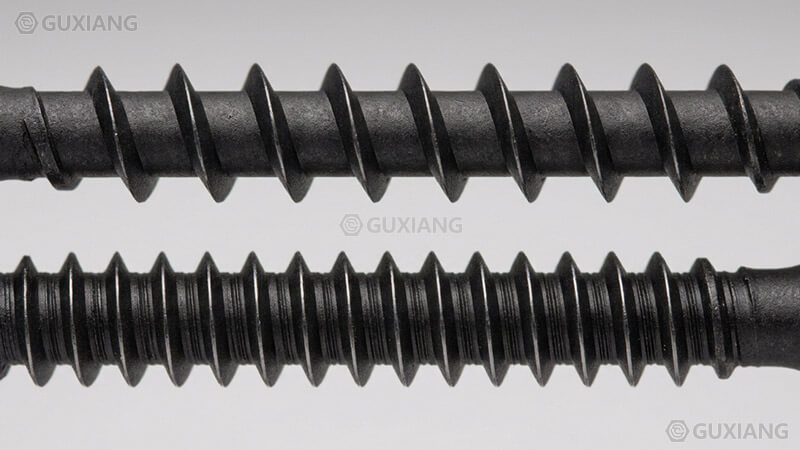
थ्रेड ज्यामिति: मोटे बनाम ठीक
ड्राईवॉल स्क्रू थ्रेड पिच स्टड सामग्री से मेल खाता है, और दोनों को मिलाकर सबसे आम क्षेत्र गलती है। मोटे-थ्रेड टाइप W स्क्रू एक गहरे, आक्रामक flank के साथ सॉफ्टवुड स्टड को संलग्न करता है जो कम घनत्व वाले फ़्रेमिंग से मजबूत होल्डिंग मूल्यों को खींचता है। ठीक-थ्रेड टाइप S पेंच एक तंग पिच का उपयोग करता है जो एक स्टील स्टड की पतली दीवार में अधिक धागे को पैक करता है, जिससे पेंच को 25 से 20 गेज धातु से अलग होने से रोकता है। स्टील स्टड में संचालित एक मोटे पेंच पतली दीवार को फाड़ देता है और इसकी अधिकांश होल्डिंग शक्ति खो देता है; लकड़ी में संचालित एक ठीक पेंच एक छोटा काटने खींचता है और कंपन के नीचे ढीला हो सकता है।.
| संपत्ति | कोर्स थ्रेड (type W) | फाइन थ्रेड (type S) |
|---|---|---|
| फ्रेमिंग लक्ष्य | लकड़ी स्टड, OSB, प्लाईवुड | स्टील स्टड, धातु furring, ट्रैक |
| पिच | ~9-11 थ्रेड्स पर इंच ठेठ | ~16-20 थ्रेड्स पर इंच ठेठ |
| होल्डिंग तंत्र | सॉफ्टवुड फाइबर में डीप कटिंग | कई पतली धातु में लगे हुए हैं |
| व्यवहार शुरू करना | नरम लकड़ी में आसान, पतले किनारों को विभाजित कर सकता है | Pierces light-गेज इस्पात cleanly |
| आम गलत परिणाम | पतली स्टील स्टड स्ट्रिप्स | लोड के तहत लकड़ी में ढीला |
अंगूठे का दृश्य नियम: मोटे drywall स्क्रू में visibly व्यापक धागा रिक्ति और एक तेज, गहरा flank है; ठीक स्क्रू घनी धागा दिखता है और अक्सर अधिक तीव्र बिंदु होता है। जब एक परियोजना मिश्रित फ्रेमिंग का उपयोग करती है, तो सही दृष्टिकोण दोनों प्रकार को ऑर्डर करना है और उन्हें स्टड सामग्री द्वारा लेबल करना है, क्योंकि धागे विनिमेय नहीं हैं। The drywall स्क्रू बनाम डेक स्क्रू तुलना से पता चलता है कि थ्रेड ज्यामिति तब बदलता है जब फास्टनर जिप्सम से अवगत डेकिंग सेवा तक चलता है।.
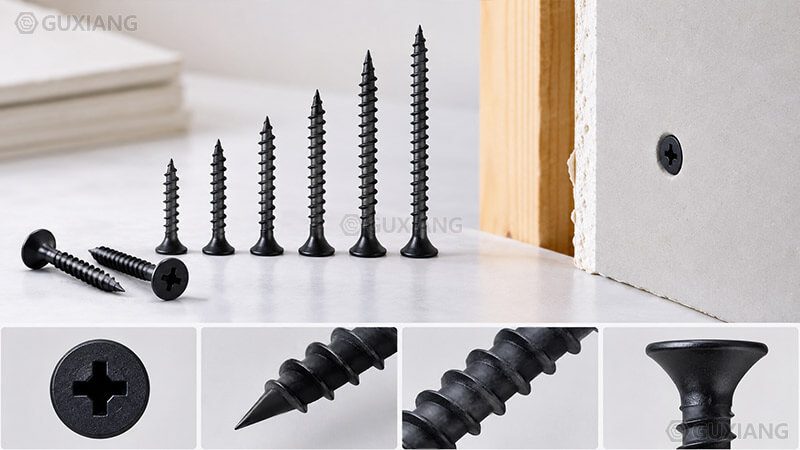
आकार और आयाम
ड्राईवॉल स्क्रू गेज (व्यास) और लंबाई द्वारा निर्दिष्ट हैं। तीन वर्कहोर्स गेज #6, #8 और #10 हैं, #8 के साथ आवासीय और वाणिज्यिक फ्रेमिंग पर हावी है।.
| पेंच | व्यास | आम लंबाई | विशिष्ट कर्तव्य |
|---|---|---|---|
| #6 | 0.138 in (3.5 mm) | 1 in, 1-1/4 in | 1/2 in board to wood or steel studs, light duty |
| #8 | 0.164 in (4.2 mm) | 1-1/4, 1-5/8, 2, 2-1/2, 3 in | Standard board, ceilings, double layer |
| #10 | 0.190 in (4.8 mm) | 2, 3 in | Heavy panels, furring, metal lath |
Length selection follows a simple rule: the screw must penetrate the board and embed at least 3/4 inch into a wood stud or at least 3/8 inch through a steel stud and its track. For 1/2-inch drywall on wood studs, a 1-1/4 inch screw works; for 5/8-inch Type X board on steel studs, a 1-inch fine-thread screw embeds correctly; for double-layer board, step up to 1-5/8 or 2 inches. Edge and field spacing follows the framing code: screws sit 6 to 8 inches apart on board edges, 12 inches apart in the field for walls, and 12 inches on edges with 12-inch field spacing on ceilings, with every screw located at least 3/8 inch from the panel edge to prevent paper tear-out.
Pull-out capacity depends on gauge, embedment, and stud density. A #8 coarse screw embedded 3/4 inch in spruce framing typically resists roughly 90 to 120 pounds of direct pull-out; the same screw in steel studs depends on how many thread turns engage the metal and typically delivers 60 to 90 pounds per screw in 25-gauge track. These values drive the 12-inch field spacing rule: at 12 inches on center, each square foot of 1/2-inch board is held by about one screw, and the joint system carries the rest. When a ceiling carries heavier panels or acoustic loads, move to #8 x 1-5/8 screws and 12-inch spacing in both directions.
The correct zलकड़ी के स्क्रू के लिए पायलट छेद आकार matter in one drywall edge case: when a screw lands within 1 inch of a stud end or a cut board edge in hardwood, a small pilot hole prevents splitting. Standard drywall installation does not pre-drill, because the needle point and thread geometry are tuned to start without one.
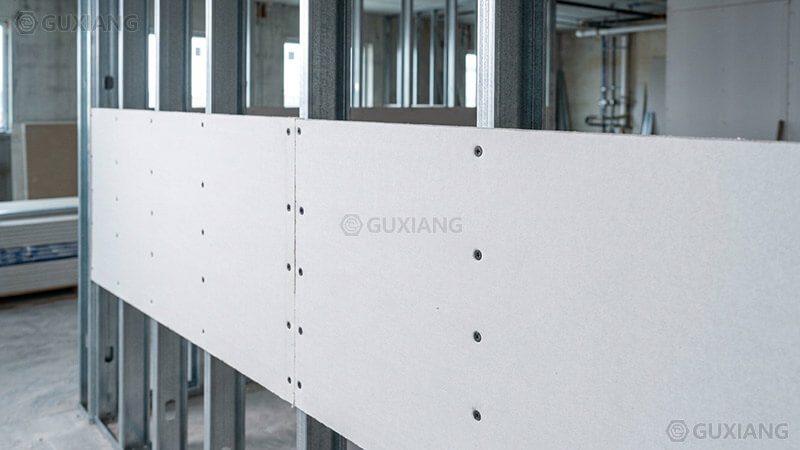
Application Scenarios
Drywall screws show up in every framed gypsum assembly, but the correct type changes with the substrate and service condition.
Gypsum board to wood studs. Coarse-thread type W screws, #8 x 1-1/4 inch for single layer or #8 x 1-5/8 inch for double layer, driven 16 or 24 inches on center into dimension lumber. This is the default residential wall and ceiling detail.
Gypsum board to steel studs. Fine-thread type S screws, #8 x 1 inch for 1/2-inch board and #8 x 1-1/4 inch for 5/8-inch board, into 25 to 20 gauge steel track and studs. The screw point pierces the metal and the fine thread engages the thin wall; ASTM C954 and C1002 govern the joint.
Ceilings and overhead assemblies. Ceilings demand longer screws and tighter spacing because gravity adds a direct shear load to every fastener. Use #8 or #10 screws with at least 3/4 inch embedment, and follow the ceiling spacing schedule of 12 inches on center in the field. Overhead work also punishes stripped or under-embedded screws, so crews set the screw-gun depth nose and check the first dozen screws on every new coil.
Metal furring and lath. Fine-thread screws attach gypsum board or metal lath to furring channels and hat channels over masonry. The screw must not protrude past the far side of the channel, so length is chosen by channel gauge plus board thickness.
Fire-rated assemblies. Type X and Type C gypsum boards in rated walls use the exact screw spacing and length from the assembly listing, often 8 inches on center on edges and 8 inches in the field, with a specific screw count per board. Never substitute phosphate for coated screws in a rated assembly without checking the listing, because the coating and head geometry are part of the tested system.
Moisture and treated-lumber areas. Green board in bathrooms, epoxy-coated screws with treated studs, and stainless screws within 10 miles of salt spray are the practical boundaries. A phosphate screw in a shower wall rusts through the tile backer within two to three years.
Acoustic and partition systems. Sound-rated partitions use the same drywall screws as fire-rated walls but add sealant and resilient channel details; screw spacing stays per the assembly listing, and every screw must land in the stud or track. Missing screws in a rated partition reduce both sound isolation and structural continuity, so collated coils with fixed spacing markings help crews stay consistent.
The मीट्रिक बोल्ट टोक़ चार्ट and torque guidance in the standards guide matter here in one specific way: drywall screws are installed by depth, not by torque, but the torque ceiling of the driver sets the practical limit on what gauge a crew can run without cam-out.
Drywall Screws vs Wood Screws vs Self-Tapping Screws
| संपत्ति | ड्राईवॉल स्क्रू | लकड़ी का स्क्रू | Generic self-tapping screw |
|---|---|---|---|
| हेड | Bugle, self-countersinking | Flat, pan, or oval; needs countersinking | Pan, flat, hex, varies |
| धागा | Double-lead, coarse or fine by stud type | Single-lead, aggressive wood thread | Uniform machine thread with cutting flute |
| अंक | Needle point, no pre-drill | Tapered gimlet or auger point | Cutting or forming point by type |
| कोटिंग | Phosphate, zinc, epoxy, stainless | Zinc, stainless, ceramic, coated | Zinc, black oxide, stainless |
| Substrate | Gypsum to wood or steel studs | Wood, engineered lumber, composites | Sheet metal, plastic, light steel |
| Pre-drill | नहीं | Often recommended in hardwood | Type AB/A no; thread-forming may need hole |
| विशिष्ट लागत | Low, production volumes | Low to medium | Low to medium |
The practical translation: a drywall screw is a specialized self-tapping screw for gypsum framing, a wood screw is a general wood fastener that needs countersinking and often a pilot hole, and a generic self-tapping screw is a metal-to-metal or metal-to-plastic worker with a cutting point. Using a drywall screw as a general wood screw works poorly because the bugle head tears and the thread is tuned for soft gypsum-facing service; using a wood screw in drywall leaves proud heads that break the tape. The full types of screws and head and drive comparisons in the series cover the rest of the taxonomy when a project moves beyond gypsum.
Installation Practice
Installation quality decides whether a wall stays flat and crack-free. Four variables dominate: driver type, bit condition, depth control, and spacing discipline.
Driver and speed. Collated drywall screw guns feed screws from a magazine and drive at a fixed, depth-limited stroke; a variable-speed drill works for small jobs but must be run at reduced speed, roughly 2000 to 3000 rpm, so the screw does not over-advance past the paper. Set the depth nose so the head seats to a shallow dimple, about 1/32 inch below the surface, without breaking the paper face.
Bit condition and fit. Use a sharp Phillips #2 bit that seats fully in the recess. A worn bit cams out, rounds the recess, and strips the screw head; a mismatched bit does the same in seconds at 3000 rpm. Replace bits every few coils on production work, and check the first joint of every new box of screws for cam-out before running a full wall.
Dimple depth. Drive until the head sits just below the paper surface, leaving a smooth dimple. Overdriving tears the paper and crushes the gypsum core, killing the head’s bearing value; underdriving leaves the head proud, which the joint compound cannot cover without a bulge.
Spacing and edge distance. Keep screws 6 to 8 inches on center along panel edges, 12 inches in the field on walls, and 12 inches on edges and in the field on ceilings. Every screw sits at least 3/8 inch from the panel edge and 2 inches from stud ends. Stagger screws across adjoining panels instead of stacking them at the joint.
Fastener selection by framing. Confirm thread type matches the stud: coarse for wood, fine for steel. On mixed framing jobs, sort screws by type at the coil and color-code the boxes; a single mis-threaded coil on a steel-stud job strips dozens of studs before anyone notices.
Torque and depth discipline. The screw gun’s depth stop, not the drill’s clutch, controls final seating. When using a conventional drill, set the clutch to a low slip point and finish the dimple by hand-feel, because a drywall screw has no built-in torque signature. The metric bolt torque chart and fastener torque tables in the series explain the general principle that fasteners in brittle substrates are depth-controlled, not torque-controlled.
सामान्य
क्या drywall स्क्रू के लिए इस्तेमाल किया जाता है?
A: ड्राईवॉल स्क्रू लकड़ी या स्टील स्टड, धातु फरिंग और जिप्सम पैनल के लिए जिप्सम बोर्ड संलग्न करते हैं। बकल हेड सीट फ्लश, और तेज बिंदु पूर्व ड्रिलिंग के बिना शुरू होता है।.
मोटे और फाइन थ्रेड drywall स्क्रू के बीच क्या अंतर है?
A: एक गहरे काटने के साथ कोर्स थ्रेड शिकंजा सूट लकड़ी स्टड। फाइन थ्रेड स्क्रू सूट स्टील स्टड, पतली धातु की दीवारों को संलग्न करते हैं। उन्हें मिलाकर स्ट्रिप्स को मिलाना या फास्टनर को ढीला करना।.
क्या drywall स्क्रू का उपयोग लकड़ी में किया जा सकता है?
A: हाँ, सॉफ्टवुड स्टड में कोर्स थ्रेड स्क्रू के साथ। कम से कम 3/4 इंच एम्बेड करें। लकड़ी में फाइन थ्रेड प्रकार S स्क्रू का उपयोग न करें क्योंकि होल्डिंग पावर तेजी से गिर जाती है।.
क्यों drywall स्क्रू काला?
A: काला फिनिश एक फॉस्फेट रूपांतरण कोटिंग है। यह आंतरिक उपयोग के लिए संक्षारण प्रतिरोध जोड़ता है, ड्राइव घर्षण को कम करता है, और संयुक्त यौगिक के तहत एक सुसंगत उपस्थिति रखता है।.
क्या साइज़ ड्राईवॉल स्क्रू मुझे 1/2 इंच की ड्राईवॉल की आवश्यकता है?
A: लकड़ी के स्टड के लिए #8 x 1-1 / 4 इंच कोर्स थ्रेड का उपयोग करें, या स्टील स्टड के लिए #8 x 1 इंच फाइन थ्रेड का उपयोग करें। स्क्रू को 3/4 इंच लकड़ी में एम्बेड करना चाहिए।.
क्या drywall स्क्रू को पायलट छेद की आवश्यकता है?
A: आम तौर पर नहीं। सुई बिंदु तुरंत कागज और जिप्सम पर शुरू होता है। केवल बोर्ड किनारों या दृढ़ लकड़ी के पास एक पायलट ड्रिल करें, जहां विभाजन संभव है।.
क्या मैं बाहरी परियोजनाओं के लिए ड्राईवॉल स्क्रू का उपयोग कर सकता हूं?
A: नहीं, जब तक वे स्टेनलेस या epoxy लेपित नहीं हैं। मानक फॉस्फेट drywall स्क्रू corrode जल्दी आउटडोर। इसके बजाय लेपित डेक या बाहरी स्क्रू का उपयोग करें।.
ड्राईवॉल स्क्रू और डेक स्क्रू के बीच क्या अंतर है?
A: ड्राईवॉल स्क्रू में एक छोटी सिर, सुई बिंदु और ठीक या मोटे जिप्सम थ्रेड है। डेक स्क्रू में उजागर सेवा के लिए बड़े सिर, जंग कोटिंग और लकड़ी थ्रेड हैं।.
क्यों drywall स्क्रू पॉप आउट?
A: स्क्रू पॉप जब लकड़ी सिकुड़ती है, स्टड को ताड़ दिया जाता है, या बोर्ड को तंग नहीं खींचा गया था। उचित एम्बेडिंग और जेडजेड 1 जेडजेड प्लेसमेंट को जेडजेड 2 जेडजेड किनारों से दूर रखें।.
कितनी देर तक drywall स्क्रू को स्पेस किया जाना चाहिए?
A: किनारों पर स्पेस स्क्रू 6 से 8 इंच और दीवारों के लिए क्षेत्र में 12 इंच। छत किनारों पर और क्षेत्र में, या विधानसभा सूचीकरण के अनुसार 12 इंच का उपयोग करती है।.
संदर्भ
ISO 898-1:2013, Mechanical Properties of Fasteners Made of Carbon Steel and Alloy Steel — Part 1: Bolts, Screws and Studs with Specified Property Classes. https://www.iso.org/standard/60696.html
ASTM C954-18, Standard Specification for Steel Drill Screws for the Application of Gypsum Panel Products or Metal Plates to Steel Framing Members. https://www.astm.org/c0954-18.html
ASTM C1002-22, Standard Specification for Steel Self-Piercing Tapping Screws for the Application of Gypsum Panel Products or Metal Plates. https://www.astm.org/c1002-22.html
ASME, Codes & Standards — Fastener and Screw Thread Standards (B18 series). https://www.asme.org/codes-standards
Oberg, E., et al., Machinery’s Handbook, Industrial Press. https://www.industrialpress.com/
USG Corporation, Gypsum Construction Handbook. https://www.usg.com/
National Gypsum, Technical Documents and Installation Guides. https://www.nationalgypsum.com/