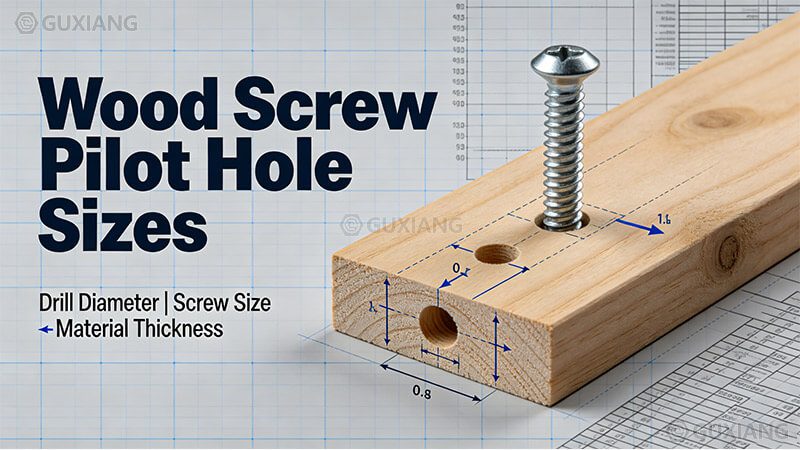
A pilot hole is a pre-drilled hole that guides a wood screw into the workpiece, reducing insertion torque and preventing the wood from splitting. The correct pilot hole size depends on the screw gauge and whether the material is hardwood or softwood. This chart provides tapered and straight drill bit recommendations for wood screw sizes #0 through #24, along with matching countersink sizes.
Pilot Hole Size Lookup
Pilot Hole Anatomy
Pilot Hole Size Chart
All dimensions in inches. Hardwood values apply to dense species such as oak, maple, and walnut. Softwood values apply to pine, cedar, fir, and similar species.
Screw Size
Shank Diameter
Hardwood
Softwood
Counter- sink
Tapered Bit
Straight Bit
Tapered Bit
Straight Bit
Small Screws (#0 – #4)
#0
0.060"
5/64"
1/32"
1/32"
1/64"
1/4"
#1
0.073"
5/64"
1/32"
1/32"
1/32"
1/4"
#2
0.086"
3/32"
1/16"
1/16"
1/32"
1/4"
#3
0.099"
7/64"
5/64"
5/64"
3/64"
1/4"
#4
0.112"
7/64"
5/64"
5/64"
1/16"
1/4"
Medium Screws (#5 – #9)
#5
0.125"
1/8"
3/32"
3/32"
5/64"
5/16"
#6
0.138"
9/64"
7/64"
7/64"
3/32"
5/16"
#7
0.151"
5/32"
7/64"
7/64"
7/64"
3/8"
#8
0.164"
11/64"
1/8"
1/8"
7/64"
3/8"
#9
0.177"
11/64"
9/64"
9/64"
1/8"
3/8"
Large Screws (#10 – #14)
#10
0.190"
3/16"
9/64"
9/64"
1/8"
1/2"
#11
0.203"
3/16"
5/32"
5/32"
9/64"
1/2"
#12
0.216"
7/32"
5/32"
5/32"
9/64"
1/2"
#13
—
7/32"
11/64"
11/64"
5/32"
1/2"
#14
0.242"
1/4"
3/16"
3/16"
5/32"
5/8"
Extra-Large Screws (#15 – #24)
#15
—
1/4"
13/64"
13/64"
11/64"
5/8"
#16
0.268"
17/64"
7/32"
7/32"
3/16"
5/8"
#18
0.294"
9/32"
1/4"
1/4"
13/64"
3/4"
#20
0.320"
5/16"
9/32"
9/32"
7/32"
3/4"
#22
—
11/32"
5/16"
5/16"
1/4"
7/8"
#24
0.372"
3/8"
11/32"
11/32"
9/32"
7/8"
Data source: MISUMI Technical Reference. Screw shank diameters per Bolt Depot. Sizes marked “—&rdash;” are not commonly stocked; shank diameter interpolated.
Understanding Pilot Holes
What Is a Pilot Hole?
A pilot hole is a narrow pre-drilled hole that removes material ahead of a wood screw. It has two zones: a straight section matching the shank diameter, and a tapered section matching the thread profile. This dual geometry lets the screw seat fully while minimizing splitting force.
Tapered vs. Straight Bits
A tapered drill bit produces a hole that widens gradually, matching the screw's thread profile for full-length engagement. A straight bit creates a uniform bore sized to the root diameter. Tapered bits are preferred for precision joinery; straight bits are faster and more widely available.
Hardwood vs. Softwood
Hardwood (oak, maple, walnut) requires a larger pilot hole because its density resists screw insertion. Softwood (pine, cedar, fir) is more compressible, so a smaller pilot hole provides adequate thread engagement. Using the wrong size risks splitting in hardwood or weak holding in softwood.
Countersink Bits
A countersink bit creates a conical recess that allows flat-head screws to sit flush with the wood surface. Combination bits drill the pilot hole, countersink, and sometimes a shallower straight bore in a single operation, saving time on production work.
How to Select the Right Pilot Hole
Step-by-Step Selection Guide
Identify the screw size — Check the gauge number (#0–#24) printed on the packaging or measure the shank diameter with calipers.
Identify the wood type — Determine whether your workpiece is hardwood (density > 0.55 g/cm³) or softwood (density < 0.45 g/cm³).
Choose your drill bit type — Tapered bits provide maximum thread engagement; straight bits are simpler and more accessible.
Look up the recommended size — Use the chart above or the lookup tool to find the matching drill bit diameter.
Test on scrap material — Drive a screw into a piece of the same wood species. The screw should turn with moderate resistance and no visible splitting.
Tip: When working near board edges or end grain, increase the pilot hole size by one fractional step to reduce splitting risk. For deep or blind holes, drill slightly deeper than the screw length to allow sawdust clearance.
Pilot Hole vs. Clearance Hole
In a typical two-piece wood joint, the screw passes through one board and threads into another. The first board receives a clearance hole — drilled to the full shank diameter so the screw passes freely. The second board receives a pilot hole — drilled to the root diameter (or smaller, for maximum grip) so the threads bite into the wood. Understanding this distinction is essential for proper joint strength and alignment.
Frequently Asked Questions
What is a pilot hole for wood screws?
A pilot hole is a pre-drilled hole made before driving a wood screw. It consists of a straight bore (matching the shank diameter) and, when using a tapered drill bit, a tapered section that matches the thread profile. Pilot holes guide the screw, reduce insertion torque, and prevent the wood from splitting.
Why are pilot holes important when using wood screws?
Pilot holes prevent wood splitting, especially near edges and in hardwoods. They reduce driving torque, which prevents screw breakage and tool cam-out. They also ensure accurate screw placement and allow the screw to achieve maximum holding power by reducing resistance during installation.
How do I determine the correct pilot hole size?
The correct pilot hole size depends on the screw gauge and wood type. For softwood, the pilot hole is typically near the root diameter of the screw. For hardwood, it is closer to the shank diameter. Reference charts like this one provide exact fractional drill bit sizes for each screw gauge. Always test on scrap material before final assembly.
What is the difference between tapered and straight pilot hole drill bits?
A tapered drill bit creates a pilot hole that gradually increases in diameter, matching the profile of the wood screw threads. This allows both the shank and threads to seat properly. A straight drill bit creates a uniform-diameter hole, which only accommodates the thread portion. Tapered bits are preferred for precise joinery; straight bits are faster and more commonly available.
Why are pilot hole sizes different for hardwood and softwood?
Hardwood is denser and less compressible than softwood, creating greater resistance when a screw is driven. A larger pilot hole in hardwood prevents excessive stress that could cause splitting or screw breakage. Softwood is more forgiving and compressible, so a smaller pilot hole is sufficient and provides strong thread engagement.
What size pilot hole do I need for a #10 wood screw?
For a #10 wood screw, use a 3/16" tapered drill bit for hardwood or 9/64" for softwood. If using a straight drill bit, use 9/64" for hardwood and 1/8" for softwood. The recommended countersink size is 1/2".
What is a countersink bit and when should I use one?
A countersink bit creates a conical recess at the top of the pilot hole, allowing flat-head wood screws to sit flush with or below the wood surface. Use a countersink bit whenever you need a smooth, flush finish. The countersink size should match the screw head diameter. Combination pilot-countersink bits can drill the pilot hole and countersink in a single operation.
Can I use a regular drill bit instead of a tapered pilot hole bit?
Yes, a standard straight-flute drill bit can be used instead of a tapered bit. When using a straight bit, select a diameter matching the screw's root diameter for softwood or the shank diameter for hardwood. The screw will still hold, but a tapered bit provides more consistent thread engagement along the full length of the screw.
How deep should I drill the pilot hole?
The pilot hole should be slightly deeper than the length of the screw to allow for sawdust clearance and full screw seating. For tapered pilot holes, the tapered section should match the threaded length of the screw, while the straight section matches the unthreaded shank length. When drilling into blind holes, mark the drill bit with tape to control depth.
What is the difference between a pilot hole and a clearance hole?
A pilot hole is drilled in the piece being fastened and has a diameter smaller than the screw shank, allowing the threads to grip the wood. A clearance hole is drilled in the piece the screw passes through and has a diameter larger than the shank, allowing the screw to pass freely without threading. In a typical two-piece joint, you drill a clearance hole in the first piece and a pilot hole in the second.
Disclaimer: The data on this page is compiled from MISUMI and Bolt Depot technical references for general informational purposes. Actual pilot hole requirements may vary depending on wood species moisture content, screw manufacturer, and application-specific factors. Always verify with test pieces before production use. GUXIANG does not guarantee the accuracy or completeness of this data for any specific application.
 EN
EN  ZH
ZH