





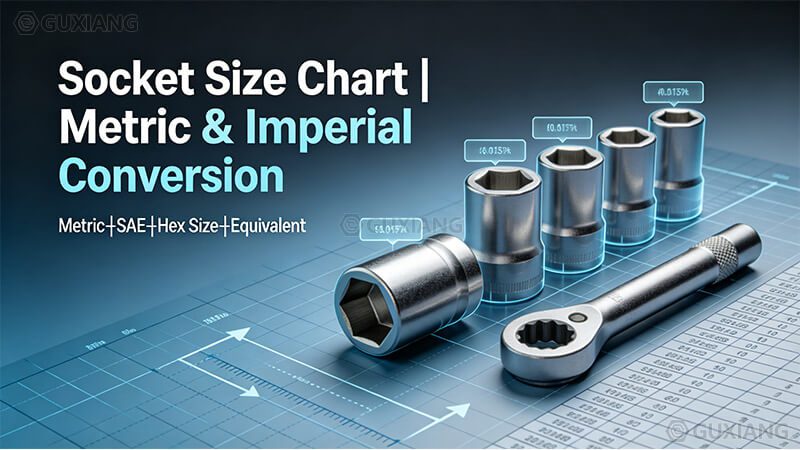
Благодаря диапазону размеров привода, измерительных систем и типов головок при регулярном использовании, быстрый справочник может сэкономить время и предотвратить повреждение скобяные изделия. Эта диаграмма приводит эти детали в одно место, показывая общие размеры розетки и то, как они относятся как к дюйму, так и к розетке [1] [0] [0], и их соответствующих размеров. Независимо от того, работаете ли вы над ремонтом автомобилестроение, обслуживанием машины или общей сборкой, это руководство поможет вам каждый раз выбирать правильную розетку.
Сокет размер Lookup Tool
| метрическая система размерZ | |
| Эквивалент дюймовая система | |
| Драйв размер | |
| Общий Применение |
Сокет размер Chart
| Метрическая система (мм) | дюймовая система (дюймовый) | Драйв размер | Общий Применение |
|---|
Сокет-драйв размер Guide
Привод размер определяет, какая ручка или гаечный ключ вам нужны. Большие диски обрабатывают больше крутящий момент, но требуют больше места. Вот краткая ссылка для сопоставления размеров розетки с размерами диска:
| Драйв размер | Метрический диапазон | Имперский хребет | Типичное использование |
|---|---|---|---|
| 1/4" | 2 мм - 7 мм | 5/64" – 9/32" | электроника, малогабаритная техника, работа точность |
| 3/8" | 6 мм - 14 мм | 1/4" – 9/16" | автомобилестроение, мотоциклы, общая сборка |
| 1/2" | 8 мм - 25 мм | 5/16" – 1" | автомобилестроение, тяжелый машины, колесный узел гайки |
| 3/4" | 24 мм - 36 мм | 15/16" – 1-7/16" | Грузовики, тяжелые оборудование, промышленное оборудование |
| 1" | 36 мм - 50 мм | 1-7/16" – 2" | Тяжелая промышленность, строительство оборудование |
6-точечные против 12-точечных сокетов
Выбор между 6-точечными и 12-точечными розетками влияет как на прочность захвата, так и на простоту использования. Вот как они сравнивают:
| Особенность | 6-точечный сокет | 12-точечный сокет |
|---|---|---|
| Очки Контакты | Плоские стороны крепежное изделие | Углы крепежное изделие |
| Моментная нагрузка | Более высокий — меньший риск округления | Низкий — больший риск округления |
| Угол взаимодействия | Каждые 60 градусов | Каждые 30 градусов |
| Тесное использование пространства | Limited swing arc needed | Easier in confined spaces |
| Идеально подходит для | High-torque, rusty, or stubborn fasteners | General assembly, speed work |
| Распространенные размеры | All standard sizes | All standard sizes |
Understanding Socket Sizes
What Does Socket Size Mean?
Socket size refers to the across-flats measurement of the opening — the distance between two parallel flat sides of the hexagonal opening. A 10mm socket fits a bolt head that measures 10mm across its flats.
Metric vs. Imperial Sockets
Metric sockets are measured in millimeters (mm), while imperial sockets use fractions of an inch. They are not interchangeable — a 10mm socket is close to but not exactly 3/8" (9.525mm). Always use the matching system.
Shallow vs. Deep Sockets
Shallow (standard) sockets work for exposed fasteners. Deep sockets are approximately twice as long, designed for fasteners on long studs or recessed in holes. Both types are available in the same size range.
Spark Plug Sockets
Spark plug sockets come in 14mm, 16mm (5/8"), 18mm, and 21mm (13/16") sizes. They feature a rubber insert or magnet to protect the ceramic insulator and often have a thin wall to fit into deep spark plug wells.
Tips for Choosing the Right Socket
Best Practices
- Always match the socket system (metric or imperial) to the fastener system
- Use 6-point sockets for high-torque or corroded fasteners to prevent rounding
- Choose the largest drive size that fits your workspace for maximum torque
- Use deep sockets for fasteners on long threaded studs or in recessed holes
- Keep sockets clean and inspect for wear — damaged sockets can strip fasteners
- Store sockets in organized trays to quickly find the right size
- When in doubt between two close sizes, try the smaller one first to avoid rounding
Часто задаваемые вопросы
For a 10mm bolt, you need a 10mm socket. The socket size corresponds to the across-flats dimension of the bolt head or nut. A 10mm socket typically uses a 3/8" drive and is one of the most commonly used sizes in automotive and general assembly work.
A 6-point socket contacts the flat sides of a fastener, providing maximum torque transfer and reducing the risk of rounding. A 12-point socket contacts the corners, allowing you to engage the fastener at twice as many positions (every 30 degrees instead of 60 degrees), making it easier to use in tight spaces. For high-torque applications, 6-point sockets are preferred.
Drive size depends on the socket size and application: 1/4" drive for small sockets (2-6mm), 3/8" drive for medium sockets (6-14mm), 1/2" drive for larger sockets (8-25mm), and 3/4" drive for heavy-duty sockets (27mm and above). Larger drives handle more torque but require more clearance space.
Metric and imperial socket sizes don't convert exactly. For example, 10mm is approximately 3/8" (9.525mm), and 13mm is approximately 1/2" (12.7mm). Always use the correct system socket for the fastener to avoid rounding. Use our chart above for exact reference between metric and imperial equivalents.
The most commonly used socket sizes are 10mm, 13mm, and 17mm for metric fasteners, and 3/8", 1/2", and 3/4" for imperial fasteners. These sizes cover the majority of automotive, machinery, and general assembly applications. A basic socket set with these sizes handles most everyday tasks.
It is not recommended. While some metric and imperial sizes are close (e.g., 13mm and 1/2"), they are not identical. Using the wrong system can strip the fastener corners, damage the socket, or cause injury. Always match the socket system to the fastener system for safe and effective work.
Most spark plugs use either 16mm (5/8") or 21mm (13/16") sockets. Some older vehicles may use 18mm or 14mm. Always check your vehicle's service manual for the correct spark plug socket size. Spark plug sockets often include a rubber insert to protect the ceramic insulator during removal and installation.
A shallow (standard) socket is about as tall as the socket's width and works for most exposed fasteners. A deep socket is approximately twice as long, designed to reach fasteners on long threaded studs or recessed bolts. Both come in the same size range and drive configurations. Choose based on the fastener's accessibility.