





Choosing a fastener finish is rarely just a matter of appearance. A screw used inside an electrical enclosure has different requirements from a high-strength bolt exposed to road salt or a precision fastener installed in an aluminum housing.
The wrong surface treatment can lead to premature corrosion, poor thread fit, inconsistent tightening torque, or unnecessary production costs. Yet specifying the most expensive coating does not automatically solve these problems. The finish must match the base material, service environment, assembly requirements, and applicable standard.
This guide focuses on the decisions that matter when selecting fastener coatings: which treatments deserve consideration, where their limitations become important, how to avoid common engineering mistakes, and what information to include when requesting a quotation from a fastener manufacturer. For a broader overview of available industrial fastener types, start with the component’s material, mechanical requirements, and intended application.
Fastener Coatings at a Glance
For most steel fasteners, the initial choice is often between a conventional zinc coating, a more specialized zinc-based system, and a thicker protective coating for suitable outdoor applications. Other treatments serve more specific purposes, such as maintaining a black appearance, supporting stainless steel corrosion resistance, or controlling friction.
Use the table below to narrow the options before reviewing the detailed requirements.
| Обработка поверхности | A reasonable starting point | Main issue to resolve |
|---|---|---|
| Цинкование | General-purpose carbon steel screws, bolts, and nuts | Whether the corrosion protection is sufficient |
| Zinc-nickel plating | Selected automotive and industrial fasteners | Required corrosion performance, friction, and process cost |
| Zinc flake coating | Demanding applications involving steel fasteners, including some high-strength fasteners | Complete coating system, hydrogen-related risks, and tightening behavior |
| Горячее цинкование | Suitable outdoor structural steel connections | Thread clearance and compatibility with mating nuts |
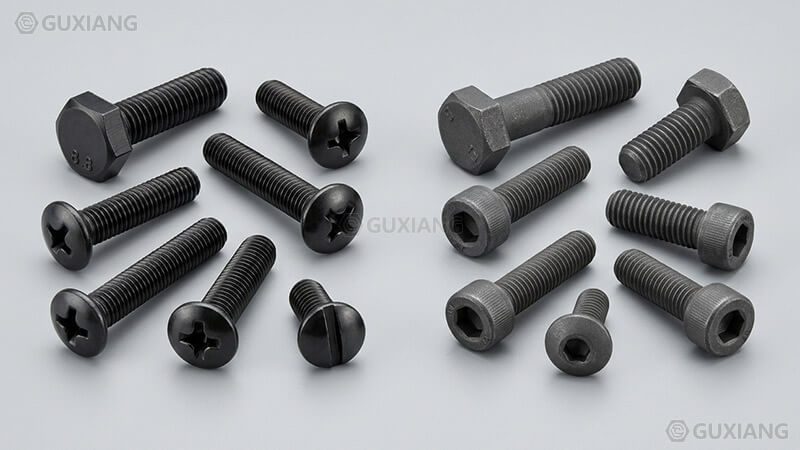
| Black oxide | Indoor machinery and fasteners requiring a dark finish | Whether supplementary rust protection is needed |
| Phosphate coating | Steel components used with specified lubricants or additional finishes | The intended function of the phosphate layer |
| Stainless steel passivation | Stainless steel fasteners and precision components | Material grade and actual exposure conditions |
| Low-friction coating | Assemblies with controlled tightening requirements | Required friction characteristics and validation |
| Aluminum anodizing | Aluminum CNC-machined components | Film thickness, dimensional fit, and electrical contact |
These are starting points, not universal rankings. Final performance depends on the actual coating specification, manufacturing process, and operating conditions.
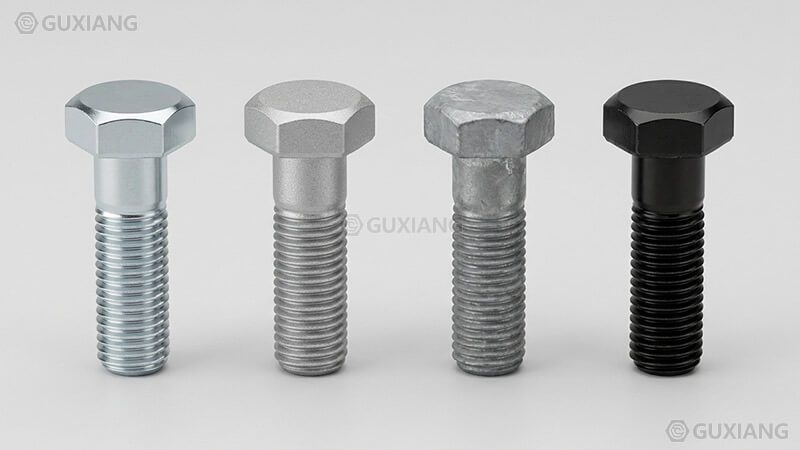
Comparing the Main Fastener Coating Systems
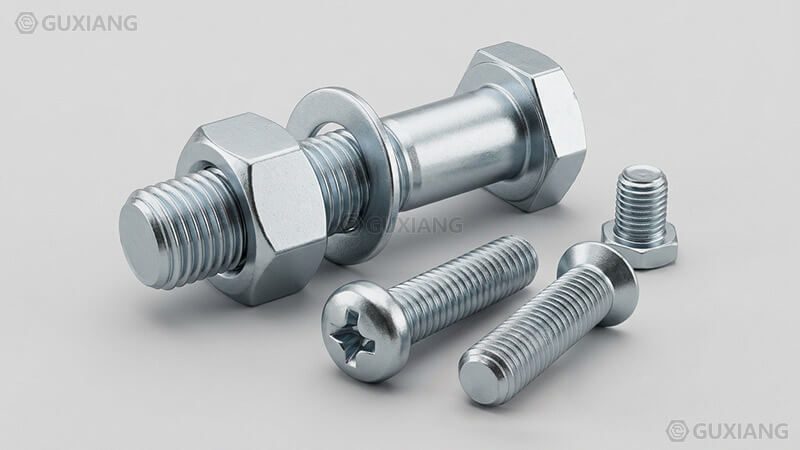
Zinc plating: an economical option for general-purpose fasteners
Zinc plating deposits a zinc layer onto a suitable metal surface, commonly carbon steel. It provides both a physical barrier and sacrificial protection: under appropriate conditions, zinc corrodes preferentially to the underlying steel.
This combination makes zinc plating a practical choice for many машинные винты, bolts, nuts, washers, and sheet-metal fasteners used in relatively mild environments.
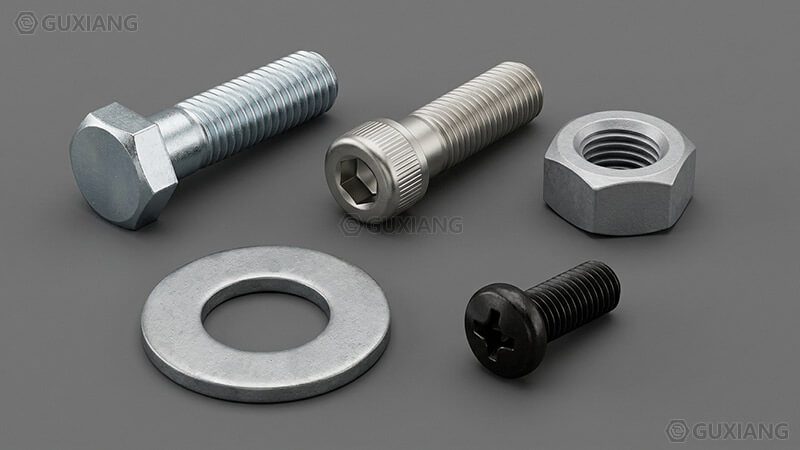
The finished appearance can range from clear or blue-toned to yellow-toned or black, depending on the conversion finish and supplementary treatments. However, color alone does not establish the coating composition or corrosion performance.
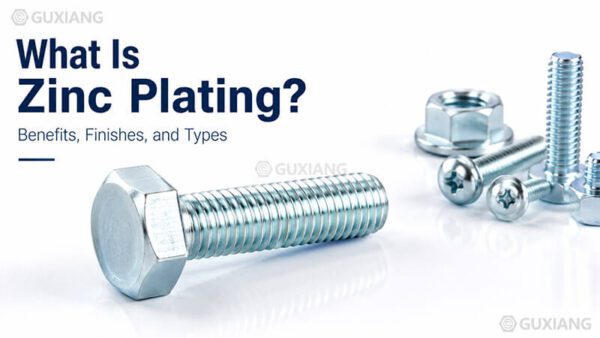
The main limitation is exposure severity. A zinc-plated fastener suitable for a dry indoor assembly may not provide sufficient protection in a coastal installation or equipment exposed to road deicing salts. Our guide to what zinc plating is, its benefits, and its finishes explains the process in more detail.
Thread dimensions and material strength also matter. Electroplating can introduce hydrogen into susceptible steels, so high-strength fasteners require careful assessment of the coating process and the applicable hydrogen-embrittlement controls.
For threaded mechanical fasteners, relevant specifications include ASTM F1941/F1941M и ISO 4042.
When to consider it: General industrial equipment, indoor machinery, electrical enclosures, and other applications where cost-effective protection meets the actual service requirements.
Zinc-nickel plating: for applications requiring a more specialized coating
Zinc-nickel plating deposits a zinc alloy containing nickel. It is used in selected automotive and industrial applications where conventional Цинкование may not meet the specified corrosion or functional requirements.
Its performance depends on the complete coating system, including alloy composition, deposit thickness, conversion treatment, sealers, and any lubricant. A zinc-nickel finish should therefore be specified by its required properties rather than by name alone.
For procurement teams, the useful comparison is not simply whether zinc-nickel is more expensive than zinc plating. The question is whether it meets the required performance while maintaining the dimensional fit and assembly behavior of the finished fastener.
The additional process cost may be justified for a demanding application, but it should be based on a defined requirement.
When to consider it: Selected automotive components, industrial assemblies, and fasteners where a specified zinc-alloy coating system offers a meaningful performance advantage.
Zinc flake coating: particularly relevant to demanding steel fasteners
Zinc flake coatings contain metallic zinc flakes, often combined with aluminum flakes and a binder. They are applied without conventional electrolytic zinc deposition and may include a topcoat or lubricant.
This system is commonly considered for automotive and other demanding fastener applications. It can be useful for high-strength steel fasteners because it avoids the conventional electroplating step associated with a particular hydrogen-embrittlement risk.
That distinction should not be overstated. A zinc flake coating does not automatically eliminate every hydrogen-related risk associated with the complete manufacturing process. The base material, pretreatment, and process controls still need to be considered.
A second point is often overlooked: the coating’s topcoat and lubricant may affect friction as well as corrosion behavior. Two coatings described as zinc flake systems may therefore perform differently during installation.
For that reason, request the coating designation, the applicable specification, the required friction characteristics, and the relevant test criteria before approving a substitute.
Useful references include ISO 10683 and ASTM F3393-24, the ASTM specification for zinc-flake coating systems for fasteners.
When to consider it: Steel fasteners requiring a specified corrosion-protection system, particularly where strength, friction control, or the avoidance of conventional electroplating influences the choice.
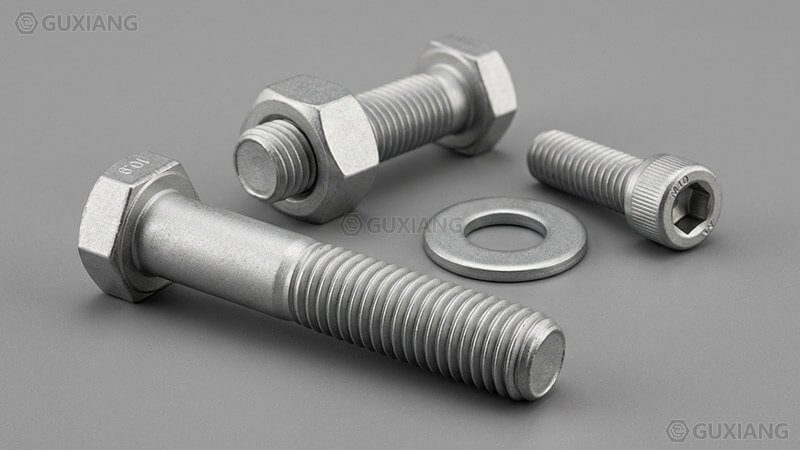
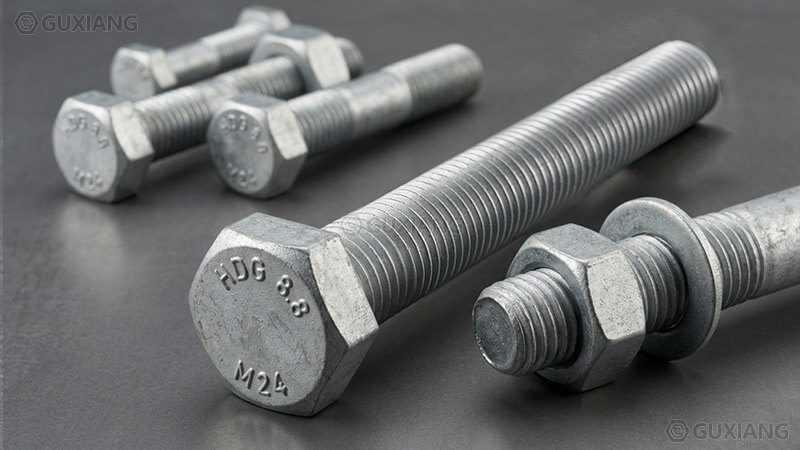
Hot-dip galvanizing: a thicker zinc coating for suitable outdoor applications
Hot-dip galvanizing immerses suitable steel components in molten zinc, creating a substantially thicker coating than conventional zinc electroplating.
It is commonly considered for outdoor steel structures, infrastructure, utility installations, and other applications where atmospheric corrosion protection is important.
Its thickness is also the principal reason that thread compatibility must be addressed before production. A bolt cannot simply be galvanized and assumed to retain the same dimensions and fit. Thread allowances, the mating nut, and the specified coating system must be compatible.
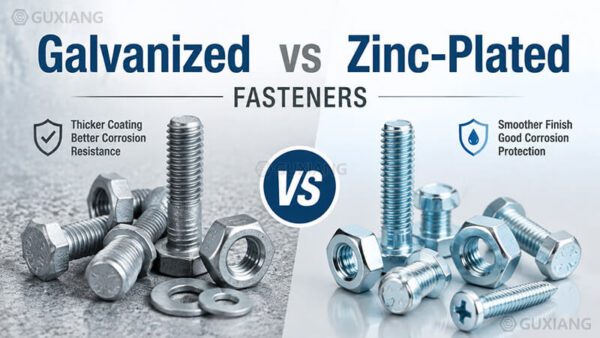
For a more focused comparison of the two processes, see Galvanized vs. Zinc-Plated Fasteners. This distinction is particularly relevant when specifying hex bolts for outdoor structural applications.
For applicable threaded fasteners, refer to ASTM F2329/F2329M или ISO 10684, as appropriate to the design and specification.
When to consider it: Suitable structural steel connections and outdoor installations where a thicker zinc coating is required and the fastener geometry accommodates the process.
Hot-dip galvanizing: a thicker zinc coating for suitable outdoor applications
Hot-dip galvanizing immerses suitable steel components in molten zinc, creating a substantially thicker coating than conventional zinc electroplating.
It is commonly considered for outdoor steel structures, infrastructure, utility installations, and other applications where atmospheric corrosion protection is important.
Its thickness is also the principal reason that thread compatibility must be addressed before production. A bolt cannot simply be galvanized and assumed to retain the same dimensions and fit. Thread allowances, the mating nut, and the specified coating system must be compatible.
For a more focused comparison of the two processes, see Galvanized vs. Zinc-Plated Fasteners. This distinction is particularly relevant when specifying hex bolts for outdoor structural applications.
For applicable threaded fasteners, refer to ASTM F2329/F2329M или ISO 10684, as appropriate to the design and specification.
When to consider it: Suitable structural steel connections and outdoor installations where a thicker zinc coating is required and the fastener geometry accommodates the process.
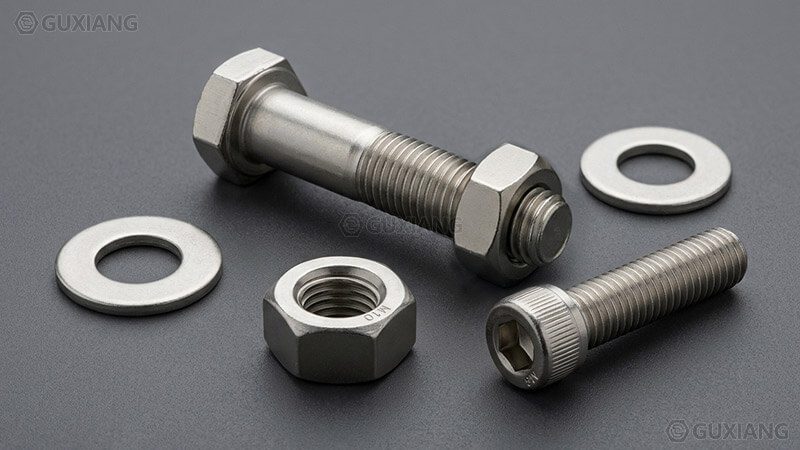
Stainless steel passivation: protecting the surface without adding a conventional metal coating
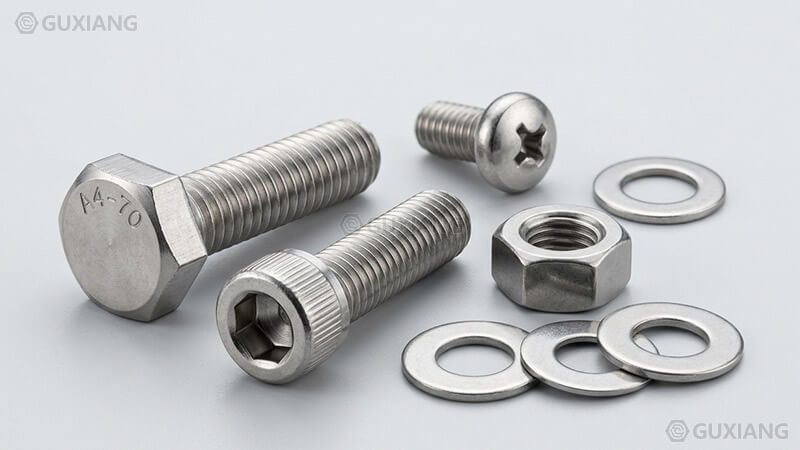
Stainless steel fasteners obtain much of their corrosion resistance from a thin passive film on the surface. Passivation treatments help remove certain contaminants, particularly unwanted free iron, and support the condition of that protective surface.
Unlike electroplating, passivation does not deposit a conventional thick metallic layer, so its dimensional impact is generally minimal.
It is relevant to stainless steel screws, bolts, nuts, pins, and precision-machined components. However, passivation cannot turn an unsuitable stainless steel grade into a universally corrosion-resistant material.
Grade selection still matters. Chloride exposure, surface condition, crevices, contamination, and cleaning procedures can all affect performance. For additional guidance, see our Stainless Steel Grades for Fasteners и 304 vs. 316 Stainless Steel Fasteners guides.
Passivation should be specified as part of a suitable material and process plan, not as a substitute for one. Our article on why stainless steel fasteners can still rust covers the relationship between grade, contamination, and corrosion.
For chemical passivation, see ASTM A967/A967M.
Other finishes worth considering
Nickel and chromium-based finishes may be appropriate where appearance or specialized surface properties are important. PTFE-based and other low-friction coatings may suit assemblies in which tightening behavior needs to be controlled.
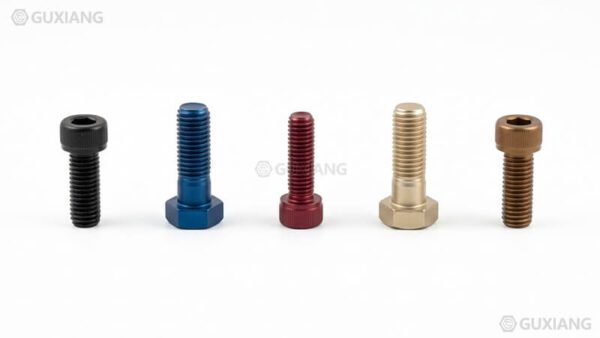
For aluminum CNC-machined parts, anodizing is often a more relevant option than steel-oriented coatings. It can provide a controlled appearance and useful surface properties, but the design must account for film thickness, masked areas, and electrical contact requirements. Our separate guide, Анодирующие застежки: типы, толщина, нити и выбор, covers these considerations in greater detail.
These treatments should be assessed against a defined requirement rather than added to a specification simply because they are available.
How to Select a Fastener Coating for Your Application
A coating decision becomes much easier when the requirements are reviewed in a consistent order.
Step 1: Define the exposure conditions
Start with the actual environment, not a general description such as “outdoor use.”
Will the fastener encounter condensation, direct rain, salt, cleaning chemicals, or repeated wet-dry cycles? Is it installed in a sheltered enclosure or directly exposed to the elements? Does the equipment operate in a coastal environment or encounter road salt?
These differences can change which coating systems are worth considering.
For example, an indoor machine screw may need only a basic protective finish, while a fastener exposed to road salts could require a more demanding, specified coating system. The appropriate choice should be supported by the required test criteria and the intended service conditions.
Step 2: Confirm the substrate and strength requirements
A coating is only suitable if it can be applied appropriately to the base material without compromising the required properties.
Identify whether the part is made from carbon steel, alloy steel, stainless steel, aluminum, or another material. Record the required strength class, heat treatment, and applicable fastener standard.
Our Fastener Materials Selection Guide provides a broader starting point for comparing materials, grades, coatings, and corrosion resistance. For steel components, also consult the Carbon Steel Fasteners Guide и Alloy Steel Fasteners Guide.
For high-strength steel, evaluate the hydrogen-embrittlement risk associated with the complete manufacturing and finishing process before approving electroplating. An alternative coating process may be suitable, but it must still meet the technical requirements.
Do not approve a coating substitution based solely on a supplier’s claim that it offers equivalent corrosion resistance.
Step 3: Check dimensions and assembly requirements
The coating can change the effective dimensions of a fastener, especially where the process deposits a relatively thick layer.
Review the following before production:
Thread size, pitch, tolerance, and required fit.
Final dimensions of critical features after coating.
Compatibility with the intended nut, washer, or mating part.
Areas requiring masking or selective treatment.
Any restrictions on coating buildup or contact surfaces.
This review is especially important for fine-pitch threads, miniature screws, high-precision components, and hot-dip galvanized fasteners.
When thread fit is uncertain, use the relevant engineering drawing and thread specification rather than relying on a nominal size alone. The Metric Thread Chart for Metric Bolt Sizes и Threads Per Inch Chart can support initial dimensional checks, while the approved drawing and applicable standard must govern final acceptance.
Step 4: Establish friction requirements where preload matters
When a fastener is tightened, friction influences the relationship between applied torque and the resulting clamp force.
A change in coating or lubricant can therefore change the preload produced by the same tightening torque. This can matter in joints designed around a specified clamp load, particularly in automotive and industrial machinery.
If preload is critical, do not treat the coating as an interchangeable cosmetic detail. Define the required friction or torque-tension performance and agree on how it will be verified.
Our reference on the Coefficient of Friction for Metals and Materials explains the wider role of friction in material contact. For preliminary torque reference, see the Metric Bolt Torque Chart. A general torque chart should not replace a coating-specific torque-tension validation when the joint design requires controlled preload.
ISO 16047 provides a relevant method for torque/clamp-force testing within its scope.
Step 5: Specify how the finish will be accepted
A statement such as “corrosion resistant” is difficult to verify unless it is tied to an agreed specification.
Define the coating designation, applicable standard, thickness where relevant, test method, exposure duration, and acceptance criteria. State whether the requirement concerns coating corrosion, base-metal corrosion, appearance, or a combination of these.
The supplier should confirm that the proposed system can meet the requirement and that the corresponding documentation can be provided.
For broader technical references, the Центр ресурсов по крепежным элементам provides a central destination for fastener guides, standards, and specification information.
Coating Thickness, Hydrogen Embrittlement, and Salt Spray Testing
Three technical issues deserve special attention because they are frequent sources of disagreement between design, purchasing, and manufacturing teams.
Coating thickness versus thread fit
A coating that improves corrosion resistance can also reduce available thread clearance. This does not mean thicker coatings are inherently unsuitable; it means dimensions and coating requirements must be designed together.
Before finishing, determine whether final thread acceptance is governed by the relevant product standard, the coating standard, or a customer drawing that defines additional requirements. Where a coating changes the required fit, the solution may involve a compatible mating component, specified thread allowances, or an approved alternative process.
Do not wait until final inspection to discover that coated fasteners no longer assemble correctly.
For parts requiring custom dimensions or selective finishing, review the drawing with the manufacturer before production. This is particularly important for CNC machining services and precision components in which critical bores, threads, or mating surfaces must retain specified final dimensions.
Hydrogen embrittlement versus coating selection
Hydrogen embrittlement can cause susceptible high-strength steel components to fail under stress. Certain pretreatment and finishing operations can introduce hydrogen, which is why coating selection and process control are especially important for affected fasteners.
The appropriate controls depend on the material, strength, process, and applicable specification. Standards such as ISO 4042 and ASTM F1941/F1941M address requirements and considerations related to electroplated fasteners and hydrogen-embrittlement risk.
Zinc flake coatings are often considered where avoiding conventional electroplating is an important objective. Nevertheless, the whole process and the actual fastener specification need to be reviewed before making a decision.
Salt spray hours versus actual service life
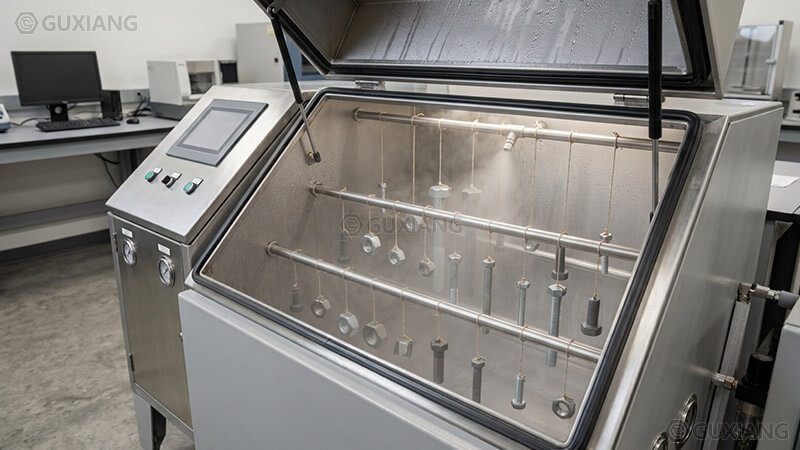
Salt spray testing provides a controlled environment for comparing the corrosion behavior of specimens under specified conditions. It can be useful for quality control when the test procedure and acceptance criteria are clearly defined.
It does not provide a universal conversion from test hours to years in service. ASTM B117 notes that standalone salt spray results do not reliably predict natural-environment performance in every situation.
When comparing two coatings, use the agreed method and acceptance criteria for both. Also consider field exposure, part geometry, coating damage, and the consequences of corrosion in the intended application.
A useful test requirement specifies more than a number of hours. It states which corrosion products or defects are acceptable, how the specimen will be evaluated, and which standard governs the test.
Standards to Reference When Specifying Fastener Coatings
The correct standard depends on the coating process and the type of fastener. Common references include:
| Стандартный | Main subject |
|---|---|
| ISO 4042:2022, with Amendment 1:2026 | Electroplated coating systems for fasteners |
| ISO 10683:2018 | Non-electrolytically applied zinc flake coating systems for steel fasteners |
| ASTM F1941/F1941M-16(2025) | Electrodeposited coatings on mechanical fasteners |
| ASTM B633 | Electrodeposited zinc coatings on iron and steel |
| ASTM F2329/F2329M-15(2023) | Hot-dip zinc coatings for specified steel fasteners |
| ASTM F3393-24 | Zinc-flake coating systems for fasteners |
| ASTM A967/A967M-25 | Chemical passivation treatments for stainless steel parts |
| ASTM B117-26 | Operating a salt spray (fog) test apparatus |
| ISO 16047:2005, with Amendment 1:2012 | Torque/clamp-force testing for applicable fasteners |
These standards serve different purposes and are not interchangeable. For example, ASTM B117 defines a salt spray test practice; it does not by itself determine the complete coating specification or establish how many years a fastener will last outdoors.
For projects involving multiple international standards, the guide DIN vs. ISO vs. ANSI/ASME Fastener Standards Explained provides additional context.
Before releasing a drawing or purchase order, confirm the applicable edition, coating designation, dimensional requirements, and any customer-specific provisions. Standards can be revised or amended, so the edition should be checked when a current specification is prepared.
Practical Fastener Coating RFQ Checklist
A complete request for quotation should allow the manufacturer to evaluate the part, select a suitable process, and identify any risks before production.
Include the following information:
Part details: Drawing or part number, dimensions, thread specification, base material, strength class, and heat treatment where applicable.
Operating environment: Indoor or outdoor installation, moisture, salts, chemical exposure, temperature, and contact with dissimilar materials.
Surface treatment: Required coating system, applicable standard and edition, coating thickness where relevant, color, supplementary topcoat, and lubricant if specified.
Assembly requirements: Thread fit, mating hardware, critical dimensions, tightening torque, friction requirements, and any electrical contact restrictions.
Quality acceptance: Required corrosion test method, exposure duration, acceptance criteria, dimensional inspection, documentation, and traceability.
Production details: Prototype or production quantity, packaging requirements, and any restrictions on approved process changes.
Example: How to write a coating requirement more clearly
The following is an illustrative template, not a universal engineering specification:
Part: Steel hex bolt; part number and dimensions per approved drawing.
Material and strength: As defined by the drawing and applicable product standard.
Finish: Approved zinc flake coating system to the specified edition of ISO 10683 or ASTM F3393, subject to engineering approval.
Corrosion acceptance: Test method, exposure duration, and acceptable corrosion criteria to be agreed before production.
Assembly performance: Required friction or torque-tension criteria to be specified if the joint depends on controlled preload.
Dimensions: Final thread fit and critical dimensions to comply with the approved drawing and applicable requirements.
Quality records: Coating documentation and inspection records as agreed in the purchase specification.
Notice what this example does not do: it does not insert an arbitrary salt spray target or assume that one coating is appropriate for every strength class and exposure condition.
For an actual order, the customer and supplier should resolve the blank or undefined requirements before production. If a supplier proposes an alternative finish, the substitution should be documented and approved against the same functional requirements.
Where a coating requirement forms part of a broader custom manufacturing project, the Engineering-Driven Fastener Solutions page provides a relevant next step for discussing design, materials, and assembly requirements.
Frequently Asked Questions About Fastener Coatings
1. What is the best coating for steel fasteners used outdoors?
The best coating depends on the exposure conditions, fastener strength, thread requirements, and expected corrosion performance. Hot-dip galvanizing is often considered for suitable outdoor structural fasteners, while zinc flake or other engineered coating systems may suit different applications. Specify the required performance rather than choosing a coating by name alone.
2. What is the difference between zinc-plated and hot-dip galvanized fasteners?
Цинкование typically produces a thinner zinc coating through an electroplating process, while hot-dip galvanizing applies zinc by immersing suitable steel components in molten zinc. Hot-dip galvanizing generally produces a thicker coating, which can affect thread clearance and mating-nut compatibility. The appropriate process depends on the application and the applicable fastener specification.
3. Zinc plating vs. zinc flake coating: which should I choose?
Zinc plating is often a cost-effective option for general-purpose steel fasteners. Zinc flake coatings are frequently considered when a specified corrosion-protection system, controlled friction, or avoidance of conventional electrolytic deposition is important. Compare the complete coating systems, including topcoats, lubricants, dimensional requirements, and hydrogen-embrittlement risk controls.
4. Does black oxide prevent fasteners from rusting?
Black oxide alone generally provides limited corrosion protection. An oil, wax, or other supplementary treatment may be necessary, depending on storage and operating conditions. For persistent moisture or outdoor exposure, verify that the complete finish meets the required corrosion criteria.
5. Can zinc plating cause hydrogen embrittlement in high-strength fasteners?
Certain electroplating and pretreatment processes can introduce hydrogen into susceptible high-strength steel fasteners, creating a risk of delayed brittle failure under stress. The risk depends on the material, strength, manufacturing process, and applicable requirements. Specify the required process controls and verification measures rather than relying on the coating designation alone.
6. Is zinc flake coating suitable for high-strength bolts?
Zinc flake coating is often considered for high-strength steel fasteners because it avoids conventional electrolytic deposition. However, it does not automatically eliminate every hydrogen-related risk associated with pretreatment and manufacturing. Confirm the complete process, applicable coating standard, mechanical requirements, and assembly performance before approval.
7. How does coating thickness affect fastener thread fit?
Coating buildup can reduce available thread clearance and affect assembly with the mating nut. This is particularly important for fine-pitch threads, precision fasteners, and hot-dip galvanized components. Final dimensions, thread allowances, and mating-part compatibility should be defined before coating and checked against the applicable specification.
8. How do fastener coatings affect tightening torque and clamp load?
Coatings and lubricants can change friction at the threads and bearing surfaces. As a result, the same applied torque may produce a different clamp load when the finish changes. Where preload is critical, specify the required friction or torque-tension performance and validate it using an appropriate test method, such as ISO 16047 within its scope.
9. How many hours of salt spray testing should fasteners pass?
There is no single salt spray duration suitable for every fastener coating or application. The required exposure duration and acceptance criteria depend on the coating specification, product requirements, and intended service conditions. Agree on the test method, exposure duration, and acceptable corrosion results before production.
10. Do salt spray test hours predict how long fasteners will last outdoors?
No universal conversion exists between salt spray hours and years of outdoor service. Salt spray testing provides controlled comparative data, but actual field performance also depends on exposure, coating damage, geometry, installation, and maintenance. Treat the test as one part of coating qualification rather than a direct service-life guarantee.
11. Do stainless steel fasteners need passivation?
Passivation may be specified to remove certain surface contaminants, particularly free iron, and support the corrosion-resistant passive film on stainless steel. Whether it is required depends on the material specification, manufacturing process, cleanliness requirements, and service environment. Passivation does not compensate for choosing an unsuitable stainless steel grade.
12. What is the difference between passivation and plating?
Plating deposits another material, such as zinc or nickel, onto a component’s surface. Stainless steel passivation is a chemical surface treatment that removes certain contaminants and supports the existing passive film rather than applying a conventional thick metal coating. The two processes serve different purposes and should not be treated as interchangeable.
13. Which standard should I specify for fastener coatings?
The appropriate standard depends on the substrate, coating process, and fastener application. ISO 4042 addresses electroplated coating systems for fasteners, ISO 10683 addresses non-electrolytically applied zinc flake coating systems for steel fasteners, and ASTM F2329/F2329M covers hot-dip zinc coatings for specified steel fasteners. Confirm the applicable edition and any additional customer-specific requirements before production.
14. Which fastener coating is best for marine or coastal environments?
Marine and coastal environments can expose fasteners to aggressive chloride-containing conditions, so coating selection should consider material grade, corrosion exposure, crevices, galvanic compatibility, and coating damage. Stainless steel or a qualified protective coating system may be appropriate depending on the application. No finish should be assumed suitable without checking the actual service requirements.
15. Can I change a fastener coating after the drawing has been approved?
A coating change should be reviewed before production because it may affect corrosion protection, dimensions, friction, appearance, and hydrogen-embrittlement controls. The alternative should be assessed against the original functional requirements and applicable standards. Obtain the relevant design or customer approval before implementing a substitution.
16. What information should I provide when requesting a fastener coating quotation?
Provide the part drawing, material and strength class, thread dimensions, service environment, required coating system, applicable standard, and any critical dimensional or friction requirements. Include corrosion-test criteria, inspection documentation, and production quantities where applicable. If you are uncertain which finish to specify, describe the operating conditions and functional requirements so the manufacturer can review suitable options.
17. What is white rust on zinc-plated fasteners, and is it a problem?
White rust is a white or pale corrosion product that can form on zinc surfaces, particularly under damp conditions with limited air circulation. Its presence should be evaluated against the coating specification, storage conditions, and acceptance criteria rather than judged by appearance alone. If white corrosion is found, inspect the parts and consult the supplier before deciding whether they meet the required standard.
Need help specifying a suitable finish for a custom fastener? Prepare your drawing, material and strength requirements, operating environment, and coating specification for technical review before production.
Conclusion
The right fastener coating is the one that meets the application’s corrosion, dimensional, mechanical, and assembly requirements—not simply the one with the best-looking finish or the highest claimed salt spray hours.
Цинкование remains useful for many general-purpose fasteners. Zinc-nickel and zinc flake systems may be appropriate for more demanding applications, while hot-dip galvanizing can suit specified outdoor structural connections. Black oxide, phosphate, stainless steel passivation, low-friction treatments, and anodizing have more specific roles.
The most reliable selection process begins with the operating environment and base material, then checks thread fit, strength-related risks, friction, testing, and the relevant standard.
Need fasteners manufactured to a specified surface finish? Share your drawing, material and strength requirements, service conditions, and coating specification through our Свяжитесь с нами page. For projects involving custom parts or secondary finishing, our industrial manufacturing and fastener services page is another relevant starting point. Resolving these details before production helps the supplier identify a suitable process and reduces the risk of coating-related problems after delivery.