





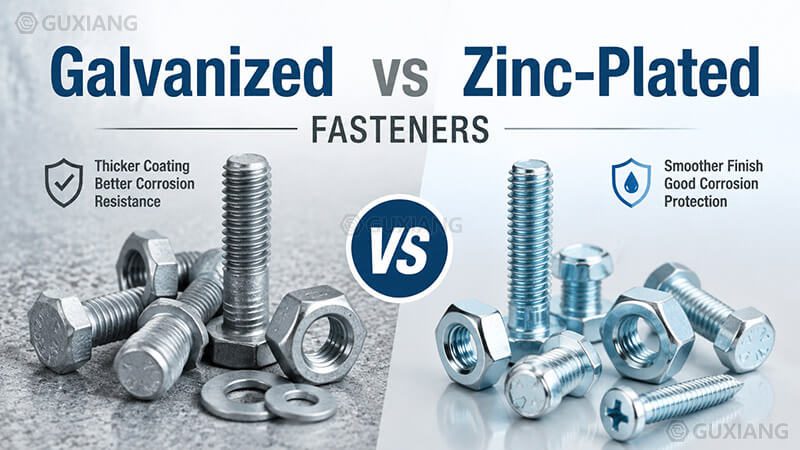
镀锌和热浸镀锌与紧固件不是同一种产品,把它们混合在一起在野外需要花钱. 两者都带有锌涂层,因此混淆是可以理解的. 但电镀锌是用微量测量的薄薄的装饰品级地层,而热液活化是用数十个微量测量的厚厚的冶金相接装甲地层. 镀锌的螺栓在室外持续一季;活活活活活活活活活活活活活活活活活活活活活活活活活活活活活活活活活活活活活活活活活活活活活活活活活活活活活活活活活活活活活活活活活活活活活活活活活活活活活活活活活活活活活活活活活活活活活活活活活活活活活活活活活活活活活活活活活活活活活活活活活活活活活活活活活活活活活活活活活活活活活活活活活活活活活活活活活活活活活活活活活活活活活活活活活活活活活活活活活活活活活活活活活活活活活活活活活活活活活活活活活活活活活活活活活活活活活活活活活活活活活活活活活活活活活活活活活活活活活活活活活活活如果您购买了紧固件作为栅栏,太阳能架,护栏,传输塔,或者任何户外钢结构,这种区分决定了您更换五金件的频率以及腐蚀性保修实际覆盖的内容.
本指南是我们Surface Finishes系列的第二个条目,它坐落在我们之前比较的旁边 不锈钢对热浸镀锌. 文章回答了材质的问题:你需要不锈钢或锌制钢? 这个解答了涂层问题: 一旦你选择了锌,锌应该如何应用,每个应用的路线在线程,增殖和腐蚀寿命方面有什么变化?
首先,命名的梅斯
在任何数字之前,你需要知道这些单词是如何使用的,因为行业不一致.
镀锌 几乎总是意味着电镀——从电解浴中沉入紧固件表面的锌. 表面处理型机车为薄,光滑,并有制服. 在北美,这是在五金件商店出售的廉价螺栓,螺丝和坚果上的默认完成. 它在ASTM B633或ISO 4042下被规定.
镀锌 是松散的词。严格地说,刺激是指表面处理用锌制成的钢。在实践中,紧固件购买者使用“热浸镀锌”表示热潮起伏-该部分在450°C左右被浸入熔锌中,并形成厚的锌-铁合金层。在北美,紧固件绘图上的“热浸镀锌”几乎总是指热滴,在ASTM A153或ISO 1461中规定.
陷阱:在一些地区和一些目录中,“热浸镀锌”被松散地用于电镀锌。订购“热浸镀锌螺栓”并接受镀锌的买方,除非取名为标准的图纸,否则没有法律依据。在每张画上,写出标准,而不是字.
还有第3个家庭你会遇到: 机械刺激—— 锌粉被撒入旋转鼓中。它坐落在厚度中的两者之间,它的存在主要是为了避免被硬化的部分上被氢化的浸润. 它较少出现在紧固件作品中,但是它属于这个对话中,因为它既解决了电镀问题,也解决了热迪普共享问题.
两个过程:坦克对克特尔
电镀:坦克里发生了什么
紧固件被悬浮在水上锌浴中并制作阴极. 锌的阳极会溶解,锌离子板出到部分,一层薄而稠密的地层会逐渐形成. 沐浴化学性质各有不同——氰化物,碱性非氰化物,而氯化酸是三个家族,每个家族都会改变投掷力,亮度和氢能生成.
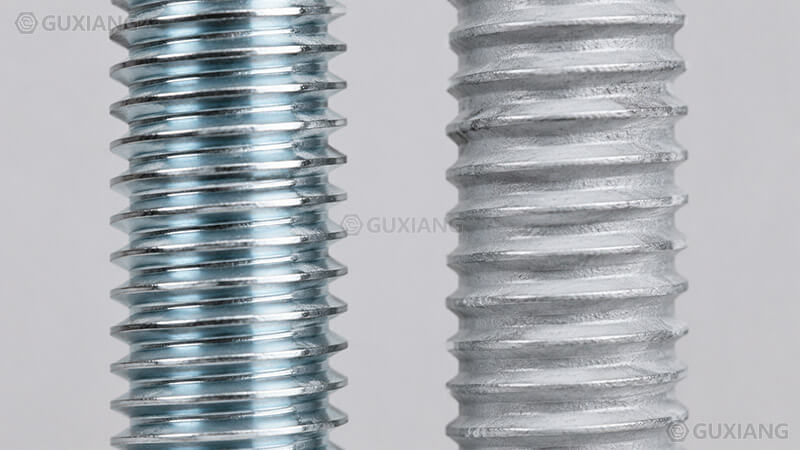
时间是分钟,不是小时。表面处理在每一个地表上均匀地生长出,包括线根和内起伏,这就是板状线条留在公差的原因. 浴缸里的闪光灯让闪亮的稍有蓝色的丁丁完成你看到的商店买的螺钉。光线是化妆品,它没有说腐蚀生命.
热水飞船:Kettle的遭遇
路线完全不同. 紧固件先是清洗-由高温脱脂而来,再将酸腌取去剥取磨坊和生锈后再浸入通量中以保持表面活性,再浸入存放于450°C附近的熔锌浴中. 锌将钢湿并与之反应,形成一系列锌-铁金属间层,上方为纯锌外层.
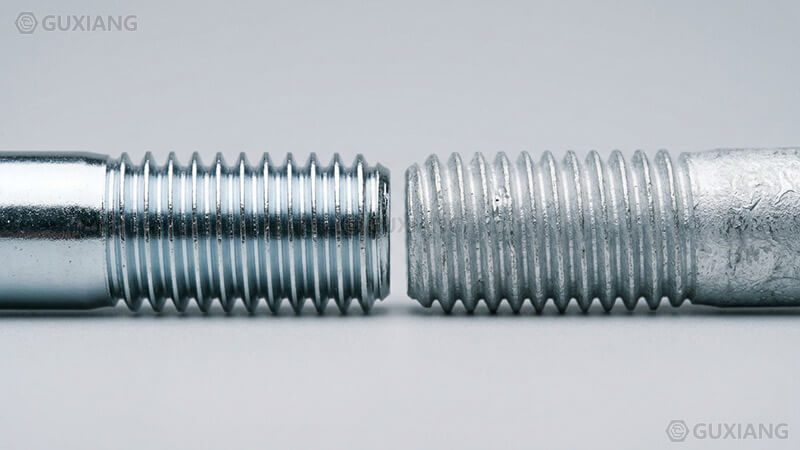
冶金债券是关键区别. 被电化的锌坐到表面,可以被刮去. 热干锌被合金制入钢表面;不剥取. 重锤击打可以打碎它,但正常的处理不会将其取出.
Hot-dip 表面处理厚度主要由钢化学和浴温设定. 钢中的硅和磷能驱动反应——即所谓的桑德林效应,这就是为什么同一刺激线可以从一个螺栓上产生60微米的表面处理,从同一个螺栓上产生110微米的表面处理. 正如第5节所解释的,这种可变性是正常的,正是线状紧固件造成麻烦的原因。关于该进程及其冶金的更广泛背景 维基百科关于热潮刺激的文章 详细覆盖地层结构.
单声道版本
电镀会使部分的锌皮薄而统一. 热潮刺激会长出厚厚的锌铁装甲,这是其中的一部分。其他一切——螺纹适合,腐蚀寿命,腐蚀风险,成本——都源于这一差异.
标准:ASTM vs ISO, 以及您实际购买的哪一个
画上命名的标准是真正的规格. “镀锌”或“热浸镀锌”一语不是。三对标准几乎覆盖了所有更紧凑的工作,一些令人惊讶的失败可以追溯到一张没有命名的画.
| 完成 | 北美 | 国际 | 它的覆盖 |
|---|---|---|---|
| 电镀锌 | 1个TP5T B633 | ISO 4042 (韩语) | 钢铁上的锌电镀,厚度班,补充结业,减压 |
| 热滴刺激,五金件 | 1个TP5T A153/A153M | ISO 1461 (韩语) | 钢铁物品上的热底锌涂层、表面处理重量/等级、取样和试验方法 |
| 盐喷雾测试 | ASTM B117 | ISO 9227 (韩语) | 用于限定涂层的中性盐雾测试方法 |
1个TP5T B633 将电镀锌分为四个厚度类,FE/Zn 5,8,12和25——数字是微量中最小的表面处理. 它还定义了从平原(Type I)到铬化转化为钝化的5个类型的补充完成. 一张写有“镀锌, 清澈的铬酸盐”的画, 写出"FE/Zn 12"或"FE/Zn 25",对话内容也有所改变.
1个TP5T A153 包括钢铁硬件的热潮刺激——零配件的紧固件级——以及按每平方英尺盎司和涂层重量的等级涂装。 A153下的紧固件一般会得到B级或C级涂料;标准是北美建筑的热-dip 紧固件的工作马.
ISO 1461 (韩语) 是国际热潮标准, 它规定涂装厚度由钢节厚度. 对于典型的螺栓弹壳或坚果,所需的平均厚度在45-85微米范围内着陆,这取决于钢的厚度. 这就是需要记住的数字:紧固件上的热底锌比电镀锌厚5到10倍。现版为: ISO 1461:2022 (韩语), 它明确指出,具有自己专用标准的紧固件在其他地方可以涵盖——对于板上路线,“其他地方”是ISO 4042.
ISO 4042 (韩语) 专门覆盖紧固件钢的电镀涂层系统。它是ASTM B633的紧固件级对应物,当你关心氢增压时,它才是重要的标准,因为它将厚度的涂装,烘焙,和氢的去除连接到一个系统中. 目前版本, ISO 4042:2022 (英语), ,是大多数出口工作中所标注的紧固件规格的参考.
出口商的实用规则:如果你的客户在北美,盘式的姓名 ASTM B633和热管的ASTM A153。如果你的客户在欧洲,姓名 ISO 4042和ISO 1461. 姓名两部分都跨越了两个市场——在图纸上花费一行并去除一整类纠纷.
4. 厚度编目:5–15微米对45–85微米
厚度是解释其他几乎所有事物的单数. 将两个涂料并排:
| 属性 | 锌-镀锌(电气化) | 热浸镀锌 |
|---|---|---|
| 典型的表面处理 | 5 - 15微米(FE/Zn 5 - 25/ASTM B633) | 典型于紧固件部分的45-85微米(ISO 1461) |
| 重量 | 35-110克/平方米 | 320-610克/平方米 |
| 债券 | 机械/电化学沉积 | 冶金锌-铁合金层 |
| 表面 | 平滑、明亮、制服 | 有纹理、可变、滴入重部件 |
| 边际覆盖 | 好,跟着轮廓 | 在尖地上会很薄 在平地上会很厚 |
| 主题 | 表面处理遵循螺纹配置文件 | 表面处理可以桥接或填充螺纹根 |
| 在同一环境中的神圣生活 | 数月到数年 | 数以十年计 |
锌能保护活钢:先用锌腐蚀,钢保持完好无损,给定大气中锌的腐蚀率大致不变. 所以表面处理的生命尺度几乎是线性的与表面处理0ZZ。 10微米板起的表面处理和70微米热-滴起的表面处理在同一大气中,在钢铁开始生锈前,生命约有7倍的差异. 这就是决定的整个经济学, 压缩成一行表.
不过不要只读厚度紧固件上的热干涂装不统一. 尖锐的边缘——线状花峰,扳手平地——可以跑得更薄,而平地跑得更厚. 盘式表面处理在整个部分更统一对于腐蚀寿命来说,平均值很重要;对于线合,最厚的分数重要,也就是下一节.
螺纹:为什么"热地"吃"ZZ1"
这是产生最愤怒电话的故障模式. 热滴热浸镀锌螺栓将不符合它的坚果,买方责怪供应商,供应商责怪了标准,真正的答案是没有人在线上说明涂了厚度.
这里的几何。在外线上,涂层会向外增长,而投出直径逐渐增长. 60-85μm的热干涂装在螺栓上,对接接接接接接接接接接接接接接接接接接接接接接接接接接接接接接接接接接接接接接接接接接接接接接接接接接接接接接接接接接接接接接接接接接接接接接接接接接接接接接接接接接接接接接接接接接接接接接接接接接接接接接接接接接接接接接接接接接接接接接接接接接接接接接接接接接接接接接接接接接接接接接接接接接接接接接接接接接接接接接接接接接接接接接接接接接接接接接接接接接接接接接接接接接接接接接接接接接接接接接接接接接接接接接接接接接接接接接接接接接接接接接接接接接接接接接接接接接接接接接接接在装有标准 6克公差的M12螺栓上,一发热滴涂装可以将投出直径推出可接受的范围. 坚果线在中途和果酱上,或者组装器强迫并剥去线条,或者坚果被交叉曲折后被曲折.
镀锌的紧固件没有这个问题,因为5–15微米在标准的耐受性内坐得舒适. 这是最常见的原因光谱师选择被打上牌的紧固件即使在腐蚀性服务中: 不是他们喜欢电镀,而是线程起作用.
该行业有一个标准的答案热水: 在激发前超大螺纹大小 . ASTM A153 and ISO 1461 both address this — hot-dip galvanized bolts are commonly tapped or rolled oversize (the familiar “oversize nut” or “galvanized after threading with oversize allowance”) so the coating brings the final pitch diameter back into fit. In practice:
Roll or cut the thread oversize by the expected coating build, typically 0.25–0.4 mm on pitch diameter for M10–M20 bolts.
Tap the nut oversize to match, or use a nut tapped after galvanizing.
Always test-fit with a functional thread gauge and an actual nut from the same batch before shipping.
The lesson from the shop floor: never buy hot-dip galvanized fasteners from a supplier who cannot tell you their oversize threading practice. If they say “we just dip standard bolts,” the threads will fail, and the failure will be blamed on you, the specifier.
Hydrogen Embrittlement: The Quiet Killer
Hydrogen embrittlement is the fastener failure that kills people, and it is tied directly to the coating process.
The mechanism, in one paragraph. During acid pickling and electroplating, atomic hydrogen is generated at the steel surface. In hardened steel — typically above about 1000 MPa tensile strength — hydrogen atoms diffuse into the lattice and collect at stress concentrators. After assembly, the hydrogen migrates to high-stress points, and the bolt fails suddenly, often hours or days after installation, at a fraction of its rated load. The bolt snaps. There is no warning, no yielding, no visible corrosion. In overhead lifting, fall protection, and structural connections, this is a catastrophic failure mode.
Electroplating is the high-risk route because the bath itself generates hydrogen at the cathode — that is the plating process. Hot-dip galvanizing also exposes the part to hydrogen during pickling, but the 450°C molten zinc bath acts as a natural bake, driving hydrogen out. So in practice, hot-dip carries far lower embrittlement risk than electroplating on the same steel grade.
The control for electroplating is a post-plate bake. ISO 4042 and ASTM B633 both require hydrogen embrittlement relief baking for hardened parts: typically 190–230°C for 4–24 hours, started within one hour of plating. The bake is only effective if it happens soon after plating and before any subsequent coating steps seal the surface.
The practical rules:
Do not electroplate fasteners above roughly 1000–1200 MPa (grade 10.9, grade 8.8 borderline, most quenched-and-tempered alloy steel) without a documented bake cycle. The 合金钢紧固件指南 covers the strength grades in detail.
Grade 12.9 and above: electroplating is generally off the table. Use mechanical galvanizing, zinc flake coating, hot-dip with controlled processing, or a corrosion-resistant alloy.
Ask the plater for the bake certificate, not the promise. A bake that did not happen cannot be detected on the finished part, so the paper trail is the only evidence.
If the joint is safety-critical — lifting, suspension, structural — treat “zinc plated, grade 10.9” as a red flag until you see the process certificate.
Hydrogen embrittlement does not show up in corrosion testing. A bolt can pass salt spray and still be time-bombed. That is why the process control matters more than the coating test.
White Rust vs Red Rust: Reading the Failure
Both coatings fail in predictable ways, and the color of the corrosion product tells you which stage you are in.
White rust is the first sign of trouble on fresh zinc. When a zinc surface gets wet and dries repeatedly without a chance to form its protective patina — think stacked parts in rain, or condensation in transit — it forms bulky white zinc hydroxide and zinc oxide. White rust is not the coating gone; it is the surface reacting. On hot-dip coatings, white rust is mostly cosmetic and the residual zinc still protects for years. On thin plated coatings, white rust is more serious, because 10 µm of zinc consumed by white rust is a large fraction of the coating.
Prevention: keep parts dry in storage and transit, keep packaging ventilated, and avoid tightly nested wet parts. Chromate or passivation treatments on plated parts delay white rust onset. On galvanized parts, the industry uses quench treatments and silicate or chromate passivation for the same reason.
红色生锈 means the zinc is gone — locally or entirely — and the steel is corroding. Red rust on a plated fastener appears first at thread crests, edges, and damaged spots, because that is where the thin coating is thin or broken. Red rust on a hot-dip part is usually edge-driven too, or the sign of coating damage from spanner jaws, impact, or scratches that cut through to steel.
The practical read: white rust on galvanized is a storage complaint, not a failure. Red rust on either coating is a real failure that means the coating budget was exceeded or the wrong coating was chosen. When a customer sends a photo of red rust on a plated bolt after one winter, the answer is not “better plating,” it is “hot-dip or stainless,” and the cost conversation follows.
Salt Spray and Real Corrosion Life
Salt spray testing (ASTM B117 or ISO 9227 neutral salt fog) is how most coating specs are verified, and it gets misread more than any other test in this industry.
Typical results for fasteners, using representative values from plating and galvanizing practice:
| 涂层 | Typical B117 Neutral Salt Spray Before Red Rust | 请读作 |
|---|---|---|
| Zinc plated, 5–8 µm, clear passivate | 24-72小时 | The absolute bottom of the market |
| Zinc plated, 8–12 µm, yellow/olive chromate | 72-120小时 | Common hardware-store grade |
| Zinc plated, 12–25 µm, trivalent passivate | 120–250 h | Good plated work, but still thin |
| Hot-dip galvanized, 45–85 µm | 1000–2000+ h | A different corrosion class entirely |
| Hot-dip galvanized, heavy sections | 2000-3000+h 时 | 厚厚的涂层,长寿 |
三个关于这些数字的诚实警告。首先,盐喷剂是高氯化载荷的加速试验;它与船舶和路盐接触有关,但夸大了温和室内大气中的差异。第二,盐喷剂不以真实服务的方式检验牺牲生命——真实生活涉及湿干循环,紫外线和磨损,而锌的表现不同. 第三,盐喷雾没有告诉你什么关于氢内含,螺纹适合, 或galvanic相容。这是资格中的一个数字,而不是整个故事.
在典型的工业环境中,锌的腐蚀量每年约为1至4微米,在海洋大气中每年约为3至10微米,这取决于暴露程度。自己做算术——海洋环境中一个10微米的盘状表面处理是一个一到三年的命题,一个70微米的活活活活活活活活活活活活活活活活活活活活活活活活活活活活活活活活活活活活活活活活活活活活活活活活活活活活活活活活活活活活活活活活活活活活活活活活活活活活活活活活活活活活活活活活活活活活活活活活活活活活活活活活活活活活活活活活活活活活活活活活活活活活活活活活活活活活活活活活活活活活活活活活活活活活活活活活活活活活活活活活活活活活活活活活活活活活活活活活活活活活活活活活活活活活活活活活活活活活活活活活活活活活活活活活活活活活活活活活活活活活活活活造成这一差距的原因是,基础设施紧固件是热水或不锈的,以及室内五金件是被打上牌子的原因.
Galvanic相容性:锌不是一个通用的答案
锌对钢是无名的,这是表面处理的全部点. 但是锌对大多数其它常见金属也是无名的,这在锌合金的紧固件遇到其他的材料时会产生相容性问题.
典型案例是"铝"上的**zinc 紧固件. 锌对铝是无名的,因此锌的腐蚀是优先的——原则上铝是被保护的. 在实际操作中,一个小紧身衣上所涂的锌薄而得到快速消耗,头部周围的铝从伽瓦尼克夫妇身上反正会腐蚀出,而关节以不可预测的方式失效. 对于铝结构来说,不锈钢 ZZZ是标准答案是有原因的;如果锌完全被使用,则是一种临时或非结构的选择. 在铝部分本身需要完成的地方,去碘化是铝的特定路线——不同的化学,不同的涂层,不同的规则,包含在**[去碘化的紧固件导 (/blog/anodization-紧固件-guide/)**.
** Zinc 紧固件与不锈钢**是相反的更糟糕的. 无色是锌的阴极,因此锌作为阳极被迅速消耗,而不锈硬件则起到大阴极的作用,驱动对小锌涂层的快速攻击. 不锈括号中的板状螺栓是快腐蚀装置,而不是腐蚀溶液. 如果结构是不锈的,使用不锈的紧固件——我们不锈的和热浸镀锌的文章中论证了材料比较.
** 铜和黄铜的Zinc也是不匹配的:锌是铜合金的代名词,而黄铜在冶金一致性的铜系统中选择了黄铜,正如**[黄铜-紧固件导 (/blog/ZZZ2-紧固件-guide/)**所解释的那样。将锌合钢混入铜管道或电气系统,将一个腐蚀问题换成另一个腐蚀问题.
规则:锌涂层属于钢结构上并有钢或其他与锌相容的紧固件,在牺牲寿命足够大的环境中. 交配金属为铝,不锈铜或铜合金时,停止并重新考虑材质的选择,而不是涂层.
四起外地投诉及其成本
真正的顾客不会打电话抱怨表面处理的班级. 他们用四个故事召唤, 每一个都追踪到一个过程决定.
“螺栓在一个冬天后生锈了。” 经典的盘式-紧固件投诉. 部分可能是FE/Zn 5或8有明显的钝化,被售出供户外使用,表面处理在一个单一的湿季中被消耗. Fix:要么升级到FE/Zn 12–25,并配有适当的钝化剂,要么移动到热水中,用于任何带有载荷的室外活动. 也检查存储——箱中白色生锈往往会先于场上红色生锈.
“螺母将不执行热浸镀锌1Z” 第5节的线索公差故障. 供货商将标准线条浸出并涂上桥. 修补:在刺激前需要超大小的线程,用同一批坚果进行测试,并将备抵写入定购单。这就是将廉价的热浸镀锌购买变成站点延迟的抱怨,而延迟成本比紧固件要高.
“安装后,高强度螺栓断裂。” 第6节:含氢浸润剂,A 等级 10.9或12.9 盘状的螺栓没有被烘焙,或没有证件被烘烤。固定:没有经过认证的烘焙、机械活化或锌片,没有超过强度阈值的电镀,每批都有证书。本指南中没有任何其他东西可以杀人;这就是指南.
“热浸镀锌部件上的白色粉末——是否生锈?” 白色的生锈恐慌。 主要为仓储和中转问题,化妆品用活活活活活活活活活活活活活活活活活活活活活活活活活活活活活活活活活活活活活活活活活活活活活活活活活活活活活活活活活活活活活活活活活活活活活活活活活活活活活活活活活活活活活活活活活活活活活活活活活活活活活活活活活活活活活活活活活活活活活活活活活活活活活活活活活活活活活活活活活活活活活活活活活活活活活活活活活活活活活活活活活活活活活活活活活活活活活活活活活活活活活活活活活活活活活活活活活活活活活活活活活活活活活活活活活活活活活活活活活活活活活活活活活活活活活活活活活活活活活活活活活活活活 修补:使零件保持干燥,向顾客解释区别,在薄板活出后,可分辨为钝化. 一张相片和一个诚实的解释通常可以解决这一投诉而无需退回.
每项申诉的费用都低于申诉的费用。横跨四地的图案:失败是在规格时间决定的,而不是在工厂z时间决定的.
北美与欧洲的实践对比
出口者不断满足差别. 两种市场对锌涂层的规定不同,一种批准的部分不会自动批准.
| 主题 | 北美 | 欧洲 |
|---|---|---|
| 薄荷锌标准 | ASTM B633(FE/Zn 5-25级) | ISO 4042 (表面处理系统,装订控制) |
| 热滴标准 | ASTM A153/A153M(五金件班) | ISO 1461 (按款次分列的厚度) |
| 盐雾测试 | ASTM B117 | ISO 9227 (韩语) |
| 常见盘式等级 | FE/Zn 5 清晰,在五金件中非常常见 | Fe/Zn 5-12 有 Cr6+-无钝化;REACH 推出 三价 |
| 六价铬 | 仍在使用, RoHS 限制在产品中心 | 在REACH下有效禁止大多数申请 |
| 热地紧固件练习 | C类涂层中常见的超大小线程 | ISO 1461 厚度表,超大小线程常见 |
| 表面处理 0ZZ单元 | μm和mils, 表面处理重量 z/ft2 | µm, g/m² |
The regulatory pressure is the part that surprises exporters. Hexavalent chromium passivates — the yellow and olive finishes that dominated plated fastener corrosion performance for decades — are under heavy restriction in Europe under REACH, and trivalent (Cr³⁺) passivates are now the default. Cr³⁺ passivates perform differently: less self-healing, different corrosion behavior, and lower salt spray hours in some formulations. A fastener spec written in 2010 that says “zinc plated, yellow chromate” is not buildable in Europe today without a reformulation conversation.
For hot-dip work, the differences are smaller — both markets rely on the same metallurgy — but the thickness expectations differ. A European drawing cites ISO 1461 and gets 45–85 µm by section thickness. A North American drawing cites A153 and gets coating weight classes. Write both on the drawing for dual-market parts, and you eliminate the most common export dispute: “our standard says this is adequate.”
选拔框架
Four questions settle nearly every galvanized-vs-plated fastener decision. Walk them in order.
Step 1: Where Does the Fastener Live?
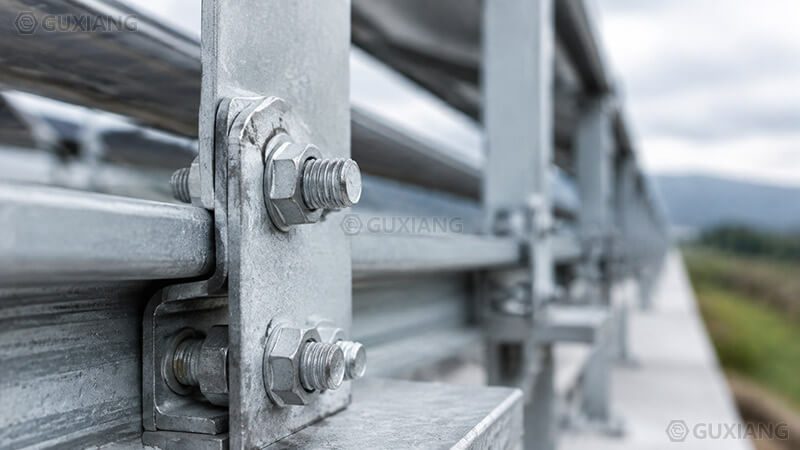
Indoor, dry, sheltered — plated zinc is almost always sufficient, and for fully non-corrosive or non-metallic needs the 塑料紧固件指南 covers when polymer hardware makes sense. Outdoor, wet, coastal, road-salt, chemical — the coating thickness ledger decides: plated zinc is a few-year finish, hot-dip is a multi-decade finish. If the structure is designed for 25 years, the fasteners need a 25-year finish.
Step 2: What Is the Strength Grade?
Below about 1000 MPa, electroplating is routine. Above it, hydrogen embrittlement management dominates the decision — certified bake, mechanical galvanizing, or zinc flake. Above about 1200 MPa, electroplating is generally out. High-strength work also changes the material conversation entirely, and the 碳钢紧固件指南 covers the grade landscape.
Step 3: Can the Thread Fit Absorb the Coating?
Plated coatings fit standard threads. Hot-dip needs oversize threading, oversize or re-tapped nuts, and a functional test-fit. If the joint is tight-tolerance, fine-pitch, or assembled blind, the hot-dip thread problem may outweigh its corrosion advantage — this is where some specifiers choose stainless or plated zinc with a shorter life rather than fight the fit.
Step 4: What Does the Drawing Actually Say?
Name the standard, the class, the passivation, the bake requirement, and the test method. “Galvanized” or “zinc plated” without a standard is a conversation, not a specification. The drawing is where this guide’s lessons get enforced — write the ISO or ASTM reference, the thickness class, and the embrittlement relief, and the supplier has no room to ship the cheapest version of the word.
Worked Example: Railing Hardware for a Coastal Boardwalk
The fasteners hold stainless railing to a steel structure on a salt-air boardwalk. Step 1: coastal, salt, decades — thin plating is out. Step 2: the structural bolts are grade 8.8, so electroplating is possible with baking but marginal; the coating life is the bigger problem. Step 3: M16 bolts, coarse thread, room for oversize threading. Step 4: the spec reads “hot-dip galvanized per ISO 1461, oversize threaded before galvanizing, test-fit with nut from same batch, coating thickness 70 µm average, 55 µm minimum.” The fasteners cost more than plated ones and last twenty times longer. The boardwalk does not get re-bolted every three years.
常见问题解答
1. What is the difference between galvanized and zinc-plated fasteners?
镀锌紧固件表面有一层薄薄的电镀锌层,厚度通常为5–15 µm。热镀锌紧固件则是通过热浸镀锌工艺,在熔融锌液中进行镀覆,镀层厚度通常为45–85 µm,且与基材形成冶金结合。.
2. Is galvanized or zinc-plated better for outdoor use?
Hot-dip galvanized. The thicker coating gives roughly ten times the sacrificial life in the same atmosphere. Zinc plating suits indoor and sheltered service.
3. Do galvanized bolts fit standard nuts?
不能完全靠它。热浸镀层会在螺纹上堆积,因此螺栓需要采用超尺寸螺纹,而螺母则需要匹配的超尺寸螺纹,或者在镀锌后重新攻丝。.
4. Can zinc-plated fasteners be used on stainless steel?
不。不锈钢在锌的电化学电位序列中位于锌的阴极位置,因此锌镀层作为阳极会迅速腐蚀。在不锈钢结构上应使用不锈钢紧固件。.
5. What causes white rust on galvanized fasteners?
在形成保护性铜绿之前,新鲜的锌会与水分发生反应。对于热浸镀层而言,这主要影响外观;但对于薄镀层而言,则会显著消耗镀层厚度。.
6. Do zinc-plated bolts need hydrogen embrittlement relief?
在1000 MPa以上时,是的。经硬化处理的紧固件需要在电镀后一小时内,在190–230°C下进行电镀后烘烤,并需提供有记录的工艺证书。.
7. What coating thickness do zinc-plated fasteners have?
ASTM B633班跑出FE/Zn 5,8,12和25——微分中的最低厚度. 常见的五金件-存储电镀为FE/Zn 5–8;耐用工作使用12–25.
8. Are galvanized fasteners compatible with aluminum?
Poorly. Zinc is anodic to aluminum and corrodes preferentially, consuming the coating fast. Stainless fasteners are the standard choice for aluminum structures.
9. How long does galvanized coating last in salt spray?
代表B117的结果显示,热水涂层为1000至2000+小时,而板状涂层为24至250小时,这取决于厚度和钝化.
10. Can you paint over galvanized or zinc-plated fasteners?
是的,但准备很重要。 锌表面需要清洗并往往需要特定的底物;未经制备就将活锌涂上而因粘合物流失而失效. 热潮表面可能需要先进行风化或扫射.
参考文献
International Organization for Standardization. “ISO 1461:2022 — Hot dip galvanized coatings on fabricated iron and steel articles — Specifications and test methods.” https://www.iso.org/standard/81435.html
International Organization for Standardization. “ISO 4042:2022 — Fasteners — Electroplated coating systems.” https://www.iso.org/standard/77913.html
ASTM International. “ASTM B633-15 — Standard Specification for Electrodeposited Coatings of Zinc on Iron and Steel.” https://www.astm.org/b0633-15.html
ASTM International. “ASTM A153/A153M-16 — Standard Specification for Zinc Coating (Hot-Dip) on Iron and Steel Hardware.” https://www.astm.org/a0153_a0153m-16.html
American Galvanizers Association. “Galvanizing Education and Resources.” https://galvanizeit.org/
Wikipedia. “Hot-dip galvanization.” https://en.wikipedia.org/wiki/Hot-dip_galvanization
ASTM International. “ASTM B117-19 — Standard Practice for Operating Salt Spray (Fog) Apparatus.” https://www.astm.org/b0117-19.html