





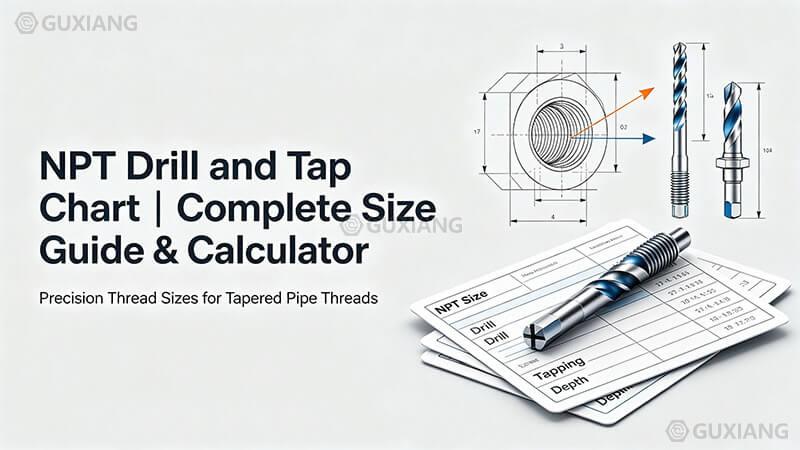
快速参考: NPT(国管相接器)线条跟随ANSI B1.20.1,有60°螺纹角和1:16相接相接相接相接相接相接相接相接相接相接相接相接相接相接相接相接相接相接相接相接相接相接相接相接相接相接相接相接相接相接相接相接相接相接相接相接相接相接相接相接相接相接相接相接相接相接相接相接相接相接相接相接相接相接相接相接相接相接相接相接相接相接相接相接相接相接相接相接相接相接相接相接相接相接相接相接相接相接相接相接相接相接相接相接相接相接相接相接相接相接相接相接相接相接相接相接相接相接相接相接相接相接相接相接相接相接相接相接相接相接相接相接选择低于《不扩散条约》的任何尺寸,以便立即找到正确的自带钻孔尺寸、每英寸牙数和等同的公制.
为《不扩散条约》线程选择正确的钻探Z尺寸对于实现适当的压力密封和避免在管道装配、液压系统和流体动力应用方面进行昂贵的再造至关重要。您是否需要 1/4 不扩散条约演习尺寸, ,则 1/2 不扩散条约演习尺寸, ,或更大配件的尺寸,例如: 2" 不扩散条约 或 4" 不扩散条约, 这张图表每次都能给你准确的匹配.
不扩散条约钻探工具
找到您的 NPT 磁带钻探器尺寸
攻丝钻
—
线索 / 英寸
—
公制钻探
—
NPT 磁盘钻台( 所有大小)
这份综合图表涵盖《不扩散条约》的所有尺寸: 1/16"改为"12", 包括水龙头钻探尺寸,十进制等同器,毫米等同器,每英寸牙数,和直径外接管. 使用过滤按钮来跳转到所需的范围.
| 《不扩散条约》 | TPI | 磁盘钻出尺寸 | 十进制 (英寸) | 公制(毫米) | 管道 OD (内) |
|---|
NPT锥管螺纹维度参考
为机械和检验目的,下表提供手紧平面上的关键螺纹直径. ANSI B1.20.1中的所有值.
| 《不扩散条约》 | TPI | 迪亚少校 (in) | 皮奇·迪亚(in) | 小迪亚 (in) | 磁带 |
|---|
如何选择用于《不扩散条约》绘图的右钻尺寸
理解关系
水龙头钻在《不扩散条约》水龙头切断内部水龙头螺纹之前就创造了试验孔。正确的钻探尺寸应产生接近于标准的小径 NPT 小径来表示这种尺寸. 如果钻孔太小,水龙头会被过度打磨并可能断裂. 如果太大,线会很浅,关节可能会在压力下漏出.
分步选择
步骤 1: 确定适合你的《不扩散条约》尺寸(例如《不扩散条约》第1/4号).
步骤 2: 在上图中查看自带式钻探Z尺寸(用于1/4"NPT:7/16"钻探,0.438"小数).
第 3 步: 选择匹配的钻入位。 如果分数大小不可用,则使用十进制等值来寻找最近的字母或公制钻.
第 4 步: Drill the pilot hole, then tap with the corresponding NPT tap. Verify thread engagement with the fitting hand-tight.
75% Thread Engagement Rule
For most NPT applications, 75% thread engagement provides an optimal balance between joint strength and ease of assembly. The tap drill sizes in this chart are calculated for approximately 75% engagement. For high-pressure hydraulic systems, some engineers prefer 80–85% engagement, which requires a slightly smaller drill.
重要提示: NPT threads are tapered (1:16 ratio, or 3/4" per foot). The minor diameter varies along the length of the thread. The drill sizes listed produce the correct minor diameter at the hand-tight plane. Always use a taper pipe tap (not a straight NPT tap) for through-hole applications, and verify fit with a thread gauge.
《不扩散条约》与BSPT:关键差异
When working with international fittings, you may encounter BSPT (British Standard Pipe Taper) threads alongside NPT. While both are tapered pipe threads, they are not interchangeable.
The key differences are: NPT uses a 60° thread angle (ANSI B1.20.1, American standard), while BSPT uses a 55° thread angle (ISO 7-1, British/international standard). The thread forms have different flank angles and pitches per inch. Forcing an NPT fitting into a BSPT port (or vice versa) will cross-thread and damage both components. Always verify the thread standard before assembly — look for markings on the fitting or consult the equipment manual.
常见问题解答
For 1/4" NPT (18 TPI), use a 7/16" drill bit (0.438" decimal / 11.1 mm). This produces the correct minor diameter for 75% thread engagement at the hand-tight plane.
For 1/2" NPT (14 TPI), use a 23/32" drill bit (0.719" decimal / 18.3 mm). The 1/2" NPT has a pipe OD of 1.050" and 14 threads per inch.
NPT (National Pipe Taper) has tapered threads that create a pressure seal through thread interference. NPS (National Pipe Straight) has parallel threads and requires an O-ring or gasket for sealing. They share the same thread angle (60°) and pitch, but the taper is the critical difference — never mix NPT and NPS fittings in pressure applications.
不。. NPT (60° thread angle, ANSI standard) and BSPT (55° thread angle, ISO standard) have incompatible thread forms. Forcing them together will cross-thread and damage the connection. Always match the thread standard exactly.
TPI stands for Threads Per Inch — the number of thread peaks in one linear inch. For example, 1/4" NPT has 18 TPI (pitch = 1/18 = 0.0556"), while 1/2" NPT has 14 TPI (pitch = 1/14 = 0.0714"). Larger NPT sizes generally have fewer threads per inch.
All NPT threads have a 1:16 taper (3/4" per foot), meaning the diameter decreases by 3/4" over a 12-inch length. This taper is what creates the pressure seal when male and female threads are tightened together. The taper applies to both the thread diameter and the pitch diameter.
Yes, in most cases. While the taper creates mechanical interference, NPT threads typically require PTFE tape, pipe dope, or anaerobic sealant to achieve a leak-free seal in pressure applications. The only exception is when using NPT fittings with integrated O-ring seals (SAE O-ring boss), which seal on the O-ring, not the threads.
The pilot hole should be drilled at least 1–2 threads deeper than the required thread engagement depth. For standard pipe fittings, a minimum of 6 full threads of engagement is typical. Use the drill depth formula: drill depth = thread engagement length + 2× thread pitch. This ensures the tap can start cleanly without bottoming out.
NPT fittings are generally rated for pressures up to 10,000 PSI depending on size, material, and temperature. Smaller sizes (1/4"–1/2") typically handle higher pressures. For high-pressure hydraulic systems, always verify the fitting manufacturer's pressure rating table and ensure proper thread engagement and sealant application. Material selection also affects the pressure capability.
Reusing NPT fittings is generally not recommended for pressure applications. The tapered threads deform during initial assembly to create the seal, and re-tightening can compromise this seal. For non-critical, low-pressure applications, reuse may be acceptable if the threads show no visible damage. Always inspect threads before reinstallation and apply fresh sealant.