



Quick Reference: This chart provides recommended maximum tightening torque values for standard coarse-thread metric bolts (M3–M30) based on property class per ISO 898. Values are for dry (unlubricated) threads.
T ≈ 0.2 × d × σ0.2 × As
Selecting the correct tightening torque is critical for ensuring proper clamp force in bolted joints — under-torquing leads to joint loosening and fatigue failure, while over-torquing risks bolt yield or thread stripping. This page provides an interactive torque calculator, a complete torque specification table for all standard sizes and property classes, and a practical tightening guide for manufacturing and assembly applications.
Metric Bolt Torque Calculator
Find Tightening Torque by Size & Property Class
Recommended Max Tightening Torque
—
Metric Bolt Torque Chart (M3–M30)
Complete reference table of recommended maximum tightening torque values (in N·m) for standard coarse-thread metric hex bolts per ISO 898-1. Data covers bolt sizes from M3 to M30 across all common property classes. Use the filter buttons to focus on the size range you need.
| Thread Size | 4.6 | 4.8 | 5.8 | 6.8 | 8.8 | 9.8 | 10.9 | 12.9 |
|---|
Important: These are recommended maximum tightening torque values for standard pitch, dry (unlubricated) threads. For lubricated bolts, reduce torque by 10–15%. Values marked "—" indicate property classes not commonly available for that size. Always refer to manufacturer specifications when available.
Understanding Bolt Property Classes
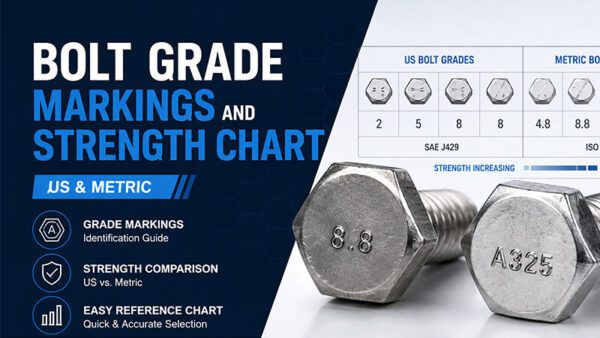
The property class marking on a bolt head tells you its mechanical strength. The two-digit system per ISO 898-1 works as follows:
First digit × 100 = ultimate tensile strength (MPa).
First digit × second digit × 10 = yield strength (MPa).
For example, a class 8.8 bolt has an ultimate tensile strength of 800 MPa and a yield strength of 8 × 8 × 10 = 640 MPa. A class 10.9 bolt has 1,000 MPa ultimate and 900 MPa yield strength.
4.6 / 4.8
Low strength — mild steel, general purpose
5.8 / 6.8
Medium strength — general engineering
8.8
High strength — structural, most common
10.9 / 12.9
Very high strength — heavy-duty, aerospace
In practice, class 8.8 is the most widely used for structural steel connections, while 10.9 and 12.9 are specified for high-stress applications such as structural joints in bridges, pressure vessels, and heavy machinery.
How to Choose the Right Tightening Torque
The Torque-Tension Relationship
The fundamental relationship between applied torque and resulting clamp force is:
T = K × d × F
Where: T = torque (N·m), K = torque coefficient (typically 0.2 for dry steel threads), d = nominal bolt diameter (m), F = desired clamp force (N).
Step-by-Step Torque Selection
Step 1: Identify the bolt property class (marked on the bolt head). This determines the maximum allowable tensile stress.
Step 2: Determine the required clamp force for your joint. This is typically 70–90% of the bolt's yield strength for static loading applications.
Step 3: Look up the recommended torque in the chart above, or calculate using the formula. For critical joints, always use the manufacturer's specified value.
Step 4: Apply torque using a calibrated torque wrench. For precision fastener assemblies, follow a star-pattern tightening sequence in multiple passes (30%, 60%, 100% of final torque).
Key Factors Affecting Torque Values
Several factors influence the actual clamp force achieved for a given torque: thread surface condition (lubricated vs. dry), thread quality and tolerances, bolt length and grip length, number of threads engaged, and whether the joint uses a nut or tapped hole. The torque values in this chart assume standard conditions — dry threads, standard coarse pitch, and normal grip lengths.
Effect of Lubrication on Torque Values
Lubrication significantly reduces friction in the thread and under the bolt head, which means more of the applied torque converts to clamp force rather than being lost to friction. This is why lubricated bolts achieve higher clamp force at the same torque compared to dry bolts.
Common lubrication conditions and their effect on the torque coefficient (K):
• Dry (plain): K ≈ 0.20 — baseline values in this chart
• Light oil: K ≈ 0.15 — reduce torque by ~25%
• Heavy oil / grease: K ≈ 0.10 — reduce torque by ~40%
• MoS2 coating: K ≈ 0.12 — reduce torque by ~30%
Warning: Over-torquing a lubricated bolt using dry torque values can cause bolt yield, thread galling (especially in ), or joint damage. Always adjust torque when lubrication is present.
Frequently Asked Questions
For an M8 bolt, the recommended tightening torque depends on the property class: 28.8 N·m for class 8.8, 41.3 N·m for class 10.9, and 48.3 N·m for class 12.9. These values assume standard coarse thread and dry (unlubricated) conditions.
For an M10 bolt: 57.3 N·m (class 8.8), 81.8 N·m (class 10.9), and 95.7 N·m (class 12.9). Class 8.8 is the most common grade for M10 hex bolts in general engineering and structural applications.
For an M12 bolt: 99.8 N·m (class 8.8), 143 N·m (class 10.9), and 167 N·m (class 12.9). M12 is one of the most widely used sizes in structural steel connections and heavy machinery assembly.
Higher property classes have greater tensile and yield strength, allowing higher tightening torque and therefore greater clamp force. For example, an M10 bolt at class 8.8 is torqued to 57.3 N·m, while the same size at class 10.9 can handle 81.8 N·m — a 43% increase. Always match the torque to the actual bolt class marked on the head.
Yes. Lubricated bolts require 10–25% less torque to achieve the same clamp force because reduced friction means more torque converts to tension. Using dry torque values on lubricated bolts can over-stress the fastener and cause yield or thread stripping. Always adjust torque when using oil, grease, or anti-seize compounds.
Torque is the rotational force applied to the bolt (measured in N·m). Tension (or clamp force) is the axial stretching force the bolt generates, which clamps the joint together. Only about 10–15% of applied torque actually creates tension; the rest overcomes thread and under-head friction. This is why torque control alone has ±25–30% scatter in achieved clamp force.
A properly calibrated torque wrench is typically accurate to ±4% (click type) or ±1–2% (digital/electronic). However, the total joint accuracy is much wider (±25–30%) due to friction variation. For critical applications, consider using torque-angle methods or direct tension indicators (DTIs) for more precise clamp force control.
No. This chart is based on ISO 898-1 which covers carbon steel and alloy steel fasteners. Stainless steel bolts (ISO 3506) have different property classes (e.g., A2-70, A4-80) and lower torque values due to different mechanical properties and higher friction/galling tendency. Refer to the manufacturer's data for stainless steel torque specifications.
For flanged or multi-bolt joints, always tighten in a star (criss-cross) pattern to ensure even gasket compression and joint loading. Use a three-pass approach: first pass at 30% of final torque, second pass at 60%, and final pass at 100%. This prevents distortion and ensures uniform clamp force across the joint.
Multiply N·m by 0.7376 to get ft·lb. Or divide ft·lb by 0.7376 to get N·m. For example, 100 N·m × 0.7376 = 73.76 ft·lb. A quick mental shortcut: N·m × 3/4 ≈ ft·lb (within 1.3% error).