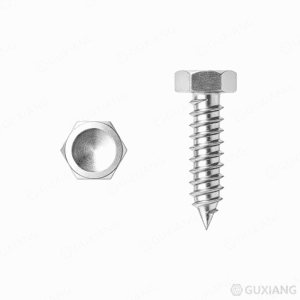






Древесные винты предназначены для твердых деревянных и деревянных стыков, с конусообразной толщей, грубой нитью и острой точкой, которая захватывает древесные волокна для сильного сопротивления отводу. DIN 95 (oval countersunk), DIN 96 (round) и DIN 97 (flat countersunk) определяют стандартные стили головы. Размеры охватывают императорские #2-#14 и метрические эквиваленты. Углеродистая сталь цинковая для внутренних работ; A2 / A4 нержавеющая и HDG для наружного и обработанного пиломатериалов.

Древесный винт представляет собой резьбовый крепеж для твердой древесины: шанк сужается от кончика до головы, нить грубая и глубокая, а гладкая непоточная секция ниже головы притягивает верхнюю часть плотно к нижней части. Наконечник острый — точка подвода в традиционных винтовых винтах, точка шнека 17 типа в современных вариантах производства.
Конусообразный шанк делает его деревянным винтом. В отличие от машинного винта с корпусом постоянного диаметра, деревянный винт утолщается к голове, соответствуя естественному сужению правильно просверленного пилотного отверстия. Полноразмерное зацепление резьбы от кончика до корня по всей глубине встраивания - нет пустой нити, нет зазора на дне отверстия.
Винт входит в пилотное отверстие в нижней части, меньше, чем шанк на его кончике и сужается, чтобы соответствовать на голове. По мере того, как нить кусается, шанк вбивается в отверстие, сжимая древесные волокна против нитей флангов.
Гладкий непоточный лоскут свободно вращается в верхней части, позволяя головке винта стягивать обе части вместе без нити, захватывающей верхнюю доску. Полностью резьбовый деревянный винт не может закрыть сустав, потому что нити запираются в верхней доске и останавливают ее от скольжения вниз к линии соединения. Частично резьбовые винты решают это.
| Стиль | Профиль | Заявка |
|---|---|---|
| Плоский Countersunk | Подкошенный под днищем при 82° (стандарт в Северной Америке) или 90° (DIN 97, Европейский) | Пылесос с деревянной поверхностью; наполняемый шпатлевкой или штепселью для невидимого крепления |
| Овальный контрсанк | Контрабандист с куполообразным верхом | Видимое оборудование в прекрасной мебели — купол гордится деталями дизайна |
| Круглая голова | Полная купольная голова, плоская подшипниковая поверхность | Монтажные скобки, оборудование и тонкий металл к дереву, где противопотопление не требуется |
| Головка типа «Pan» | Низкий купол с плоской нижней стороной | Общее собрание; более низкая высота головы, чем круглая |
| Исполнитель: Finishing Head | Плоская головка малого диаметра, опускается ниже поверхности | Завершите столярную и отделочную работу; маленькую голову легко покрыть наполнителем |
| Стиральная машина / Flange Head | Контрабандист с цельным плоским стиральным лицом | Распределение нагрузки зажима на хвойные породы, которые давят под стандартным давлением подшипника головы |
| Диск | Примечания |
|---|---|
| С прорезями | Традиционно. Доминировали деревянные винты в течение столетия. Cam-out присущ — водитель выходит из слота под крутящим моментом. Все еще указан для восстановительных работ, соответствующих периоду оборудования. |
| Филлипс (PH) | Сконструирован для маскировки при контролируемом крутящем моменте. PH2 является стандартным для винтов #6-#10. Проскальзывание под высоким крутящим моментом в лиственных породах — держите водителя идеально квадратным к винту. |
| Пози (PZ) | Филлипс-совместимый визуально, но не функционально — дополнительные ребра между крестообразными руками сжимаются лучше. PZ2 является стандартным для винтов #8-#12. Обновление по сравнению с Phillips по той же цене. |
| Сквер (Робертсон) | Стандарт в Канаде, растущий в США. Квадратный углубление держит винт на бите без магнитного наконечника. SQ2 покрывает большинство деревянных винтов #6-#10. Вывод устраняется: водитель проскальзывает перед выходными полосами. |
| Torx / Звезда (T) | Максимальная передача крутящего момента. Никакой маскировки. T15-T25 покрывает большинство деревянных винтов. Стандарт для производственных и ударных драйверов. Бит и винт - это соответствующая система - изношенные винты Torx винты быстрее, чем изношенные винты Phillips. |
Square и Torx - это современные стандарты для деревообработки. Слотированные остаются в реставрационно-репродукционных работах, где периодически правильные крепежные элементы имеют большее значение, чем эффективность сборки.
Стандартный деревянный винт Частично резиновый, суженный шанк, точка подвода. Базовый уровень. Для общих столярных изделий, где сустав зажимается перед ввинчиванием, и винт обеспечивает силу зажима и сопротивление отводу. Размеры от #2 до #24, длины от 1/4 до 6 дюймов.
Палубный винт Древесный винт, оптимизированный для наружных настилов. Тип 17 самонаводки точки шнека через доски палубы без пробоины. Полностью резьба для максимального сцепления в обработанном давлением пиломатериале. Покрытие представляет собой либо ACQ-совместимый полимер (для современной обработанной под давлением древесины, которая является коррозионной по отношению к стандартному цинку), либо 305/316 нержавеющий. Голова жука уменьшает грибы вокруг головки винта в мягком пиломатериале. Общие размеры: #8 × 2-1/2 in., #10 × 3 in.
Production / Cabinet Screw Fully threaded with a narrow core. Washer head or flat head with ribs for self-countersinking. Engineered for cabinet assembly lines—no pilot hole, no countersink, driven with a clutch-set drill. Often has a wax or polymer coating for reduced driving torque. Overlaps with chipboard screw territory but the thread geometry is tuned for solid wood joinery rather than engineered panels.
Lag Screw / Lag Bolt A heavy-duty wood screw with a hex head, driven by wrench or socket rather than screwdriver. Diameters 1/4 in. to 1-1/4 in., lengths to 12 in. or more. Used for structural timber connections—beams to posts, ledger boards to walls, heavy hinges. Requires a pilot hole. The thread cuts into the wood with a coarse pitch; the hex head delivers torque far beyond what a screwdriver head can handle.
Brass Wood Screw Solid brass, not brass-plated steel. Non-magnetic, corrosion-resistant, decorative. Standard in fine furniture, marine joinery below deck, and architectural millwork. The material is soft—brass threads strip at roughly half the torque of a steel screw. Always drill a pilot hole and lubricate the threads with wax or soap before driving.
Steel (Zinc-Plated) The default. Indoor woodworking where moisture is not a concern. Electroplated zinc at 5–8 µm offers indoor atmospheric protection. Not rated for outdoor use or pressure-treated wood contact.
Steel (Black Oxide / Black Phosphate) Dark matte finish, zero meaningful corrosion resistance. The appeal is aesthetic—black screws on dark woods and painted black hardware are invisible without filling. Oil the threads before driving to prevent the finish from galling in the hole.
Steel (Hot-Dip Galvanized) For outdoor structural timber—deck framing, pergolas, fence rails. Coating thickness 45–55 µm. The coating roughness increases driving torque. Matches well with pressure-treated lumber rated to UC4A ground contact. Not decorative—the finish is rough, matte gray, with drips and high spots.
Stainless Steel 305 / 316 The premium outdoor option. 305 stainless (lower nickel, higher work-hardening) for general deck and fence use. 316 stainless for coastal saltwater exposure and boatbuilding. Stainless wood screws cost roughly 3–4× the galvanized equivalent. For deck boards within 5 km of saltwater, 316 is the minimum that avoids rust staining within a year. 305 may show tea-staining at screw heads within 6–12 months in the same environment.
Solid Brass Decorative and marine. Brass wood screws in traditional slotted flat-head are the standard for period furniture reproduction. Pre-drilling is mandatory—brass is too soft to overcome the friction of an unthreaded pilot hole. Lubricate every screw with wax. A snapped brass screw buried below the wood surface is a problem: the soft metal resists extraction with a screw extractor.
Кремниевая бронза Marine wood screws for boatbuilding, docks, and saltwater piers. Silicon bronze is stronger than brass, roughly matching mild steel in tensile strength, and utterly immune to saltwater corrosion. Cost is roughly 5–6× galvanized steel. Used where a broken fastener would require structural disassembly of a hull or dock section.
Wood screws use gauge numbers in imperial sizing, not fractional inches. The gauge is a historical wire-gauge system—the number does not correspond to any simple fraction of an inch.
| Gauge (#) | Nominal Diameter (in.) | Nominal Diameter (mm) | Common Lengths (in.) | Типичное использование |
|---|---|---|---|---|
| 2 | 0.086 | 2.2 | 1/4–3/4 | Craft, small hardware, hinges on jewelry boxes |
| 4 | 0.112 | 2.8 | 3/8–1-1/2 | Light-duty hardware, drawer pulls, small brackets |
| 6 | 0.138 | 3.5 | 1/2–2 | Cabinet assembly, face frames, hinges on cabinetry |
| 8 | 0.164 | 4.2 | 5/8–3 | General joinery, door hinges, medium brackets |
| 10 | 0.190 | 4.8 | 3/4–4 | Structural assembly, stair treads, heavy hinges |
| 12 | 0.216 | 5.5 | 1– | Timber framing, heavy furniture, ledger connections |
| 14 | 0.242 | 6.1 | 1-1/4– | Heavy timber, beam-to-post connections |
Metric wood screws follow ISO/DIN sizing: M2, M2.5, M3, M3.5, M4, M5, M6, M8, M10.
Length selection: The threaded portion should penetrate at least half the thickness of the lower piece, and the smooth shank length should equal the thickness of the upper piece. For a 3/4 in. board screwed to a 1-1/2 in. post: a #10 × 2 in. screw with roughly 3/4 in. of smooth shank and 1-1/4 in. of thread.
Hardwood and softwood demand different pilot hole strategies. Hardwood (oak, maple, ash, hickory) resists thread penetration and splits if the hole is undersized. Softwood (pine, fir, cedar, spruce) compresses around the thread and tolerates a tighter hole.
| Screw Gauge | Softwood Pilot (in.) | Hardwood Pilot (in.) | Softwood Clearance (in.) | Hardwood Clearance (in.) |
|---|---|---|---|---|
| #6 | 3/32 | 7/64 | 9/64 | 5/32 |
| #8 | 7/64 | 1/8 | 5/32 | 11/64 |
| #10 | 1/8 | 9/64 | 3/16 | 13/64 |
| #12 | 9/64 | 5/32 | 7/32 | 15/64 |
The pilot hole is the hole in the lower piece—it receives the threaded portion. The clearance hole is the hole in the upper piece—it passes the smooth shank. Without a clearance hole, the screw thread grips the upper piece and holds it away from the joint, leaving a gap.
Furniture Making Hardwood joinery uses #6 to #12 flat-head wood screws with a pilot hole and countersink for every screw. Screws reinforce mortise-and-tenon and dowel joints; they are not the primary connection but the backup. A dining chair with glued dowels in the leg-to-rail joint plus a single #10 screw through the inside corner will survive decades of lateral racking that a dowel-only joint might not.
Decking and Outdoor Structures Deck screws in #8 and #10 with ACQ-compatible coating are the standard for face-screwing deck boards to joists. The Type 17 point eliminates the pilot hole through 5/4 deck boards. For structural framing (joists to beams, posts to footings), lag screws or structural screws with hex heads replace nails—screws resist withdrawal as wood shrinks and swells through seasonal humidity cycles.
Finish Carpentry and Trim Trim-head screws with a small-diameter flat head sink below the surface of baseboards, crown molding, and door casing. The screw holds the trim tight to the wall while construction adhesive cures. The small hole fills with a dab of caulk or spackle—no visible fastener head on painted trim.
Boatbuilding and Marine Joinery Silicon bronze wood screws in flat-head, oval-head, and round-head are the standard for wooden boat construction, dock hardware, and saltwater pier decking. Every screw hole is pre-drilled and countersunk. The bronze screw head is left exposed or bunged with a matching wooden plug—either way, the fastener must survive decades of saltwater immersion and splash. 316 stainless is an alternative; galvanized steel is unacceptable below deck or within the splash zone.
| Решение | О чем спросить | Рекомендации |
|---|---|---|
| 1. Material | Indoor or outdoor? Wood or pressure-treated? | Indoor dry → zinc-plated steel. Indoor aesthetic → brass. Outdoor general → hot-dip galvanized or 305 stainless. Pressure-treated → ACQ-compatible polymer or stainless. Saltwater → 316 stainless or silicon bronze. |
| 2. Тип головки | Visible or hidden? | Hidden → flat countersunk, filled with putty or plug. Visible decorative → oval or round head. Deck boards → bugle or trim head to reduce mushrooming. |
| 3. Thread type | Single piece or two pieces? | Two pieces being joined → partially threaded with smooth shank. Attaching to a single surface → fully threaded (deck screws, trim screws). |
| 4. Drive | Hand driving or production? | Hand or restoration → slotted or Phillips. Production line → square or Torx. Impact driver → Torx only (square strips under impact). |
| 5. Gauge and length | Joint geometry? | Gauge matches the load—use #8 for cabinet hinges, #12 for stair treads. Length: smooth shank = upper piece thickness, thread ≥ half the lower piece thickness. |
What is the difference between a wood screw and a drywall screw? A wood screw has a tapered shank, coarse deep thread, and smooth upper shank. A drywall screw has a constant-diameter shank, fine thread, bugle head, and phosphate coating. A drywall screw in wood snaps under bending loads that a wood screw tolerates—the drywall screw is case-hardened and brittle.
Do wood screws require a pilot hole? In hardwood—yes, always. The screw will split oak or maple without a pilot hole. In softwood with modern Type 17 auger-point screws—no pilot needed for #8 and smaller. For any screw larger than #10, drill a pilot hole regardless of wood species.
Can I use deck screws for indoor furniture? Functionally yes, aesthetically no. Deck screws have a brown, green, or gray coating that looks industrial on furniture. The thread geometry and holding power are fine—the appearance is the problem. Use standard wood screws for visible fasteners in furniture.
What is a Type 17 point? A cutting notch at the screw tip that drills an entry hole and clears chips during driving. It eliminates the pilot hole in softwood and reduces splitting in hardwood. Standard on deck screws and modern production wood screws.
Why do brass wood screws break so easily? Brass tensile strength is roughly half that of steel, and it lacks steel’s ductility. The head shears at the thread start if the pilot hole is undersized or unlubricated. Drill the correct pilot hole and wax the threads before driving.
How deep should a wood screw go? The threaded portion must penetrate at least half the lower piece thickness, with at least 1 in. of thread engagement for structural joints. Two-thirds is better. The screw length must never exceed the combined thickness of both pieces—a protruding tip is a hazard.
Приложение «Social Chat» бесплатное — скачайте и попробуйте прямо сейчас вот здесь!