ZH
ZH  EN
EN 

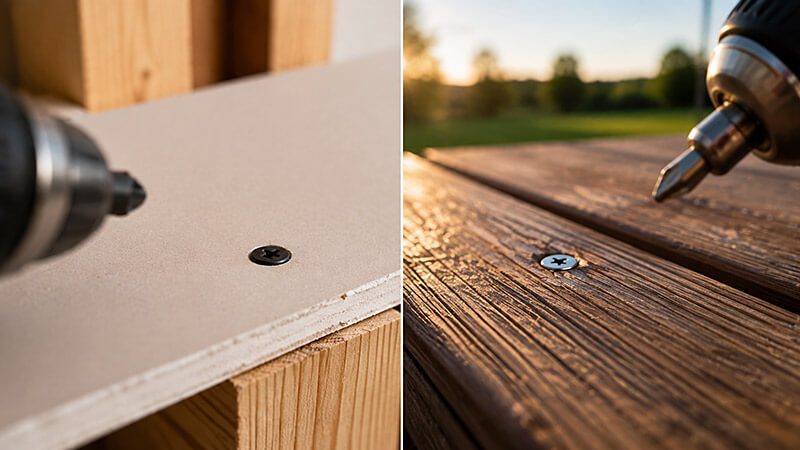
Drywall screws vs deck screws look nearly identical in the bin, but they solve opposite problems. A drywall screw fastens gypsum board to wood or metal studs indoors, sitting flush without tearing the paper face. A deck screw is built for outdoor and pressure-treated lumber, holding wet timber under load for decades without rusting through. The table below settles the choice at a glance.
Before the detail, here is the whole argument on one table. Most of your decision is already made once you read the rows below.
| Attribute | Drywall Screw | Deck Screw |
|---|---|---|
| Head type | Bugle (self-countersinking) | Flat with nibs (cutting teeth) |
| Thread | Coarse (W) or fine (S), sharp point | Asymmetric coarse, aggressive grip |
| Material & Coating | Hardened steel, black phosphate | 304/316 stainless, HDG, or 1000-hour coated steel |
| Corrosion rating | Indoor only | Exterior, ACQ-treated wood compatible |
| Typical length | 1″ to 2″ | 1-5/8″ to 4″ |
| Diameter/gauge | #6, #8 | #8, #10 |
| Drive | Phillips #2 | Phillips #2, Square, Torx |
| Primary use | Gypsum board to wood or steel studs | Decks, fences, outdoor wood, treated lumber |
| Indoor/Outdoor | Indoor | Outdoor (and damp indoor) |
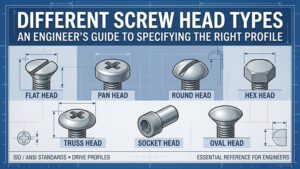
That table answers the most common search, drywall screw vs deck screw difference, in a single glance. The rows below explain the why. If you want the head shapes drawn out, our guide to screw head types shows each profile in detail.
A drywall screw is a hardened steel fastener made to attach gypsum board to wood studs or light-gauge steel framing. Its job is narrow and specific: grip the board, seat flush, and never tear the paper skin that gives drywall its strength.
The defining feature is the bugle head. The sides curve outward from the shank like a trumpet bell. When the screw drives in, that curve spreads the load across the board face and pulls the head flush without cutting the paper. The standard North American countersink angle is 82 degrees. European drywall screws often use 90 degrees. This difference is why a Euro screw can sit proud or sink too deep in a North American board. For the formal standard, the Gypsum Association publishes the specifications behind drywall screw use at gypsum.org. See our full screw head types reference for the bugle profile next to every other common head.
Drywall screws come in two thread types. The coarse thread (W) is for wood studs. Its wide pitch bites softwood and holds tight. The fine thread (S) is for steel studs. The tighter pitch grips thin metal without stripping. Both share a sharp self-tapping point, so they start without a pilot hole in most framing.
Inside, the screw is carbon steel, heat-treated for hardness. The familiar black finish is black phosphate, a coating that resists the mild indoor humidity of a wall cavity. It is not a weather coating. A drywall screw carries no stainless option and no heavy zinc layer because it is not meant to see rain, and hardness makes it brittle under bending load.
Length tracks board thickness. For 1/2″ drywall use a 1-1/4″ screw. For 5/8″ board or ceiling work use 1-5/8″. A common rule keeps the screw at least twice as deep into the stud as the board is thick. Gauge runs #6 for light work and #8 for ceilings and double layers. A 4′ x 8′ wall sheet takes about 32 screws. A ceiling sheet takes 36 to 40 because gravity fights you overhead.
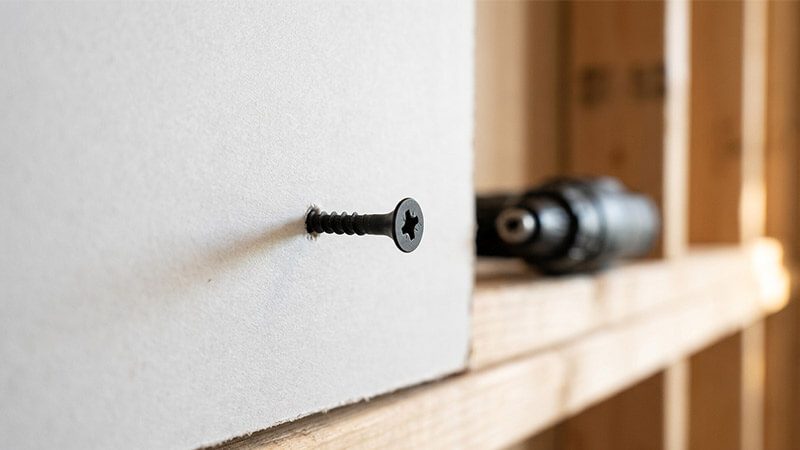
A deck screw is a corrosion-resistant fastener built for exterior wood under load. Where a drywall screw is a one-trick indoor tool, a deck screw lives outside through freeze, thaw, rain, and sun, and it has to keep a deck board tight for the life of the structure.
The deck screw uses a flat head with nibs, small cutting teeth under the rim that shave the wood as the head seats. That leaves a clean, flush finish with no proud screw to catch a bare foot. The point is a type-17 auger tip, a self-drilling cone that bites the wood and clears chips so the board does not split near the end.
The thread is coarse and asymmetric. One flank is steeper than the other so the screw pulls the board down tight as it turns and resists back-out from seasonal wood movement. This is the grip a drywall thread cannot match in solid timber.
This is where deck screws earn their price. The body is stainless steel (304 for most climates, 316 near salt water) or carbon steel given a heavy coating: hot-dip galvanizing (HDG) or a 1000-hour fluoropolymer finish rated for long salt-spray exposure. The mark that matters for treated lumber is ACQ compatibility. Modern pressure-treated wood uses alkaline copper quaternary preservative, which eats plain zinc and black phosphate. A deck screw must be rated for ACQ contact or the wood will corrode it from the inside out. Our page on screw coatings and materials breaks down each coating’s salt-spray hours and best use.
Deck screws run #8 and #10 gauge. Length starts around 1-5/8″ for thin trim and reaches 4″ for thick structural members. A 5/4 deck board over a 2x joist typically takes a 3″ screw so you get roughly 1-1/2″ of bite into the joist.
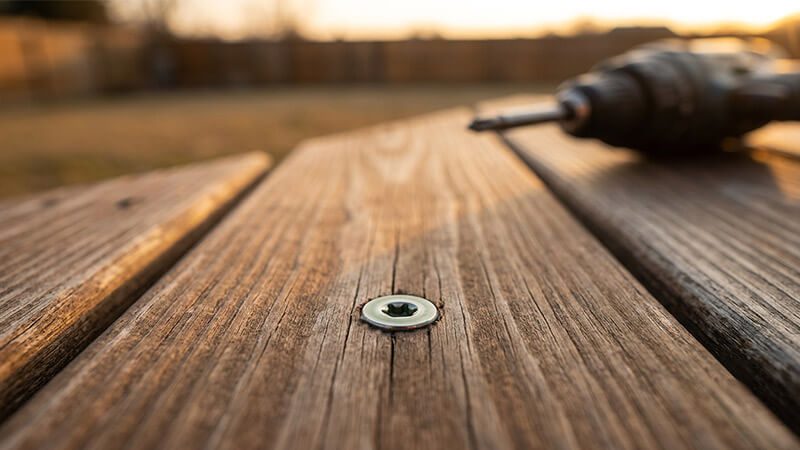
The drywall screws vs deck screws gap shows up in six places. Start with the two heads, because that is where each screw announces what it is built for.
The bugle head sits on the drywall surface and sinks just enough to vanish. The flat head with nibs cuts into wood and finishes level with the grain. Put a drywall bugle into wood and it usually sits proud. Put a deck flat head into drywall and the nibs gouge the board.
Drywall thread is fine or medium, tuned for gypsum and thin steel. Deck thread is a coarse, aggressive wedge built for dense, wet, moving timber. The deck thread rips the paper face of drywall. The drywall thread strips out of softwood under deck loads.
Phosphate protects against indoor damp for a few years. Stainless, HDG, and 1000-hour coatings protect against rain and ACQ chemistry for decades. Salt-spray testing measures this: a 1000-hour rating means the fastener survived 1000 hours in a salt fog chamber before red rust appeared. The Bolt Depot fastener basics PDF gives a plain-language rundown of coating types and head styles.
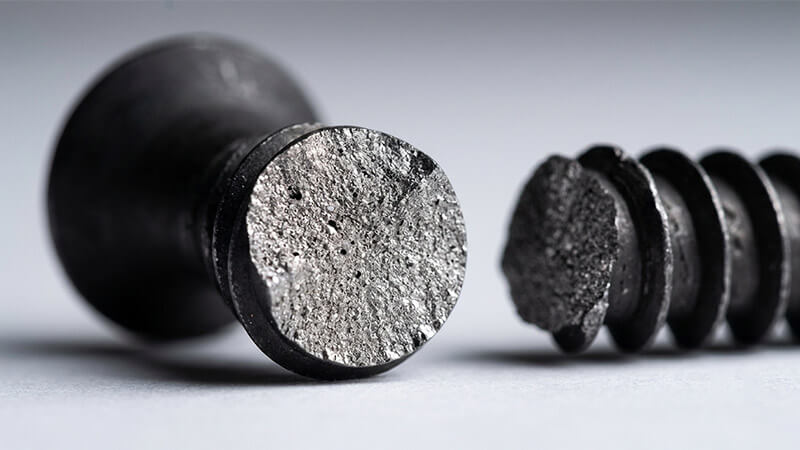
Here is the trade most people miss. Drywall screws are hardened for hardness, which makes them brittle. They snap under bending and shock. Deck screws are engineered for tensile and shear strength under outdoor load, so they flex instead of breaking. For structural connections that step past screw limits, structural bolts are the right upgrade.
| Detail | Drywall Screw | Deck Screw |
|---|---|---|
| Length range | 1″ to 2″ | 1-5/8″ to 4″ |
| Common gauge | #6, #8 | #8, #10 |
| Into substrate | 3/4″ to 1″ into stud | 1-1/2″ into joist typical |
| Point | Sharp self-tap | Type-17 auger |
Both take a Phillips #2, but deck screws add Square (Robertson) and Torx drives to cut cam-out, the slipping that strips the screw head. For high-torque exterior and structural work, hex cap screws give you a wrench drive that a drill bit cannot round off.
Key takeaway: Substitution is the leading cause of field fastener failure. The right screw is the one matched to the board and the weather, not the one already in the box.
No, not recommended. A deck screw’s coarse thread tears the paper face of drywall as it drives. The flat head with nibs cuts too deep and breaks the surface rather than seating cleanly. You also pay three to five times the price of a drywall screw for a result that looks worse. For hanging board, the cheap, paper-safe drywall screw is the correct tool. If you searched **can you use deck screws for drywall** hoping for a yes, the honest answer is to keep deck screws outside and reach for the right indoor fastener.
No. A drywall screw’s black phosphate coating is an indoor rust resistor, not a weather shield. In an exterior or wet location it rusts within a year or two, stains the surrounding wood, and loses its grip. Anyone who typed can you use drywall screws outside should treat the answer as a hard stop. Outside means stainless, HDG, or 1000-hour coated deck screws, full stop.
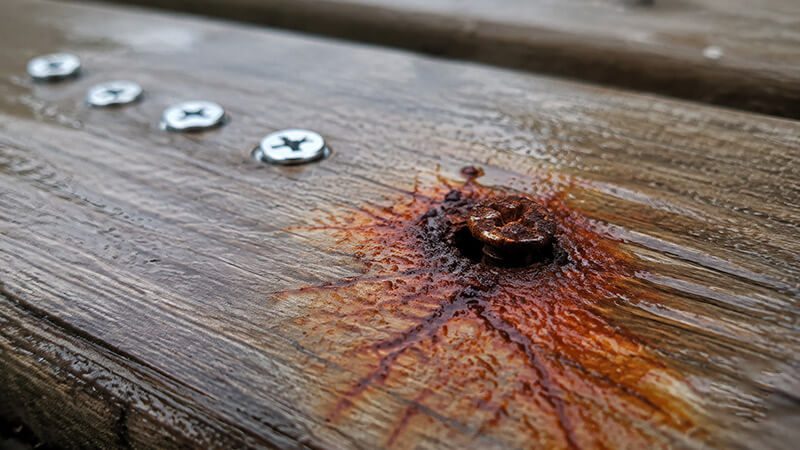
The failure modes are predictable, and they are all expensive.
A builder in Ohio finished a basement ceiling with drywall screws, then hung heavy shelving on the same studs with the same screws. Under load the hardened steel cracked at the thread root and the shelf dropped. Drywall screws are not rated for the cyclic load of a shelf bracket.
A deck contractor once substituted black drywall screws on a fence because the delivery of deck screws was late. By the second winter the screws had rusted through and the pickets leaned. The homeowner filed a warranty claim that the builder could not honor, because the spec called for ACQ-compatible fasteners and he had used none.
Use this matrix on every job. State the project, the substrate, and the environment, then read the screw.
Interior walls and ceilings call for drywall screws. Decks, fences, planters, and outdoor furniture call for deck screws. There is no overlap project.
Wood studs take coarse-thread drywall screws. Steel studs take fine-thread drywall screws. Pressure-treated or composite wood takes ACQ-compatible deck screws. Bare metal takes a self-drilling metal screw, covered in a separate guide.
Dry, indoor space is drywall territory. A damp indoor space such as a bathroom or laundry room, and any outdoor space, calls for deck screws or stainless. Humidity is the line.
| If your project is… | And the substrate is… | And the environment is… | Then use… |
|---|---|---|---|
| Wall or ceiling | Wood or steel stud | Indoor, dry | Drywall screw (coarse for wood, fine for steel) |
| Wall or ceiling | Wood or steel stud | Indoor, humid (bath) | Stainless drywall screw |
| Deck or fence | Treated lumber | Outdoor | ACQ-compatible deck screw |
| Planter or trim | Cedar or composite | Outdoor | Stainless or composite deck screw |
| Structural joint | Timber or steel | Any | Structural bolt, not a screw |
If you need a wrench-driven option for high-torque work, hex cap screw fasteners cover the gap between a screw and a bolt.
Specifying by standard removes guesswork. These are the marks a procurement engineer should recognize.
ASTM C1002 governs steel self-tapping screws for acoustical and drywall tile, the U.S. benchmark for drywall fasteners.
Gauge: drywall runs #6 and #8; deck runs #8 and #10. The heavier deck gauge carries more shear.
Coating specs: a 1000-hour salt-spray rating, HDG, and fluoropolymer are the three outdoor finishes that matter.
ACQ compatible is the label that proves a screw survives pressure-treated wood.
Countersink angle: 82 degrees in North America, 90 degrees in the EU. Mix them and the head sits wrong.
The full hardware standard menu, including ISO and ANSI references, lives at Engineers Edge. When a project steps beyond screw limits into loaded connections, structural bolts are specified to ASTM A307 or A325 grades.
Here is the cheat sheet:
| Standard / Spec | Drywall Screw | Deck Screw |
|---|---|---|
| Governing spec | ASTM C1002 | ACQ-rated, per maker spec |
| Common gauge | #6 / #8 | #8 / #10 |
| Salt-spray rating | None (indoor) | 1000-hour typical |
| HDG option | No | Yes |
| Fluoropolymer | No | Yes |
| ACQ compatible | No | Yes |
| Countersink angle | 82° (NA) / 90° (EU) | 82° (NA) / 90° (EU) |
On the shelf, drywall screws cost pennies and deck screws cost several times more. That gap is misleading. A drywall screw does one indoor job and dies outside. A deck screw’s stainless or 1000-hour body lasts the life of the structure, so the cost per year of service is often lower.
The hidden cost is the wrong choice. A rusted planter, a denied deck warranty, a sagging ceiling: each turns a few cents of savings into hours of labor and a repurchase. Buy by the project, not by the unit price. Ask your supplier for the salt-spray report and the gauge certificate before a bulk order, because batch consistency is what keeps a spec honest across ten thousand fasteners.
Mostly no. Drywall screws are hardened and brittle; in wood or outdoors they rust or snap under load. Deck screws have a coarse thread that tears the drywall paper, and the flat head with nibs cuts too deep and breaks the surface. The only overlap is a dry indoor wood job, where a deck screw can stand in temporarily but at three to five times the cost. Use our decision matrix to pick the right fastener.
For drywall, match screw size to board thickness: 1/2-inch board uses a #6 × 1-1/4-inch screw (coarse for wood studs, fine for steel), while 5/8-inch board or ceilings use a #8 × 1-5/8-inch driven at least 5/8 inch into the stud. For decking pick #8–#10 gauge; a 5/4 board over a joist needs a #10 × 2-1/2 to 3-inch screw with 1-1/2 inches of bite, and structural members reach 4 inches.
Drywall screws are not built for outdoor use. The black phosphate coating gives only indoor rust resistance, so in an exterior or wet location most drywall screws show rust within a year or two and can fail not long after.
Four coatings cover the range. Black phosphate suits drywall indoors only and fails outside. Stainless 304 resists rust but is soft and pricey; coastal jobs need 316. Hot-dip galvanized (HDG, ASTM A153, ≥43µm) is the treated-lumber standard, and 1000-hour polymer coatings give ACQ-compatible protection at a lower cost. The line that matters is ACQ compatibility: plain zinc and black phosphate are eaten by the copper preservative in pressure-treated wood. Compare every finish in our screw coatings and materials guide.
Use a dedicated composite-decking screw or a 304/316 stainless fastener. Composite boards need a reversed, or “trim,” thread near the head to prevent the mushrooming that standard deck screws leave on the board surface.
For light wood assemblies a drywall screw can stand in temporarily, but never for structural joints or hinge-mounted parts. Drywall screws are hardened and brittle, so they snap under the cyclic load that wood screws are built to absorb. For a full head-to-head, see our drywall vs wood screw comparison.
Cam-out is what happens when a Phillips bit is pushed out of the screw slot at high torque, stripping the head. Square (Robertson) and Torx drives use parallel walls or a six-lobe seat, so they grip through far more torque with almost no cam-out. Deck screws face high outdoor torque and need that grip; drywall screws drive indoors at low torque, so a Phillips #2 is enough. Pick Torx to cut slipped and stripped heads — see our screw head types guide for every profile.
Deck screws are stronger where it counts outdoors. Drywall screws are heat-treated for hardness so they drive fast, but that hardness makes them brittle: they snap under bending or shock rather than flexing. Deck screws are engineered for tensile and shear load, so they bend and recover instead of breaking. That is why drywall screws fail in shelves, hardwood, or structural joints — jobs that call for structural bolts, not a screw.
Yes. Deck screws will hold indoor wood just fine, but the cost rarely makes sense. For inside work a standard wood or drywall screw does the same job for a fraction of the price.
When the question is drywall screws vs deck screws, the two fasteners share a bin and a thread but solve opposite problems. Pick by substrate, environment, and project: drywall for indoor board, deck for outdoor and treated wood. The at-a-glance table and the decision matrix above are your working tools, and the standards in this guide turn a guess into a spec.
If you are sourcing fasteners at volume, the GUXIANG team supplies both drywall and deck lines with the salt-spray reports and gauge certificates your quality file needs. Start with our screw coatings and materials guide to compare finishes, then Request a Quote for sample batches and full specifications.
Choose the right screw once and the structure takes care of itself.
Social Chat is free, download and try it now here!